Category: weight gain

  • Honor Your Body Clock, Create Circadian Alignment

    Honor Your Body Clock, Create Circadian Alignment

    Scientists have isolated the body-clock genes that control 24-hour light-dark circadian rhythm, and it’s now known that every cell in the body has a synchronized clock. 
     
    The 2017 Nobel Prize in Physiology and Medicine was awarded to three scientists who discovered the body clock gene and its critical role in metabolic function. In a world of 24/7 non-stop chaotic eating, relentless stress, continuous screen-gazing, sedentary lifestyle and sleep deprivation, time has become irrelevant. These constant 21st century disruptions of the powerful cellular body clock cycles (aka, circadian rhythm) are wreaking life-threatening havoc on mental and physical health, resulting in obesity, metabolic syndrome, cancer and diabetes.
     
    “We didn’t realize at the time that this clock would be represented all over the body in many different tissues and control so many different biological processes that we go through every day,” says Michael Young MD, 2017 Nobel Laureate in Medicine and Physiology. “It left us with the understanding that our whole bodies are rhythmically active.”  
     
    Circadian Alignment is when the central and peripheral clocks are aligned: bright light during daytime, sleep at night, and food intake during daytime. Circadian Misalignment is when the central and peripheral clocks are misaligned: light at night, sleep during daytime, and food intake at night.
     
    This misalignment has become normalized. According to a recent study of the eating habits of more than 34,000 U.S. adults, nearly 60 percent said it was normal for them to eat after 9 p.m. 
     
    Yet, time-restricted eating (12-16 hours of non-eating) has proven to be the best match to our circadian clocks. This means we need to eliminate nocturnal eating. We should stop eating by 6-7pm and not eat again for at least 12 hours (14 hours is the sweet spot).
     
    Our bodies have evolved to process nutrients during the day, and to conserve energy at night. The body uses energy to repair all of its systems at night, while we sleep. Disrupting that natural rhythm can cause problems.
     
    Several studies have found, for instance, that eating dinner within three hours of bedtime may worsen heartburn or acid reflux symptoms. And limited research has suggested that eating one to three hours before bedtime is associated with more disrupted sleep.
     
    The most intriguing research on late-night eating, however, has focused on its relationship with body weight and metabolic health.
     
    In one 2019 study of nearly 900 middle-aged and older U.S. adults, researchers at Brigham and Women’s Hospital in Boston found that those who consumed roughly 100 calories or more within two hours of bedtime were about 80 percent more likely to be overweight or to have obesity than those who did not eat during that window. Researchers have found similar results in adults in Sweden and Japan.
     
    And in a 2023 study of more than 850 adults in Britain, those who regularly snacked after 9 p.m. had higher levels of HbA1c, a marker for diabetes risk, and greater spikes in blood sugars and fats after daytime meals than those who did not typically consume late-night snacks.
     
    Research has also found that carbohydrates consumed in the evening result in greater blood sugar spikes than those consumed earlier in the day. That is in part because melatonin, a sleep-promoting hormone that increases in the evening, dampens the secretion of insulin, which regulates blood sugar levels. Elevated blood sugars could eventually damage blood vessels and increase the risk of developing high blood pressure and Type 2 diabetes.
     
    Research suggests that it’s best to avoid eating for three to four hours before your usual bedtime. We should be eating during an 8-12 hour window, allowing 12-16 hours for regeneration. We should also be sleeping for 7-8 hours each night. 
     
    A regular bed time is critical for your health and wellness, as is a regular waking time. Additionally, sleeping too long can affect your ability to fall asleep that night. After a good night’s sleep, most people need to be awake around 16 hours before they feel sleepy again.
     
    Going to sleep between 10:00 pm and 11:00 pm is associated with a lower risk of developing heart disease compared to earlier or later bedtimes, according to a recent study by the European Society of Cardiology. Early or late bedtimes may be more likely to disrupt the body’s circadian clock, with adverse consequences for cardiovascular health, according to the study’s authors.
     
    The incidence of cardiovascular disease was highest in those with sleep times at midnight or later (25% higher risk) and lowest in those with sleep onset from 10:00 to 10:59 pm. There was also a 24% higher risk for falling asleep before 10:00 pm. Yes, the body clock is that precise and sensitive. 
     
    Humans are not nocturnal animals; we are diurnal. We need to honor our innate body clock by eating and sleeping in a manner that naturally suits us and promotes health.
  • What Is Your Body Type?

    What Is Your Body Type?

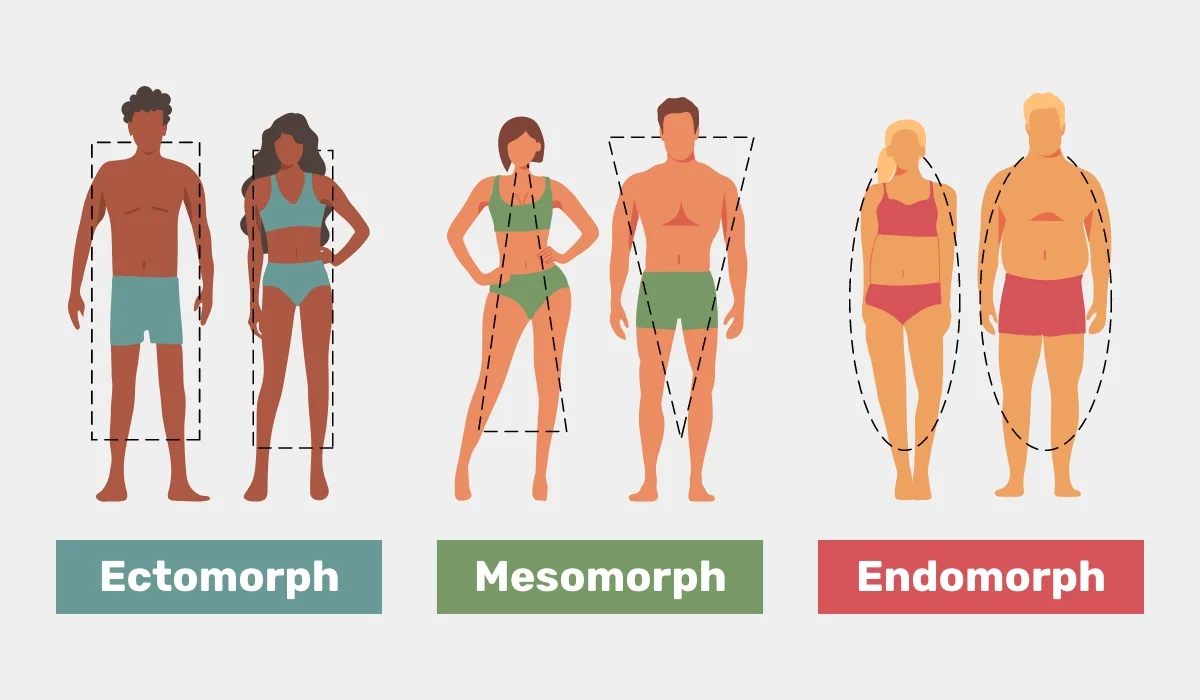
    One’s body type, or somatotype, describes their body composition or the amount of muscle and fat their body tends to comprise. There are three body types — endomorph, mesomorph, and ectomorph — and each is related to overall body composition. 
     
    Endomorphs have bodies that are rounded and soft (think apple or pear shaped), with shorter, thicker arms and legs; mesomorphs are athletic and muscular; and ectomorphs are slender, with thin arms and legs. 
     
    More specifically, endomorphs are stocky, with a larger midsection and hips. Their bodies hold more fat, which is easy to gain and difficult to lose. Endomorphs have a slower metabolism and are more likely to be sedentary. Though they may be heavy and carry lots of body fat, endomorphs can be quite strong. Participants in strongman competitions are likely to be endomorphs.  
     
    Mesomorphs have athletic, muscular bodies, with broad shoulders and narrow waists. They have a higher metabolism and can gain muscle and lose fat fairly easily. Most athletes in sports that require speed, strength, power and coordination tend to be mesomorphs. Most people who exercise would like to have a mesomorphic body, whether that’s realistic or not.
     
    Ectomorphs have narrow shoulders and hips, with longer limb segments. They are the classic ’skinny’ body type. They have a very high metabolism that makes it difficult to gain either muscle or fat. Ectomorphs seem to able to eat almost anything and everything without gaining an ounce. As athletes, ectomorphs are likely to be distance runners. However, they aren’t likely to excel at sports requiring power and strength. 
     
    However, most people are some combination of these body types. For example, one might be a cross between an endomorph and a mesomorph, or a cross between an ectomorph and a mesomorph. For each of these body types, an appropriate diet makes a big difference in the results they will get from a workout program.
     
    One study, published in the National Center for Biotechnology Information, found that men were most likely to be endomorphic/mesomorphs and women were most likely to be mesomorph/endomorphs. Another study of men and women, also published in the National Center for Biotechnology Information, found that the average distribution of somatotypes is 51.6% endomorphic/mesomorphs, which was by far the highest percentage found in the study. In fact, 65% of men in this study were endomorphic/mesomorphs. Next up were mesomorph/endomorphs (17.1% ), and mesomorphic/endomorphs (16.7%). After that, the percentages for each cross type fell into the low single digits (6.1% balanced mesomorphs, and 3.0% ectomorphic/mesomorphs). The study also showed that somatotype classification is not static and can shift over time. So, we can eat and train in a way that will change our bodies. 
     
    Those who are predominately ectomorphic need a diet and training program that focuses on protein intake and muscle mass gain. Since it is difficult for these people to put on mass and maintain it, their workouts should focus on building muscle (hypertrophy) and strength. There should be less focus on cardiorespiratory training and calorie burning. Ectomorphs need to focus on getting adequate calories and high-quality nutrition that will help them gradually gain mass. Ectomorphs need high levels of protein in the range of 1.2 to 1.6 grams per kilogram body weight per day, which is optimal for muscle growth. Since ectomorphs can eat virtually anything without gaining weight, they need to be careful of eating junk foods/calories that are absent nutrition. Quality still counts for ectomorphs. Fats and carbohydrates can be eaten in copious amounts, but the nutritional value of everything eaten still matters, even if fat gain is not an issue. Meals should be eaten frequently throughout the day. Protein shakes can be a helpful way to get adequate protein and calories. 
     
    Those who are primarily endomorphic need a diet that focuses on reduced calorie intake, limited carbohydrates, higher protein, and frequent training sessions to stimulate metabolism. Workouts that focus on aerobic capacity and cardiovascular function should be prioritized. In the gym, interval training and circuits can be utilized to raise heart rate and improve metabolic conditioning. Rest periods should be minimized. Additionally, endomorphs should do cardiovascular exercise most days of the week and should at least take a long walk every day. Avoiding a sedentary lifestyle is critical. 
     
    Mesomorphs not only have the physique that most others aspire to, they also have an easier time with both eating and training. They carry more muscle and therefore have a higher metabolism too. They get great results with less work. They gain muscle mass rather easily and quickly. On the other hand, they don’t gain fat easily, despite eating high calorie diets. Mesomorphs need a high protein diet in the range of 1.2 to 1.6 grams per kilogram body weight per day, perhaps even higher in some cases. The balance can come from a variety of healthy carbs and fats. 
     
    Through sheer force of will, strict dieting and dedicated, focused training, some endomorphs and ectomorphs can take on the physical qualities or mesomorphs. It’s hard work — a lot harder than for mesomorphs themselves — but it can be done. Again, you need to train hard and often, and you need to focus on your diet, with a strong emphasis on your macronutrient composition, with a high percentage (25%-35%) of proteins.  
  • Stress Can Undermine Weight Loss and Increase Weight Gain

    Stress Can Undermine Weight Loss and Increase Weight Gain

    If you’re a stress eater (i.e., you eat to cope with stress), restricting calories can cause even more stress.

    If you eat a little less than your body needs, it can help you lose weight and body fat without sacrificing performance or wellbeing.

    However, eating a lot less, especially for a long time, and especially when you have major recovery needs—like hard athletic training or recovering from surgery—can actually thwart proper recovery. It can even cause your body to turn down the thermostat, restricting calorie burning. In essence, your body goes into preservation mode.

    Food is meant to nourish the body and the right amounts are vital to athletes. An excessive or chronic caloric deficit can impair performance, decrease lean muscle mass, and lead to a host of other issues ranging from hormonal imbalances to immune deficiencies.

    You need to eat enough to support your physiological needs. Unfortunately, most Americans (truly, the majority) eat well beyond their physiological needs. Stress is a common culprit.

    Cutting too many calories all at once can be very stressful and leave a person feeling like they’re starving. That’s not a formula for successful weight loss or athletic performance.

    It’s best to taper slowly, gradually reducing your caloric intake. Say, for example, that you (or your coach or nutritionist) determine that you should be eating 2,000 calories per day (I chose this because it’s a round number that’s easy to work with). Let’s also say that you discover, through the use of a food app, that you’re actually eating about 2,600 calories per day, which is why you’re overweight. 

    You’re best off tapering to 2,400 calories for about two weeks, and then dropping down 2,200 for another two weeks before finally settling in at your proper intake of 2,000 calories per day. This gradual step-down will keep your body from going into starvation mode and keep you from feeling hungry all the time, which will undermine your efforts. 
     
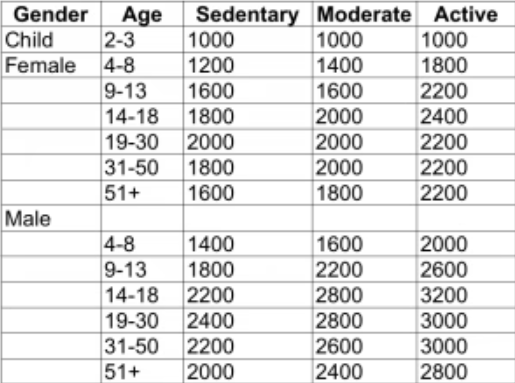
    Calorie requirements are highly individualized. An ideal daily intake of calories varies depending on age, metabolism and levels of physical activity, among other things. The Dietary Guidelines for Americans provide calorie estimates for men and women based on age and activity level. For example, these guidelines note that the general recommended intake for adult women ranges from 1,600 to 2,400 calories daily, while men often require 2,000 to 3,000 calories a day to maintain healthy body weights.  


    Sedentary people need fewer calories because sitting is not very demanding, and most Americans are quite sedentary. According to a study reported by the American College of Sports Medicine, American adults, ages 20 to 75, reported spending an average of 9.5 hours sedentary each day, and most of this time was accumulated at work and during leisure-time. Then factor in that most of us sleep 7-8 hours per night. 
     
    Harvard Medical School says that sedentary adults require 13 calories for each pound of their body weight on a daily basis. For example, a sedentary 130-pound woman needs about 1,700 calories, while a 175-pound, inactive man requires about 2,300 calories daily to maintain a healthy body weight.
     
    Yet, those numbers are to maintain body weight. If you need to lose weight, you’ll need to lower your caloric intake. The University of Washington suggests that overweight adults need 10 calories per pound of their desirable body weight to move toward that healthier weight. For example, an overweight woman with a goal weight of 130 pounds needs 1,300 calories daily, while an obese man trying to reach 175 pounds needs about 1,750 calories daily to reach his goal.
     
    Again, any caloric reduction should be done slowly and gradually. Give your body — particularly your stomach and brain, which communicate hunger signals — time to adapt. Initially, at least, focus on eating slowly and eating more whole foods, instead of just eating smaller portions. After a week or two of these adjustments, you can begin to focus on portion sizes and limiting caloric intake, which should accelerate your weight loss. Being hungry all the time will cause a backlash and result in bad food choices and, ultimately, overeating. 
     
    Highly-processed foods, aka “junk” foods, are typically loaded with sugar, fat, and sodium. Beyond that, they often harm the microbiome, the delicate balance of microorganisms in the gut, which contributes to various health problems. Highly-processed foods are also associated with increased systemic inflammation. 
     
    If you can gradually shift to to eating more whole, minimally-processed foods more often, you’ll be on the right track. Don’t do it all at once and don’t be militant about it. Slowly cut your calories to a number that suits your sex, age and activity level. 
     
    Don’t restrict food to the point that it causes anxiety or stress. That will prove to be unproductive and will undermine your goals. Simply put, don’t deprive yourself. By eating more slowly, and eating foods that are high in protein and fiber, which are more filling, you can become more attuned to hunger sensations and learn to stop before overeating. 
     
    Lastly find healthier ways to cope with stress that don’t involve eating, such as taking a walk, doing a crossword puzzle, talking to a close friend or loved one, or even meditating. Stress is part of life; don’t let it undermine you. 
     
    Be compassionate with yourself. Be on your own side and don’t be so judgmental. Good things — the fruits of your labor — take time to manifest. Keep moving forward and know that your sustained efforts will pay off. Be patient and remain focused. 
  • Adverse Childhood Experiences Have Adverse Effects on Adult Health

    Adverse Childhood Experiences Have Adverse Effects on Adult Health

    In 1985, Dr. Vincent Felitti was running an obesity program at his San Diego-based clinic. He discovered that the people most likely to drop out of the program were the ones successfully losing weight. Upon further inquiry, Dr. Felitti found that 55% of the people in the program acknowledged a history of childhood sexual abuse. Many of the women indicated that they believed their physical size helped to ward off sexual advances from men. For these women, excess weight was meant to be protective. For them, losing weight was not deemed helpful.
     
    Backing Felitti’s findings, longitudinal studies suggest that self-reported physical and sexual abuse during childhood greatly increase one’s risk for severe obesity in adulthood. One analysis using data from the National Longitudinal Study of Adolescent Health found more than double the risk for abused females and more than triple for abused males, compared to individuals with no history of abuse.
     
    This made Dr. Felitti, the founder of the Department of Preventive Medicine at Kaiser Permanente, wonder whether adverse experiences prior to one’s 18th birthday could be related to other negative health outcomes in adulthood. So, he initiated a study to find out.
     
    Now one of the world’s foremost experts on childhood trauma, Dr. Felitti is the co-principal investigator of the internationally recognized Adverse Childhood Experiences (ACE) Study, a long-term, in-depth, analysis of more than 17,000 middle-class adults, 75% of whom were white. Done in conjunction with the CDC, the ACE study was conducted at Kaiser Permanente from 1995 to 1997.
     
    Again, the participants were largely white, middle-class adults, and they were mostly educated people. In fact, 39.3% were college graduates or higher, and 35.9% had attended at least some college.
     
    The ACE study found that traumatic experiences in childhood, which are often protected for many years by shame and secrecy, can play out a half-century later in terms of emotional state, disease, and even life expectancy. The ACE study examined 10 categories of adverse childhood experiences due to their prevalence:
     
    1. Physical abuse
    2. Sexual abuse
    3. Verbal/emotional abuse
    4. Physical neglect
    5. Emotional neglect
    6. Witnessing a mother being abused
    7. A family member who is depressed, suicidal or diagnosed with other mental illness
    8. A family member who is addicted to alcohol or another substance
    9. Losing a parent to separation, divorce or death
    10. A family member who is in prison
     
    The ACEs study found a strong association between the number of adverse childhood experiences and later-life mental and physical health problems, such as heart disease, COPD, higher rates of STDs, and even premature death.
     
    Adverse childhood experiences dramatically increase the risk for seven of the 10 leading causes of death in the US. In high doses, they affect brain development, the immune system, hormonal systems, and even the way that DNA is read and transcribed. People who are exposed to very high doses have triple the lifetime risk of heart disease and lung cancer, and a significant difference in life expectancy.
     
    The ACEs study found that 67% of the population had at least one ACE; almost 25% of American adults have been exposed to three or more ACEs; and 12.6% (1 in 8) had four or more ACEs. The higher the ACE score, the worse the health outcomes are.
     
    In a middle-class population, one in 11 people experienced six or more of those adverse experiences in childhood. A so-called ACE score of six (experiencing any six of the 10 categories) made that person 4,600% more likely to become an IV drug user than a person who had experienced none of those categories. An ACE score of six also produces a likelihood of attempting suicide that is between 3,100%-5,000% greater than someone with none of these categories.
     
    An ACE score of six also shortens life expectancy by about 20 years.
     
    The findings showed that people who experienced four or more adverse childhood events (1 in 8 people) had:
     
    • Increased risk for smoking, alcoholism and drug abuse
    • Increased risk for depression and suicide attempts
    • Poor self-rated health
    • 50 or more sexual partners
    • Greater likelihood of sexually transmitted disease
    • Challenges with physical inactivity and severe obesity
     
    These individuals end up with a great likelihood of disease states in adulthood for two primary reasons:
     
    1. The use of various coping devices (i.e., smoking, drinking and overeating) that become destructive over time and
    2. The effect of chronic, major unrelieved stress on the brain and CNS can produce a chronic release of pro-inflammatory chemicals into the body and suppress the immune system.
     
    The good news is that ACEs can be screened, prevented and healed. Validating one’s existing strengths and protective factors is important. Some of the strategies that can be employed include:
     
    • Supportive relationships, including other family members and peers
    • High-quality, sufficient sleep
    • Balanced nutrition
    • Regular physical activity
    • Mindfulness and meditation
    • Experiencing nature
    • Mental health care, including psychotherapy or psychiatric care, and substance use disorder treatment, when indicated
     
    The widespread nature of adverse childhood experiences is a reminder that you never know what someone is going through at any given moment or why. It’s a reminder for us to refrain from judgement, and to always be kind.
  • How Much Muscle Can You Gain in a Year?

    How Much Muscle Can You Gain in a Year?

    When people gain weight through a committed strength training program, it involves more than just added muscle mass. A 10-to 20-pound weight gain typically includes not only muscle, but also fat, water, and carbohydrate storage. In short, it usually isn’t all lean muscle.
     
    The ability to gain muscle, and how much one gains, is dependent on age, sex, physical condition, genetics, diet quality and, of course, training program. As we get older, hormone levels can drop, and men tend to put on muscle more easily than women due to their higher testosterone levels.
     
    A good rule of thumb is that most healthy individuals can gain 1 to 2 pounds of lean muscle mass per month, at least in the early stages. After the first three months, a monthly increase of about half a pound is more likely over the longer run.
     
    Stuart Phillips, Ph.D., who has conducted many studies at McMaster University in Ontario, says he expects the average guy to gain 4 to 7 pounds of muscle in the first three months. Yet, that’s only if he’s either new to lifting or returning from a layoff. The more experienced and dedicated you are, the less you can gain. In other words, there are diminishing returns over time and the gains become harder to achieve.
     
    By Phillips’ measure, the average guy can expect to gain about 8-12 pounds of muscle over the course of a year. However, some guys may gain more or less than that.
     
    Regardless of the program or the supplements used, Phillips never sees average gains exceeding about a half-pound a week, which amounts to 26 pounds over the course of a year. But those guys are the genetic freaks, the ones everyone would like to be.
     
    Whether muscle comes easily to you or you’re a hard gainer, it all comes down to genetics. Some people have a predisposition and propensity to gain muscle easily, while others find such gains very difficult to come by.
     
    Building muscle usually equates to gaining weight, which requires eating more than your body needs to maintain its current size. That’s not desirable for someone who’s already overweight. And no, you cannot turn fat into muscle anymore than you can turn blood into bone. If you plan to gain muscle, prepare to gain weight, and some of it will be fat.
     
    Building muscle requires a very dedicated program of lifting at least three days per week, working all of the large muscle groups for 3-6 sets of 8-12 reps to failure. It’s important to give each muscle group a 48-hour break before training it again (i.e., Monday, Wednesday. Friday)
     
    It’s also critical to get eight hours of sleep every night, with essentially the same bed and wake times. Your body releases more growth hormone (GH) during sleep than at any other time. Research shows that 70% of the growth hormone humans release occurs during deep sleep (from 10pm-2am), and the more deep sleep you get, the more growth hormone you produce. Growth hormone is a vital part of muscle repair. Protein synthesis also occurs during sleep, which leads to the last factor for muscle growth.
     
    A high-protein diet is essential for muscle growth to occur. A common recommendation for gaining muscle is 1 gram of protein per pound of body weight. Though there are varying recommendations, this is a simple, easy formula to remember. Remember that in addition to animal sources, protein can be found in lots of non-animal sources, such as beans, legumes, seeds, nuts and nut butters. Then there’s also eggs and dairy. A whey-protein powder supplement can also be useful between meals and before bed.
     
    So, be prepared to train hard and often, to sleep well every night, and to eat plenty of calories, particularly protein. Always set realistic goals and remember that the one factor you can’t control is your genetics.