Look around any gym and you’ll see workout enthusiasts performing some very common exercises, such as the bench press, shoulder press, pull downs, rows, bicep curls, squats and lunges, for example. However, all of these exercises occur in just two planes of motion: sagittal (mostly) and frontal.
Yet, human movement occurs in all three planes of motion: sagittal, frontal and transverse. Nevertheless, many people forget about or ignore the transverse plane, which is ill-advised. In fact, it is the most overlooked plane of motion.
Let’s quickly examine the three planes of movement:
The sagittal plane divides the body into left and right halves, using an imaginary line. Any forward or backward movement occurs in the sagittal plane.
The frontal plane divides the body into front and back halves. Any lateral (side) movement occurs in the frontal plane.
Last, but certainly not least, the transverse plane divides the body into superior (upper) and inferior (lower) halves. Rotational movements, such as spinal and limb rotation, occur in the transverse plane.
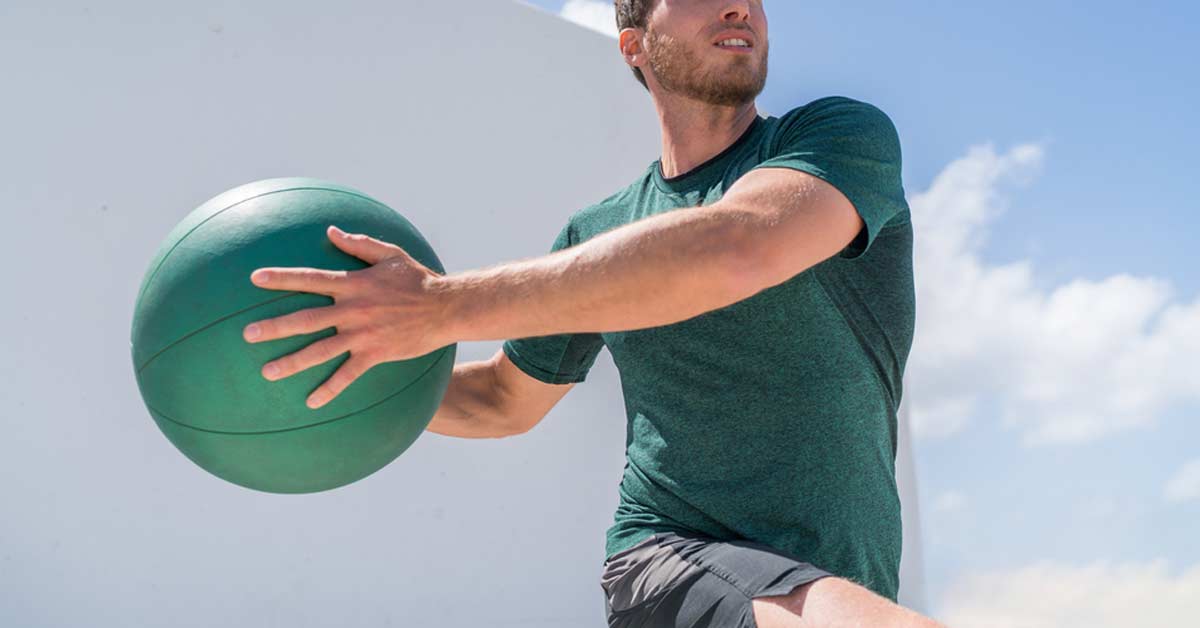
Certain activities — such as swinging a golf club, a baseball bat or a tennis racket and throwing a punch, for example — generate spinal rotation in the transverse plane.
Exercises that focus on rotation and anti-rotation are critical to good spinal health and stability. Anti-rotation exercises create stability through the core, without moving at the spine. In essence, these exercises create the necessary strength to prevent trunk rotation from occurring when it shouldn’t.
One of the main functions of the core is to stabilize the spine and pelvis, which enhances power transfer and reduces shear loading on the spinal disks. Ultimately, a strong and functional core reduces injuries by stabilizing the spine.
On the other hand, a weak core leads to general weakness. The point of having a strong core is not have “ripped abs.” The point is to have greater strength and stability when performing all functional, daily movements and exercises.
For example, the limiting factor when performing a standing cable chest press is a lack of core strength and stability, not a lack of chest and shoulder strength.
Human movement is a complex interplay of all three planes of motion, so rotational training shouldn’t be an afterthought.
Exercises such as the side plank and bird dog are fundamental to any good workout program. There are even more advanced exercises that can be be added to your program over time.
Your trainer or strength coach should be incorporating rotational training into your program. Regardless of your fitness level or goals, your trainer must understand the importance of transverse-plane movement to help you maximize your performance and to reduce the chance of injury during your day-to-day life.
If you need assistance with this, I can help. The functional training programs I utilize place great emphasis on training in the transverse plane. This will help build your core strength, stabilize your spine and improve your ability to move well.
Get in Motion. Stay in Motion.