
Category: activity

  • Know Your Health; Know Your Biomarkers

    Know Your Health; Know Your Biomarkers

    America is not a healthy nation. The US spends more on health care than any other high-income country but still has the lowest life expectancy at birth and the highest rate of people with multiple chronic diseases, according to a 2023 report from The Commonwealth Fund, an independent research group. In fact, America is ranked No. 35 out of 169 countries in terms of overall citizen health, according to the Bloomberg Healthiest Country Index. This means that 34 countries are ahead of us.

    It’s easy to see why. Nearly 60% adults in the United States have at least one chronic disease, with the most common being heart disease, cancer, diabetes, arthritis, and obesity, according to the CDC. Consequently, biomarkers — objective measures of normal or abnormal processes or conditions or diseases —really matter. These might include blood pressure, resting heart rate, blood sugar levels, cholesterol levels, and body fat percentage, for example.

    Essentially half (47%) of American adults have high blood pressure (hypertension), according to the American Heart Association. That amounts to a whopping 122.4 million people. A normal blood pressure is less than 120/80 mmHg. A blood pressure of 140/90 mmHg or more is too high. People with levels from 120/80 mmHg to 139/89 mmHg have a condition called pre-hypertension, which means they are at high risk for high blood pressure.

    Having high blood pressure puts you at risk for heart disease and stroke, which are leading causes of death in the United States. However, most people who have hypertension do not experience any symptoms. People usually discover that they have hypertension following a routine blood pressure check.

    Another all-too-common disease in the US is diabetes, which is diagnosed when a person’s A1C levels are 6.5% or higher.

    According to the CDC, 11.3% of the US population has diabetes, and 23% of adults are undiagnosed. This means that more 34% of the adult population likely has diabetes. Yet, about 90-95% of people with diabetes have type-2, which is preventable. Additionally, about 98 million American adults (more than 1 in 3) have pre-diabetes. If you get the sense that diabetes is a crisis in the US, you’re right. Having diabetes also raises the risks for other chronic conditions.

    For example, if you have diabetes, you are twice as likely to have high blood pressure. Chronic diseases are often linked.
    Diabetes is the top cause of kidney failure, causing nearly half (47%) of new cases. About 1 in 3 adults with diabetes may have kidney disease. High blood pressure is the second most common cause of kidney failure, causing 27% of new cases. In fact, 1 in 5 adults with high blood pressure may have kidney disease. Are you getting the sense that many of the most common chronic diseases are linked?

    Quite astonishingly, as many as 37 million Americans have kidney disease, meaning it affects 14% of American adults. In fact, kidney disease is the fastest-growing noncommunicable disease in the US, and it’s one of the top 10 causes of death.

    The kicker is that all of the above are preventable; it’s within our hands to heal or prevent them. But there’s more.

    High LDL (bad) cholesterol levels in the bloodstream may increase the risk of heart disease and cardiovascular events like stroke. Normal cholesterol in adults is less than 200 mg/dL; borderline high is 200 to 239 mg/dL. Yet, about 86 million US adults age 20 or older have total cholesterol levels above 200 mg/dL, according to the CDC. And nearly 25 million adults in the US have total cholesterol levels above 240 mg/dL.

    The latest data indicate that 39.6% of US adults are obese, and another 31.6% are overweight. Taken together, 71.2%, or nearly three-quarters, of American adults are either overweight or obese. This comes at a tremendous cost to our national wellbeing. Overweight and obesity may increase your risk for developing health problems, such as diabetes, heart disease, stroke, and certain cancers, according to the National Institutes of Health.

    Excess body fat is associated with high levels of LDL (bad) cholesterol and triglycerides, as well as low levels of HDL (good) cholesterol. It also impairs the body’s responsiveness to insulin, raising blood sugar and insulin levels. Excess body fat contributes to major causes of death and disability, including heart attacks, strokes, high blood pressure, cancer, diabetes, osteoarthritis, fatty liver, and depression. Yet, when it comes to health, the issue is not how much you weigh but how much abdominal fat you have. Research shows that abdominal fat is the worst of the worst because it is a major contributor to cardiovascular disease.

    Waist circumference is an indicator of the health risks associated with excess fat around the waist. A waist circumference of 40 inches or more in men, or 35 inches or more in women, is associated with health problems such as type 2 diabetes, heart disease, and high blood pressure. Ideally, everyone should aim to keep their waist measurement less than half that of their height, according to scientists. That means a 6ft (72 inch) tall man should aim to keep his waist less than 36 inches, while a 5ft 4in (64 inch) woman should keep hers under 32 inches.

    Metabolic syndrome is a cluster of conditions that increases the risk of heart disease, stroke and diabetes. Metabolic syndrome includes obesity, high blood pressure, high blood sugar, high triglycerides, and irregular cholesterol levels. The risk of metabolic syndrome increases with age, and about 1 in 3 adults have metabolic syndrome.

    Heart disease remains the leading cause of death in the US, as it has been for the past 100 years. Stroke is the fifth leading cause of death. Together, they claimed more lives in 2021 in the U.S. than all forms of cancer and chronic lower respiratory disease combined. High blood pressure, high blood cholesterol, and smoking are key risk factors for heart disease. Yet, diabetes, overweight and obesity can also put people at a higher risk for heart disease.

    The links between all of these chronic diseases is striking. Having high blood pressure puts you at risk for heart disease and stroke. If you have diabetes, you are twice as likely to have high blood pressure. Yet, people with high blood pressure usually have insulin resistance and have an increased risk of developing diabetes compared to those with normal blood pressure. So the relationship between diabetes and high blood pressure is a two-way street. Diabetes is the top cause of kidney failure. High blood pressure is the second most common cause of kidney failure. High LDL (bad) cholesterol levels in the bloodstream may increase the risk of heart disease and stroke. Overweight and obesity may increase your risk for developing a wide array health problems, such as diabetes, heart disease, stroke, and certain cancers.

    Link after link after link. The connection between chronic conditions is stark.

    Yet, being thin doesn’t necessarily mean that you’re healthy. Thin people might still have cancer, diabetes or heart disease, for example.

    Health is comprehensive and encompasses a number of factors including nutrition, exercise, sleep, stress levels, lifestyle choices, and more. Weight is just one small piece of the puzzle and should never be used as the sole indicator of overall health.

    Wellness requires us to think holistically and address all indicators of health. Obsessing and stressing over one factor, such as weight status, can stunt progress and lead to decreased mental wellbeing.

    It’s important to recognize that medical interventions contribute less than 10% to overall health. Meanwhile, nutritional status accounts for a remarkable 80%. Nutrition addresses the root causes of diseases, whereas drugs often only alleviate symptoms. What we eat really matters… a lot.

    We know that exercise certainly improves health and wellness. Yet, a staggering 80% of US adults and adolescents are insufficiently active, according to the Journal of the American Medical Association. What’s more, those leading sedentary lifestyles face a 20-30% higher risk of mortality compared to those who participate in at least 30 minutes of moderate exercise most days of the week, according to the World Health Organization.

    Numerous studies show that consistent exercise decreases the risk of cardiovascular disease, type 2 diabetes, many cancers, cognitive decline and mental illness. Meanwhile, a sedentary life is associated with an increase in cardiometabolic disease and shortened lifespans.

    While there are many reasons that people exercise, in my view it shouldn’t be about having the best butt or bigger biceps; it’s about being a happier, more fulfilled, more self-satisfied person. Everyone recognizes that exercise can change your body, but it can also change your mood, your attitude, and even your mind.

    Wellbeing is not just the absence of disease or illness. It’s a complex combination of a person’s physical, mental, emotional, and social health factors. Wellbeing is strongly linked to happiness and life satisfaction. In short, wellbeing could be described as how you feel about yourself and your life.

    Researchers agree that health-related quality of life is multi-dimensional and includes domains that are related to physical, mental, emotional and social functioning, and the social context in which people live. That said, loneliness and social disconnectedness are two of the greatest challenges of the modern era. Social isolation and loneliness are now considered demonstrated risk factors for depression and cancer. Our social connections, or lack thereof, really affect our health.

    Loneliness takes a toll on our health. It can lead to high blood pressure, and an increased risk of cardiovascular disease and stroke. Loneliness has been linked to the progression of Alzheimer’s, raising the likelihood of dementia by 40%. And it can also double the risk of Type-2 diabetes. One study found that loneliness can be as much of a long-term risk factor as smoking. As a consequence, chronically lonely people tend to have an 83% higher mortality risk than those who feel less isolated.

    Brigham Young University researchers have revealed that loneliness is deadlier than obesity and should now be considered a major public health hazard. They discovered that lonely people had a 50% increased risk of early death, compared to those with good social connections. In contrast, obesity raises the chance of dying before the age of 70 by around 30%. Humans are social animals. We need community, we need friends. While solitude may be nice sometimes, loneliness isn’t.

    Research also shows that mindset really matters when it comes to health, and it can even extend your life. A classic study found that people who were optimistic about aging lived seven and a half years longer than those who had negative perceptions of it.

    The takeaway is that our health is mostly in our own hands. We can be proactive and we can largely control our own destiny. We are not fated to ill health, even if our parents or grandparents had specific diseases. Most of the diseases that modern Americans suffer from are lifestyle disease, meaning they’re the result of the way we live and the choices we make.

    We can make better choices to improve our health, the quality of our life, and even our life expectancy. We also need to remember that stress reduction and social connection play a big role in our wellbeing. We can do better, and we must do better. Our very lives depend on it.

    It’s preferable that your doctor tells you that you look better on the inside than on the outside. Your biomarkers really matter, and you should know them.

  • Stress Can Undermine Weight Loss and Increase Weight Gain

    Stress Can Undermine Weight Loss and Increase Weight Gain

    If you’re a stress eater (i.e., you eat to cope with stress), restricting calories can cause even more stress.

    If you eat a little less than your body needs, it can help you lose weight and body fat without sacrificing performance or wellbeing.

    However, eating a lot less, especially for a long time, and especially when you have major recovery needs—like hard athletic training or recovering from surgery—can actually thwart proper recovery. It can even cause your body to turn down the thermostat, restricting calorie burning. In essence, your body goes into preservation mode.

    Food is meant to nourish the body and the right amounts are vital to athletes. An excessive or chronic caloric deficit can impair performance, decrease lean muscle mass, and lead to a host of other issues ranging from hormonal imbalances to immune deficiencies.

    You need to eat enough to support your physiological needs. Unfortunately, most Americans (truly, the majority) eat well beyond their physiological needs. Stress is a common culprit.

    Cutting too many calories all at once can be very stressful and leave a person feeling like they’re starving. That’s not a formula for successful weight loss or athletic performance.

    It’s best to taper slowly, gradually reducing your caloric intake. Say, for example, that you (or your coach or nutritionist) determine that you should be eating 2,000 calories per day (I chose this because it’s a round number that’s easy to work with). Let’s also say that you discover, through the use of a food app, that you’re actually eating about 2,600 calories per day, which is why you’re overweight. 

    You’re best off tapering to 2,400 calories for about two weeks, and then dropping down 2,200 for another two weeks before finally settling in at your proper intake of 2,000 calories per day. This gradual step-down will keep your body from going into starvation mode and keep you from feeling hungry all the time, which will undermine your efforts. 
     
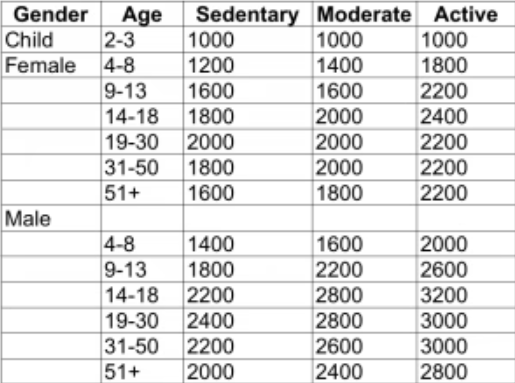
    Calorie requirements are highly individualized. An ideal daily intake of calories varies depending on age, metabolism and levels of physical activity, among other things. The Dietary Guidelines for Americans provide calorie estimates for men and women based on age and activity level. For example, these guidelines note that the general recommended intake for adult women ranges from 1,600 to 2,400 calories daily, while men often require 2,000 to 3,000 calories a day to maintain healthy body weights.  


    Sedentary people need fewer calories because sitting is not very demanding, and most Americans are quite sedentary. According to a study reported by the American College of Sports Medicine, American adults, ages 20 to 75, reported spending an average of 9.5 hours sedentary each day, and most of this time was accumulated at work and during leisure-time. Then factor in that most of us sleep 7-8 hours per night. 
     
    Harvard Medical School says that sedentary adults require 13 calories for each pound of their body weight on a daily basis. For example, a sedentary 130-pound woman needs about 1,700 calories, while a 175-pound, inactive man requires about 2,300 calories daily to maintain a healthy body weight.
     
    Yet, those numbers are to maintain body weight. If you need to lose weight, you’ll need to lower your caloric intake. The University of Washington suggests that overweight adults need 10 calories per pound of their desirable body weight to move toward that healthier weight. For example, an overweight woman with a goal weight of 130 pounds needs 1,300 calories daily, while an obese man trying to reach 175 pounds needs about 1,750 calories daily to reach his goal.
     
    Again, any caloric reduction should be done slowly and gradually. Give your body — particularly your stomach and brain, which communicate hunger signals — time to adapt. Initially, at least, focus on eating slowly and eating more whole foods, instead of just eating smaller portions. After a week or two of these adjustments, you can begin to focus on portion sizes and limiting caloric intake, which should accelerate your weight loss. Being hungry all the time will cause a backlash and result in bad food choices and, ultimately, overeating. 
     
    Highly-processed foods, aka “junk” foods, are typically loaded with sugar, fat, and sodium. Beyond that, they often harm the microbiome, the delicate balance of microorganisms in the gut, which contributes to various health problems. Highly-processed foods are also associated with increased systemic inflammation. 
     
    If you can gradually shift to to eating more whole, minimally-processed foods more often, you’ll be on the right track. Don’t do it all at once and don’t be militant about it. Slowly cut your calories to a number that suits your sex, age and activity level. 
     
    Don’t restrict food to the point that it causes anxiety or stress. That will prove to be unproductive and will undermine your goals. Simply put, don’t deprive yourself. By eating more slowly, and eating foods that are high in protein and fiber, which are more filling, you can become more attuned to hunger sensations and learn to stop before overeating. 
     
    Lastly find healthier ways to cope with stress that don’t involve eating, such as taking a walk, doing a crossword puzzle, talking to a close friend or loved one, or even meditating. Stress is part of life; don’t let it undermine you. 
     
    Be compassionate with yourself. Be on your own side and don’t be so judgmental. Good things — the fruits of your labor — take time to manifest. Keep moving forward and know that your sustained efforts will pay off. Be patient and remain focused. 
  • The Risks of Excessive Screen Time and ‘Sitting Disease’

    The Risks of Excessive Screen Time and ‘Sitting Disease’

    Always listen to your body. Never ignore the things it’s telling you; it has important information that you need to know and acknowledge. Pay attention to its cues. 
     
    As a 21st Century society, we sit far too much. Beware of so-called “sitting disease,” also known as the “desk sentence.”
     
    Constant sitting decreases your metabolism and is associated with increased risk of diabetes, cardiovascular disease, and cancer.
     
    Sitting disease:
     
    • Impairs your circulation
    • Compresses vital fluids (such as lymphatic fluid) and impacts cell growth
    • Leads to joint stiffness, low back pain, sciatica, hip pain, neck pain, and shoulder pain
     
    Over-eating and obesity are distress signals from your body; don’t ignore them. The health risks from over-eating and obesity are numerous and widely reported. Mindless over-eating is often associated with excessive screen time.
     
    Depriving yourself of sleep leads to cognitive impairment, a less efficient brain, over-eating, higher emotionality, increased anxiety, and delayed production of melatonin (the sleep hormone). Many people are sleep deprived due to an inability to limit screen time.
     
    As of 2020, it is estimated that one-third of the world’s population (2.6 billion) has myopia and that by 2050 it will affect half the global population. This short-sightedness is typically associated with excessive screen time and, in the worst cases, leads to blindness. Think I’m overstating the problem? Well, by 2050 myopia is projected to become the leading cause of permanent blindness worldwide. 
     
    Our inability to unplug and disengage from our digital devices is causing widespread stress, anxiety and self-reported depression. At this point, many people are all too familiar with “Zoom fatigue” and the associated energy loss. Many people feel they have no autonomy to determine when to disconnect. They even wake up at night to check work emails and/or text messages.
     
    This inability to disconnect has led to a lack of work/life balance, and longer work days that are uncompensated. This, in turn, has led to a long term loss of motivation.
     
    The overuse of social media has also led to more radical emotions, such as fear and outrage. It’s even led to lower self-esteem and body image.
     
    People are suffering from digital burnout and it’s little surprise that depression has risen. Researchers in a 2017 study found that adults who watched TV or used a computer for more than 6 hours per day were more likely to experience moderate to severe depression.
     
    The pandemic only made the situation worse.
     
    During the first year of the pandemic, April 2020-April 2021, the prevalence of people with depression or anxiety symptoms in America increased substantially — from about 11 percent of people in 2019 to close to 40 percent.
     
    We leave ourselves little to no time to recover from our digital overload because almost everything in our lives revolves around screen time. Consider all the things that people now do online:
     
    • Shopping
    • School
    • Mail
    • Work
    • Meetings
    • News
    • Arts
    • Sex
    • Movies
    • Bills
    • Chatting
    • Leisure/social media scrolling
     
    Some of these activities amount to using tech to relax from too much tech, which has led to what is called the “digital fatigue paradox.” More engagement simply leads to more stress. This is digital burnout.
     
    Give yourself a digital detox. Set aside time in the day when you check out and stop all screen time; give your eyes and brain a rest. Set a nighttime digital curfew. Turn off your phone at night and keep it off until the next morning. These aren’t novel ideas; this was normal, everyday life prior to the 21st Century.
     
    Take the initiative to get up and move more. A four-year study published in the Annals of Internal Medicine suggest that getting up and moving around every 30 minutes could help you avoid some of the health woes that come with sitting all day.
     
    Just set your phone alarm, Apple Watch or Fitbit to alert yourself to get up and move every 30 minutes (a paradox, huh?). It doesn’t need to be for more than a few minutes, but just the simple act of standing up and moving around will do you a lot of good.
     
    Even if you exercise vigorously on multiple days of the week, taking a daily 30-minute walk has enormous health benefits and can prevent chronic disease as you age. Walking is good for us orthopedically; we are meant to move.
     
    Just the simple act of walking also reduces stress, cheers you up (walking releases endorphins, your body’s happy hormones), and increases self-esteem. You’ll feel better about yourself just for doing it. And, if you leave your phone at home, it forces you to disconnect from screen time.
     
    We have more control over our health destiny than we might realize. We just need to take the wheel and steer.
  • What Is Your Heart Rate Monitor Really Telling You?

    What Is Your Heart Rate Monitor Really Telling You?

    Wrist-based heart-rate monitors are all the rage the days; many of my clients wear them to the gym each day. Yet, aside from the fact that these wrist-based heart-rate monitors are less accurate than the chest-strap versions, especially as you work harder (some models can be off by several beats per minute according to new research), they don’t offer users any perspective.
     
    What does it truly mean if your heart rate is 135, 145 or 155 beats per minute? Unless you know your maximum heart rate (MHR) and what percentage of it you’re working at, that info is useless.
     
    The well-known calculation of 220 minus your age to calculate MHR has long been known to be quite inaccurate. Yet, unfortunately, it remains a common standard for maximum heart rate calculations. For example, a 40-year-old person would subtract 40 from 220, indicating a maximum heart rate of 180 beats per minute.
     
    Known as the Fox formula, this classic maximum heart rate calculation was developed for untrained healthy adult males, though it was also considered valid for untrained healthy adult females and children.
     
    The Fox formula originated in the late 1960s, when William Haskell, an exercise physiologist who is now at Stanford University, and Sam Fox, a cardiologist, came up with a formula to determine the maximum heart rates of people who were having treadmill stress tests for heart disease.
     
    However, it was not really a scientific effort. Rather, it was a suggestion, based on a decidedly non-random and small sample of people. When Haskell and Fox proposed the formula, they never intended to give an absolute number for athletes or people who are used to exercising vigorously.
     
    Yet, it’s now recognized that that an individual’s maximum heart rate can vary widely from what that formula predicts — by as many as 30 beats per minute higher or lower.
     
    In essence, the Fox formula is as likely to be wrong as it is to be right. In fact, this formula’s reliability is 0.51. In other words, it’s reliable about half the time.
     
    The Tanaka formula for maximum heart rate is more accurate. It was developed based on studies of thousands of test subjects, can be used for all age and gender groups, and is considered to be more reliable than the Fox formula.
     
    • Fox: Maximum Heart Rate (beats/minute) = 220 minus Age
    • Tanaka: Maximum Heart Rate (beats/minute) = 208 minus (0.7 x Age)
     
    Using the Tanaka formula, a 40-year-old person would multiply 40 by 0.7, which equals 28. Then they would subtract 28 from 208, indicting a maximum heart rate of 180 beats per minute. You may remember that this is the same figure determined by the Fox formula. However, this is a coincidence, not the norm.
     
    For example:
     
    50-year-old
     
    • Fox formula: maximum heart rate = 170 (220 minus 50)
    • Tanaka formula: maximum heart rate = 173 (208 minus 35)
     
    30-year-old
     
    • Fox formula: maximum heart rate = 190 (220 minus 30)
    • Tanaka formula: maximum heart rate = 187 (208 minus 21)
     
    Ok, so now you can calculate your maximum heart rate. What does that mean? How does that help you?
     
    Reaching your MHR doesn’t mean your heart will explode! And it doesn’t guarantee a heart attack either. People train at this level for brief periods during their workouts every day, and they do it again and again and again.
     
    Most well-trained, fit people can maintain their maximum heart rate for just 1-2 minutes. Yet, world-class athletes may sustain their MHR for 3-4 minutes. On the other hand, a person who is quite out of shape may only be able to sustain their maximum heart rate for about 10 seconds or so.
     
    Yet, the ability to sustain MHR is just one measure of your fitness. How quickly your heart is able to recover from high-intensity exercise, during periods of lower heart-rate work or rest, matters a lot. The ability to recover (lower) your heart rate quickly is also an important measure of fitness.
     
    Familiarity and experience with exercise matters. Someone who works out regularly may be very accustomed to briefly pushing their heart rate to 85, 90 or even 100 percent. Yet, someone who is sedentary may find that pushing their heart rate to 70 percent is excruciating and scary. It’s all about perspective.
     
    It’s important to recognize that you can’t improve or increase your maximum heart rate with exercise. MHR is determined by genetics and age; as we get older, our MHR declines. Furthermore, not every 30-year-old will have the exact same maximum heart rate, nor will all 40-year-olds or 50-year-olds, etc. The calculation is an approximation, not a scientific assurance.
     
    What’s important is not what your maximum heart rate is, but what heart rate you can sustain for an extended period. Someone with a MHR of 190 isn’t necessarily more fit than someone with a MHR of 180. Person A, with the 190 MHR, may only be able to sustain 70 percent of that. Meanwhile, Person B, with the 180 MHR, may be able to sustain 85 percent of that. Person B is more fit, which is what matters — not an age-determined MHR.
     
    It’s important to remember that your heart rate has variability when you’re exerting yourself, such as when you’re working out. Most exercisers can’t simply pin their heart rate at 70, 80 or 90 percent of MHR. That’s because heart rate fluctuates throughout exercise. Your heart rate may rise quickly at the onset of a workout, then level out at a lower number. As you continue to workout, it may, over time, begin to climb again. And the harder you work, the more your heart rate may continue to rise throughout the workout.
     
    This is why you should pick a target heart-rate zone for your workouts, so that it doesn’t go to low or too high.
     
    The target heart rate during moderate intensity activities is about 50-70% of maximum heart rate, while during vigorous physical activity it’s about 70-85% of maximum, according to the American Heart Association.
     
    Of course, you can push your heart rate higher for brief periods and then allow it to recover. This is the essence of high-intensity interval training (HIIT), which is used not only by athletes but also by older folks and those with chronic conditions, such as diabetes or heart disease.
     
    Lastly, another important determinant of fitness is resting heart rate. The average resting heart rate is usually between 60 and 80 beats per minute, though it can even be as high as 100 bpm. Yet, some athletes have resting heart rates as low as 30 to 40 bpm. So, exercise can indeed lower resting heart rate, and this is important because every heart has a pre-determined number of beats from birth. The slower we get there, the better!
     
    In 2013, a team of Danish researchers published16 years of work on just under 5,200 men in the journal BMJ Heart. The researchers determined that higher resting heart rates correlated with a greater chance of dying.
     
    Those participants who ranged between 71 to 80 beats per minute had a 51 percent greater chance of dying prematurely than those with a resting rate of under 50 beats. At 81 to 90 beats per minute, that risk was double. And over 90, it tripled.
     
    So, there’s a lot more to the heart-rate story than just the number flashing on your watch.
     
    In conclusion, if you’re using a heart rate monitor while working out, it’s important to calculate your maximum heart rate, and to know your target heart-rate zone, as well as your resting heart rate. Once you know all of these things, then you’ll have some context for that heart rate number popping up on your watch.
  • Good Habits Can Have a Domino Effect

    Good Habits Can Have a Domino Effect

    We all have various reasons that we work out, assuming we do so at all. For some, it’s to relieve stress and anxiety. Some may feel a great sense of pride and accomplishment afterwards. For others, working out may be a vanity project that provides a sense of confidence and the ability to fit into tight jeans or proudly wear a tank top or a backless dress.
     
    Yet, health outcomes, not simply appearance, should be your main motivation. It’s well established that the health benefits of exercise go beyond the physical. Once you make exercise part of your routine, you may notice a host of psychological benefits, such as feeling more energized, less stressed, and sleeping better.
     
    As you begin to notice how much better exercise makes you feel, the more you’ll want to do it regularly. At that point, exercise becomes a habit. What’s most important is to perform the activities you really enjoy, which will help you adhere to your program.
     
    It’s said that old habits are hard to break and new habits are hard to form. This is especially true with exercise. If you’re not in the habit of exercising, remaining physically inactive is effortless. To create the habit of exercising, however, takes a lot of resolve, determination and effort.
     
    The more consistent an action is, the more likely it is to become a habit. This means that exercising every day is more likely to result in habit formation. One useful idea is to schedule your exercise for a given time each day, as you would with a personal trainer. Accountability is critical to maintaining your schedule and forming a habit.
     
    As Charles Duhigg, author of The Power of Habit notes, “When people start habitually exercising, even just once per week, they start changing other, unrelated patterns in their lives, often unknowingly. They often start eating better, becoming more productive, smoking less and feeling less stressed. It’s not completely clear why. But, for many people, exercise is a keystone habit that triggers widespread, positive change.”
     
    Researchers asked some study participants to write down what they ate once a week. This keystone habit, food journaling, created a structure that helped other habits to flourish. Six months into the study, these participants had lost twice as much weight as the other study participants.
     
    Unfortunately, 42 percent of Americans are obese, according to the CDC, and another 30 percent or so qualify as overweight. So, roughly three-quarters of our population has an unhealthy bodyweight. Because of this, many people view exercise solely as a means of weight loss. But there’s a whole lot more to it than that. The mental and emotional components of exercise cannot be emphasized enough.
     
    Exercise has been shown to increase grey matter in the brain, according to research published by the Mayo Clinic. Exercise also promotes brain plasticity by stimulating the growth of new connections between cells. Consequently, exercise improves cognitive ability and memory. 
     
    Furthermore, exercise releases chemicals, such as endorphins and serotonin, that improve your mood. As noted, exercise not only enhances self-esteem, it also reduces anxiety and depressed mood.
     
    “There’s good epidemiological data to suggest that active people are less depressed than inactive people. And people who were active and stopped tend to be more depressed than those who maintain or initiate an exercise program,” says James Blumenthal, PhD, a clinical psychologist at Duke University.
     
    Yet, there’s no denying the impact that exercise can have on our physical health and our ability to function well, aka, perform our activities of daily living.
     
    Don’t wait until your doctor tells you to exercise! At that point, too much time will have been lost.
     
    More than 1-in-3 adults, about 92.1 million people, have at least one type of cardiovascular disease, which is preventable.
     
    In fact, many forms of chronic illness are preventable. According to the CDC, the health-risk behaviors we can change include: lack of exercise/physical activity, poor nutrition, tobacco use and excessive alcohol use. These four behaviors cause much of the illness, suffering and early death related to chronic diseases and conditions. In essence, they are bad habits that can be corrected.
     
    It’s important to remember that health is not just about food and exercise. Everyone would benefit from things such as meditation, learning a new skill, developing a new hobby, and/or growing your social network. Each of these things can make you a healthier person in measurable ways. 
     
    If you’re new to exercise or haven’t done it in a long time, start slowly. Don’t take the attitude that you can get fit today or even this week. Allow your body time to adjust to the demands you’re placing on it. Your exercise routine should be progressive, growing in either intensity or duration as your fitness level gradually improves.
     
    The physical effects of exercise — such as weight loss, lower blood pressure or a lower resting heart rate — take time and patience; you may not see your numbers move for weeks to months.
     
    The mood boost from exercise, however, is often immediate, offering near-instant gratification. Alleviating mood disorders, such as anxiety or depression, may take longer, but the mental and emotional effects of exercise are often immediately tangible.
     
    The most important takeaway is that good habits can have a domino effect, with one healthy change leading to another and so on. After committing to a few healthy acts, we’re less likely to back-step and commit unhealthy acts. After all, no one wants to undermine their own progress.
     
    Start with the easiest change you can think of; pick the low hanging fruit first. Once you’ve created a healthy daily habit that lasts a couple of weeks, add another easy-to-achieve step. View these changes as rungs on a ladder; take them one step at a time. Be consistent and be progressive. But don’t take on too much, too soon. 
     
    Small victories lead to a sense of pride, achievement and accomplishment. These are all empowering and rewarding feelings. Ultimately, one good change will lead to another.