Category: MotionHealth
-

How to Slow Your Heart Rate and Promote Feelings of Calm
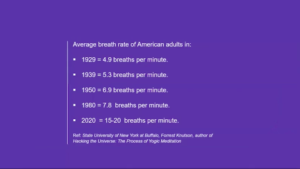
Our breath is the fundamental element of our life.Most people can comfortably hold their breath for 30 to 60 seconds. Some can safely hold it for as long 2 minutes. However, permanent brain damage usually begins after only 4 minutes without oxygen, and death can occur as soon as 4 to 6 minutes after that.Obviously, our breath is vital. Yet, we’re rarely conscious of it. Breathing is part of the autonomic nervous system, meaning that it is automatic and unconscious. The autonomic nervous system has two primary branches: The sympathetic nervous system and the parasympathetic nervous system.The sympathetic nervous system prepares the body for the “fight or flight” response during any potential danger. On the other hand, the parasympathetic nervous system inhibits the body from overworking and restores it to a calm and composed state. So, we can think of the sympathetic nervous system as the gas pedal and the parasympathetic nervous system as the brake pedal.The breath is really the quickest and most efficient way to affect and control the nervous system. By extending the exhalation longer than the inhalation, you generate parasympathetic activation and often a soothing, calming, steadying effect. This natural phenomenon is called respiratory sinus arrhythmia. As you exhale, the vagus nerve will slow down the heartbeat.So, consciously slowing your breath can ease the parasympathetic nervous system, which can slow your heart rate and promote feelings of calm.Studies have found that breathing practices can help reduce symptoms associated with anxiety, insomnia, post-traumatic stress disorder (PTSD), depression, and attention deficit disorder (ADD).Normal respiration rates for adults at rest range from 12 to 16 breaths per minute, according to Johns Hopkins. It should be noted that 12 breaths per minute amounts to one breath every 5 seconds. Exceeding 12 breaths per minute is a sign of quick and shallow breathing.Unfortunately, we breathe a lot faster than previous generations did, and it’s really not good for us. Most American adults now breathe at a rate of 15-20 per minute. Yet, any breath rate above 12 per minute activates the sympathetic nervous system (fight or flight). This means that most of us are in a constant state of fight or flight activation simply due to the way we breathe.
Scientists are finding that breathing at the rate of about six exhalations per minute can be especially restorative, triggering a relaxation response in the brain and body. Some people can reduce their respiratory rate to this level using slow, mindful breathing techniques.There is a direct relationship between respiration rate and heart rate. Exhalation – particularly when sustained longer than inhalation – slows your heart. Meanwhile, inhalation accelerates your heart. And the more your heart beats, the more respiration occurs. As the heart beats faster, it uses more energy and sends more oxygen to the body. For example, during exercise the respiratory rate will increase to about 40–60 breaths per minute.Breathing with your mouth, especially when you’re not exercising vigorously, is a sign of dysfunctional breathing.Nose breathing is more beneficial than mouth breathing, which is unnatural. Breathing through your nose can help filter out dust and allergens, boost your oxygen uptake, and humidify the air you inhale. Mouth breathing, on the other hand, can dry out your mouth, which may increase your risk of bad breath and gum inflammation.The nose produces nitric oxide, which improves your lungs’ ability to absorb oxygen. Nitric oxide also increases your ability to transport oxygen throughout your body, including inside your heart. It relaxes vascular smooth muscle and allows blood vessels to dilate.Nitric oxide is also antifungal, antiviral, antiparasitic, and antibacterial. Simply put, it helps the immune system fight infections.It is also believed that you absorb oxygen around 15 percent better when you exhale through your nose when compared to mouth breathing.So, breathing with your nose is preferable in many ways. Meanwhile, mouth breathing, as previously stated, is a sign of dysfunctional breathing.Inhaling with your chest is another common sign of dysfunctional breathing. If you notice that your chest is the first thing to move when you begin inhaling, it’s a sign that you’re engaging in shallow, upper chest breathing.A shallow or a quick breathing pattern is a sign that your diaphragmatic muscles may not be actively stabilizing your trunk, which can lead to poor posture and instability in your low back.Poor diaphragmatic control can cause the muscles in your chest and the front of your shoulders to become short and tight. If you find yourself slouching your head or shoulders forward, this can be a sign that you’re not activating your diaphragm when you breathe.You should be able to limit shoulder movement while breathing, keeping the shoulders from elevating. Elevating your shoulders when breathing causes upper chest breathing.Tight neck, chest, and shoulder muscles can cause shallow breathing. If you carry lots of tension in your shoulders and neck, this can be a sign that you engage in stressed and shallow breathing.Practice contracting your abdominal muscles as you breathe. Using your abdominals (part of your core) can help you breathe better. You should feel your abdominal muscles moving in and out as you breathe.A healthy breathing pattern allows your body to maintain a high metabolism and deliver oxygen to vital tissues. Shallow breathing increases both blood pressure and heart rate. In addition, if you breathe too fast or don’t inhale deeply enough, you can increase the pH of your blood, which can decrease the amount of blood getting to your brain and muscles, and result in less oxygen being released by the blood. This can make you feel tired and fatigued.So, though we typically take breathing for granted and pay little, if any, attention to it (unless we’re exercising), it really is a critical and fundamental element to good health and lower stress levels.The fact that slow, measured breathing can slow heart rate, promote feelings of calm, and help reduce symptoms associated with anxiety, insomnia, PTSD, depression, and ADD is all the reason we need to begin a regular, deliberate practice. Begin with the following:1. While standing or sitting, draw your elbows back slightly to allow your chest to expand.2. Take a deep inhalation through your nose for a count of four.3. Retain/hold your breath for a count of four.4. Using your belly muscles, exhale through your nose for a count of eight.5. Continue to breath like this for 2-5 minutes. See if you can eventually work your way up to 10 minutes.Utilizing this method should bring your breathing down to a rate of about six exhalations per minute, which scientists are finding to be especially restorative, triggering a relaxation response in the brain and body.Another useful technique is alternate nostril breathing, known as pranayama in India. This yogic technique also promotes relaxation and lowers heart rate.Alternate nostril breathing is best practiced on an empty stomach. Avoid the practice if you’re feeling sick or congested. Keep your breath smooth and even throughout the practice.1. Choose a comfortable seated position.2. After an exhale, use your right thumb to gently close your right nostril.3. Inhale through your left nostril and then close your left nostril with your middle or index finger.4. Release your thumb and exhale out through your right nostril.5. Inhale through your right nostril and then close this nostril.6. Release your finger to open your left nostril and exhale through this side.7. This is one cycle.8. Continue this breathing pattern for up to 5 minutes.9. Finish your session with an exhale on the left side.You can utilize these techniques any time you’re feeling stressed or anxious throughout the day. Try them both, or least one, every day. Naturally, you should discontinue these practices if you experience any feelings of discomfort or agitation. -

Here’s Why, Perhaps, You Should Be Supplementing With Vitamin D
Vitamin D is a fat-soluble vitamin that serves a number critical functions in the body. However, there’s a good chance you’re not getting enough of it.
Vitamin D plays an important role in immune function. Not only does vitamin D enhance our immune systems, it also prevents our immune systems from becoming dangerously overactive. An overactive immune system leads to many autoimmune disorders in which your body can’t tell the difference between your healthy, normal cells and invaders.
Additionally, a new study by researchers at University of South Australia finds that people with vitamin D deficiency are more likely to suffer from heart disease and higher blood pressure than those with normal levels of vitamin D. For study participants with the lowest concentrations of vitamin D, the risk of heart disease was more than double that seen for those with sufficient concentrations.
Vitamin D is also very important for people with joint pain, and research shows that people with low levels of vitamin D may indeed suffer more joint pain. In fact, vitamin D deficiency can cause subtle widespread pain that may be misdiagnosed as fibromyalgia and/or chronic fatigue syndrome, including symptoms like muscle and bone aching, fatigue and weakness, a lower pain threshold, and more acute soreness after exercise that is slower to resolve.
Though vitamin D is important for everyone, it is particularly vital for those who exercise vigorously and regularly. Vitamin D dramatically reduces muscle fatigue and studies show it decreases muscle recovery time by 20%. It can also reduce inflammation and increase muscle protein.
High levels of vitamin D in the blood are also linked with better fitness, according to research from the Virginia Commonwealth University School of Medicine. In the study, published in the European Journal of Preventive Cardiology, 20- to 49-year-olds with better vitamin D status also tended to have greater cardiorespiratory fitness, a measure of aerobic fitness often determined by measuring maximal oxygen consumption (VO2max) during exertion.
Lastly, vitamin D and calcium work together to protect your bones; calcium helps build and maintain bones, while vitamin D helps your body effectively absorb calcium. So even if you’re taking in enough calcium, it could be going to waste if you’re deficient in vitamin D. Ultimately, vitamin D is necessary for strong bones and it reduces the risk of fractures. If you don’t get enough vitamin D, you’re more likely to break bones as you age.
Though your body needs vitamin D to absorb calcium, you don’t need to take vitamin D at the same time as a calcium supplement.
But don’t forget magnesium! Vitamin D can’t be metabolized without sufficient magnesium levels, meaning vitamin D remains stored and inactive for as many as 50 percent of Americans. In addition, vitamin D supplements can increase a person’s calcium and phosphate levels even while that person remains vitamin D deficient.
Vitamin D deficiency is more common than once suspected. Nearly 1 in 4 people in the US have vitamin D blood levels that are too low or inadequate for bone and overall health, according to the National Institutes for Health.
The daily recommended amount of vitamin D for adults is 600 IU, but the upper limit is 4,000 IU. Some studies suggest that a higher daily intake of 1000–4000 IU is needed to maintain optimal blood levels. Going above 4000 IU may be toxic and should only be done under the supervision of a doctor or Registered Dietician.
There are two major types of vitamin D:
• Vitamin D2 (ergocalciferol) – which is synthesized by plants and is not produced by the human body
• Vitamin D3 (cholecalciferol) – which is made in large quantities in the skin when sunlight strikes bare skin. It can also be ingested from animal sources
Evidence suggests that vitamin D3 is approximately three times more effective at maintaining serum concentrations because the binding protein has a higher affinity to vitamin D3 than vitamin D2. This allows vitamin D3 to reside in the circulatory system longer and increase the concentration to sufficient levels more quickly.
Most over-the-counter vitamin/multivitamin preparations use vitamin D3.
Since vitamin D is fat-soluble, it is better to choose oil-based supplements or take it with food that contains some fat.
Good dietary sources include fatty fish, fish oils, egg yolk, butter and liver. All of these contain fat.
Vitamin D is special: It’s the only vitamin that we can make ourselves—our bodies create vitamin D in the form of a hormone when we process sunlight. When your skin is exposed to sunlight, it makes vitamin D from cholesterol. That’s why getting enough sunlight is very important for maintaining optimal vitamin D levels.
Factors that impact the ability of the body to synthesize vitamin D through the skin include: time of year, time of day, the presence of clouds and/or smog, skin melanin content, the application of sunscreen, and geographic latitude. For example, residents at 42° N latitude or higher are unable to synthesize vitamin D via the skin during the winter months (from November through February).
Assuming your diet is decent, if there’s only one supplement you should take for your health, it’s probably vitamin D.
-

What Is Your Heart Rate Monitor Really Telling You?
Wrist-based heart-rate monitors are all the rage the days; many of my clients wear them to the gym each day. Yet, aside from the fact that these wrist-based heart-rate monitors are less accurate than the chest-strap versions, especially as you work harder (some models can be off by several beats per minute according to new research), they don’t offer users any perspective.What does it truly mean if your heart rate is 135, 145 or 155 beats per minute? Unless you know your maximum heart rate (MHR) and what percentage of it you’re working at, that info is useless.The well-known calculation of 220 minus your age to calculate MHR has long been known to be quite inaccurate. Yet, unfortunately, it remains a common standard for maximum heart rate calculations. For example, a 40-year-old person would subtract 40 from 220, indicating a maximum heart rate of 180 beats per minute.Known as the Fox formula, this classic maximum heart rate calculation was developed for untrained healthy adult males, though it was also considered valid for untrained healthy adult females and children.The Fox formula originated in the late 1960s, when William Haskell, an exercise physiologist who is now at Stanford University, and Sam Fox, a cardiologist, came up with a formula to determine the maximum heart rates of people who were having treadmill stress tests for heart disease.However, it was not really a scientific effort. Rather, it was a suggestion, based on a decidedly non-random and small sample of people. When Haskell and Fox proposed the formula, they never intended to give an absolute number for athletes or people who are used to exercising vigorously.Yet, it’s now recognized that that an individual’s maximum heart rate can vary widely from what that formula predicts — by as many as 30 beats per minute higher or lower.In essence, the Fox formula is as likely to be wrong as it is to be right. In fact, this formula’s reliability is 0.51. In other words, it’s reliable about half the time.The Tanaka formula for maximum heart rate is more accurate. It was developed based on studies of thousands of test subjects, can be used for all age and gender groups, and is considered to be more reliable than the Fox formula.• Fox: Maximum Heart Rate (beats/minute) = 220 minus Age• Tanaka: Maximum Heart Rate (beats/minute) = 208 minus (0.7 x Age)Using the Tanaka formula, a 40-year-old person would multiply 40 by 0.7, which equals 28. Then they would subtract 28 from 208, indicting a maximum heart rate of 180 beats per minute. You may remember that this is the same figure determined by the Fox formula. However, this is a coincidence, not the norm.For example:50-year-old• Fox formula: maximum heart rate = 170 (220 minus 50)• Tanaka formula: maximum heart rate = 173 (208 minus 35)30-year-old• Fox formula: maximum heart rate = 190 (220 minus 30)• Tanaka formula: maximum heart rate = 187 (208 minus 21)Ok, so now you can calculate your maximum heart rate. What does that mean? How does that help you?Reaching your MHR doesn’t mean your heart will explode! And it doesn’t guarantee a heart attack either. People train at this level for brief periods during their workouts every day, and they do it again and again and again.Most well-trained, fit people can maintain their maximum heart rate for just 1-2 minutes. Yet, world-class athletes may sustain their MHR for 3-4 minutes. On the other hand, a person who is quite out of shape may only be able to sustain their maximum heart rate for about 10 seconds or so.Yet, the ability to sustain MHR is just one measure of your fitness. How quickly your heart is able to recover from high-intensity exercise, during periods of lower heart-rate work or rest, matters a lot. The ability to recover (lower) your heart rate quickly is also an important measure of fitness.Familiarity and experience with exercise matters. Someone who works out regularly may be very accustomed to briefly pushing their heart rate to 85, 90 or even 100 percent. Yet, someone who is sedentary may find that pushing their heart rate to 70 percent is excruciating and scary. It’s all about perspective.It’s important to recognize that you can’t improve or increase your maximum heart rate with exercise. MHR is determined by genetics and age; as we get older, our MHR declines. Furthermore, not every 30-year-old will have the exact same maximum heart rate, nor will all 40-year-olds or 50-year-olds, etc. The calculation is an approximation, not a scientific assurance.What’s important is not what your maximum heart rate is, but what heart rate you can sustain for an extended period. Someone with a MHR of 190 isn’t necessarily more fit than someone with a MHR of 180. Person A, with the 190 MHR, may only be able to sustain 70 percent of that. Meanwhile, Person B, with the 180 MHR, may be able to sustain 85 percent of that. Person B is more fit, which is what matters — not an age-determined MHR.It’s important to remember that your heart rate has variability when you’re exerting yourself, such as when you’re working out. Most exercisers can’t simply pin their heart rate at 70, 80 or 90 percent of MHR. That’s because heart rate fluctuates throughout exercise. Your heart rate may rise quickly at the onset of a workout, then level out at a lower number. As you continue to workout, it may, over time, begin to climb again. And the harder you work, the more your heart rate may continue to rise throughout the workout.This is why you should pick a target heart-rate zone for your workouts, so that it doesn’t go to low or too high.The target heart rate during moderate intensity activities is about 50-70% of maximum heart rate, while during vigorous physical activity it’s about 70-85% of maximum, according to the American Heart Association.Of course, you can push your heart rate higher for brief periods and then allow it to recover. This is the essence of high-intensity interval training (HIIT), which is used not only by athletes but also by older folks and those with chronic conditions, such as diabetes or heart disease.Lastly, another important determinant of fitness is resting heart rate. The average resting heart rate is usually between 60 and 80 beats per minute, though it can even be as high as 100 bpm. Yet, some athletes have resting heart rates as low as 30 to 40 bpm. So, exercise can indeed lower resting heart rate, and this is important because every heart has a pre-determined number of beats from birth. The slower we get there, the better!In 2013, a team of Danish researchers published16 years of work on just under 5,200 men in the journal BMJ Heart. The researchers determined that higher resting heart rates correlated with a greater chance of dying.Those participants who ranged between 71 to 80 beats per minute had a 51 percent greater chance of dying prematurely than those with a resting rate of under 50 beats. At 81 to 90 beats per minute, that risk was double. And over 90, it tripled.So, there’s a lot more to the heart-rate story than just the number flashing on your watch.In conclusion, if you’re using a heart rate monitor while working out, it’s important to calculate your maximum heart rate, and to know your target heart-rate zone, as well as your resting heart rate. Once you know all of these things, then you’ll have some context for that heart rate number popping up on your watch. -

Six Reasons Why Water is So Critical to Your Health
Water is the single most critical nutrient to your body. Therefore, drinking sufficient water is essential to your health and, because it is excreted by the body in various ways all day long, it’s important to replace it throughout the day. When your water intake does not equal your output, you become dehydrated.
Fluid losses occur continuously — from skin evaporation, breathing, urine and stool — and these losses must be replaced daily to maintain good health. Even mild dehydration can cause daytime fatigue.
I’ve long been a proponent of drinking a tall glass of water upon waking each morning, before breakfast or even coffee. Caffeine is a diuretic, meaning it increases your urine output. For roughly every 100 milligrams of caffeine you consume – the approximate amount in one cup of coffee or two cups of black tea – you should drink an additional cup of water to compensate for the drug’s diuretic effect (yes, caffeine is a drug).
Your body also excretes water while you sleep, through perspiration and breathing. So even if you’re not a coffee drinker, this lost water should be replaced immediately each morning.
Fluid losses are heightened during strenuous exercise, in warmer climates, at high altitudes and in older adults, whose sense of thirst may not be as discerning.
Here are six prime reasons to make sure you’re drinking enough water every day:
1. Drinking Water Helps Maintain Every System in Your Body
Your body is composed of about 60% water. The lungs are about 83% water; the muscles and kidneys are 79% water; the brain and heart are composed of 73% water; and even the bones are 31% water.
Your body fluids are critical to digestion, absorption, circulation, transportation of nutrients, creation of saliva and maintenance of body temperature.
Body fluids transport waste products in and out of cells. The main toxin in the body is blood-urea nitrogen, a water-soluble waste that is able to pass through the kidneys to be excreted in the urine.
When you’re getting enough fluids, urine flows freely, is light in color and free of odor. When your body is not getting enough fluids, urine concentration, color and odor increase because the kidneys trap extra fluid for bodily functions.
2. Water Can Aid Weight Loss
Water is a great appetite suppressant because it makes you feel fuller. Drinking a glass of water before meals can curb your appetite, helping you eat less without feeling hungry. Since water is 100% calorie-free, substituting it for higher-calorie beverages can help with weight loss.
Water also helps you burn more calories. The amount of calories burned by the body at rest is known as resting energy expenditure. In adults, resting energy expenditure has been shown to increase by 24–30% within 10 minutes of drinking water. This lasts at least 60 minutes. The effects are heightened by cold water. When you drink cold water, your body uses extra calories to warm up the water to body temperature.
Two separate studies showed that increasing water intake to over 1 liter (34 oz) per day resulted in an extra 4.4 pounds of weight loss over a 12-month period. That’s roughly 17,000 additional calories burned annually.
Water also increases the body’s ability to metabolize stored fat. Inadequate water intake can cause fat deposits to increase, while sufficient water intake can actually reduce fat deposits.
3. Water Helps Build Muscles
Muscle cells need to maintain a balance of fluids and electrolytes to avoid fatigue, weakness and shrinking. In short, inadequate fluid intake can cause performance to suffer. Again, your muscles are 79% water.
Research has shown that when cells lose water, protein production can slow down and protein breakdown can speed up. This could hamper post-exercise muscle protein synthesis. Greater muscle breakdown results in less new-muscle growth.
Aerobic performance, such as running or cycling, can decrease when body weight drops just 2-3% as a result of dehydration. Power generation can also become compromised with the loss of just 3% in body weight.
Researchers determined that when test subjects were dehydrated by 3%, total repetitions performed were significantly lower. The subjects also perceived the exercises as more difficult and they needed longer for their heart rates to recover.
4. Water is Critical to a Healthy Digestive Process
Adequate water helps to maintain a normal digestive tract. It helps to properly metabolize food and transport nutrients.
Water also helps to maintain normal bowel function; adequate hydration can prevent constipation.
5. Water is Vital to Healthy, Good-Looking Skin
Your skin contains 64% water. Dehydration makes your skin look dry and wrinkled. Proper hydration may help prevent wrinkles and may even decrease some. Being well hydrated can also help rid the skin and body of toxins.
Healthy, well-hydrated skin also easily absorbs water from moisturizers and creams, increasing the benefit of skincare products.
6. Sufficient Water Intake is Important for Your Heart
Your heart pumps about 2,000 gallons of blood a day and it is able to pump blood more easily when well-hydrated, allowing it to work more easily and efficiently. Water also helps maintain blood pressure. Dehydration can cause blood to become thicker, increasing blood pressure.
Dehydration causes strain on your heart because your blood volume decreases when you are dehydrated. This results in your heart beating faster and working harder. Water delivers oxygen throughout the body. Blood, which is more than 90 percent water, carries oxygen to all parts of the body.
How Much Water Should You Drink?
The National Academy of Medicine (NAM) recommends a total daily water intake of 3.7 liters (15 cups) for the average adult male and 2.7 liters (11 cups) for the average adult female.
Water needs vary tremendously, according to the individual, and are dependent on factors such as temperature, altitude and activity level. If you’re exercising, you need more water than when you’re sedentary. People who exercise regularly may need more daily water intake than those who are not very active.
The American College of Sports Medicine’s guidelines recommend that people drink about 17 ounces of fluid roughly two hours before exercise. During exercise, they recommend that people start drinking fluids early, and drink them at regular intervals to replace fluids lost by sweating.
Eating more fruits and vegetables can aid hydration due to their high water content. About 20% of our fluid intake comes from foods. Having a beverage with every snack and meal will increase hydration.
Drink plenty of water. Eat healthy. Sleep plentifully. Stay healthy.
-

Train to Maintain Strong, Healthy, Stable Shoulders
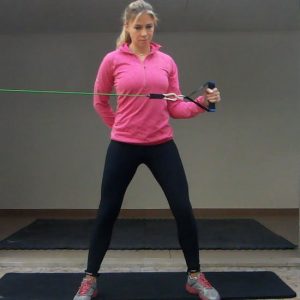
One of the consequences of modern living is that many people have poor posture — most notably, rounded, internally rotated shoulders. This poor posture results in pain, limited movement, and also diminished, shallow breathing, which leaves people oxygen deprived and tired.Everyday things — such as using a smartphone, using a computer, sitting for extended periods, writing, drawing, cooking, driving and carrying heavy objects (including babies and children) — can all lead to rounded shoulders (aka, poor posture) and poor shoulder function.Being hunched forward not only affects appearance (ever see a clothing model or a mannequin with slumped shoulders?), it also increases stress on the shoulder joints and can cause pain around the neck and upper back.A person standing with their arms at their sides has a natural inward arm rotation of about 15 degrees. This is the neutral position of the arm. Problems arise when the arm rotates too far inward, disrupting the shoulder and causing joint pain and injury. Indeed, excessive internal arm rotation is one of the most common musculoskeletal imbalances of the shoulder girdle.Exercises that focus on external rotation of the arm at the shoulder socket (the glenohumeral joint) can help alleviate rounded shoulders, while building strength and stability in the joint.The rotator cuff is a very critical muscle group, but it is also very vulnerable. Many middle-aged and older people have very poor shoulder function because they have a faulty rotator cuff. This is usually attributed to weak rotator cuff muscles (particularly the external rotators) and relatively strong deltoid muscles.In addition to rotating the humerus (upper arm), the rotator cuff is also responsible for stabilization of the humerus inside the shoulder joint.There’s an old axiom about joints: the more stable they are, the less mobile they are (think of your elbow). Conversely, the more mobile they are, the less stable they are (think of your shoulder).One of the primary problems with the shoulder is that it is a highly mobile ball-and-socket joint. Another problem is that the internal rotators of the shoulder are much bigger and stronger than the external rotators. Consequently, the external rotators are typically the weakest link in the shoulder joint.The rotator cuff muscles predominantly stabilize the glenohumeral joint, but also contribute significantly to movement.The four rotator cuff muscles are:• Supraspinatus (the most frequently torn tendon in the shoulder)• Infraspinatus• Teres minor• SubscapularisThe external rotators of the shoulder are the infraspinatus, teres minor and posterior deltoid, the latter of which is not part of the rotor cuff. So, just two of the four rotator cuff muscles perform external rotation of the upper arm.Subscapularis is the main internal rotator of the shoulder. It is also the largest and strongest cuff muscle.The other internal rotators are the latissimus dorsi (the widest muscle in the human body), pectoralis major (a large, powerful muscle), teres major and anterior deltoid.So, the internal rotators outnumber the external rotators five to three.Given the size and strength of the internal rotators, they easily overpower the smaller (and fewer) external rotators. For this reason, regularly strengthening the external rotators is critical to good shoulder health and injury prevention.
However, since the external rotators of the shoulder joint are located on the posterior aspect (back) of the body, many people neglect them when training (out of sight, out of mind).Regular and consistent strengthening of the latissimus dorsi and pectoralis major can result in a shortening and tightening of these internal rotators and, over time, a weakening of the external rotators, particularly if they are ignored. This leads to dysfunctional, imbalanced shoulders.A sound exercise program should include exercises that strengthen the external rotators, which will create joint balance and lessen the chances of shoulder injury. Ideally, your exercises should stabilize, strengthen and protect your shoulder joints, giving you pain-free movement and healthy, highly functional shoulders. -

Walking Has Many Benefits, Even for Runners
While running is more physically demanding than walking, the latter is still a good form of exercise and a great recovery tool for runners. Running the same speed and distance each day can lead to plateauing. Walking, which is lower impact, can allow your body to recover and enable better results over the long term.Running will lead to greater cardiorespiratory fitness than walking, as well as more calories burned in an equal period of time. However, walking is a better alternative for people with ankle, knee or back injuries (including recent surgeries), as well as for people who are obese. Walking puts less stress on joints and can reduce the pains associated with running.Like running, walking can improve heart health, improve circulation and improve posture. Walking can also help reduce the risk for high blood pressure, high cholesterol, diabetes, heart disease and even cancer.The key is to walk with a sense of purpose by engaging in at least moderate-intensity walking. Walking can even be a form of interval training. By repeatedly raising and lowering your speed and (if you are on a treadmill) the incline, you can also raise and lower your heart rate intermittently, which is a great calorie burner. You can even intersperse short runs, of say a block or two or a minute or two, into your walks.Walking uphill or on an incline places more demand on the body, particularly the leg muscles. You’ll notice it in your heart rate, as well. The higher you set the incline on the treadmill, the more you activate your glutes, quadriceps and calves, and the more energy you use. That means more calories burned.One common mistake that people make when using a treadmill is holding onto the handrails. This takes away from muscle engagement and the energy required to walk or run at the level you set. Remember, there are no handrails when you walk outside and you manage that quite well!Like running, walking can clear your mind, improve mood,nd alleviate anxiety and depression.So, put on some comfy athletic shoes, get hydrated and get in motion. -

Strength Training Can Prevent Falls
According to a new report from the CDC, 1 in 4 Americans age 65 and older report falling each year, which accounts for the largest percentage of unintentional deaths.There were 18,000 fall-related deaths in 2007 and that rose to 30,000 in 2016. Over that span, the rate of deaths increased by an average of 3 percent annually. Moreover, there are 3 million fall-related emergency room visits annually. This is a worsening problem that needs to be addressed.Being on multiple medicines, including blood thinners, can contribute to falling. However, reduced physical activity, plus age-related changes in gait and balance, also contribute to this problem.Balance and strengthening exercises can help prevent falls. Exercise makes your muscles stronger and more flexible, and it can also improve your balance.A comprehensive 2016 analysis by the British Journal of Sports Medicine found that exercise alone reduces the risk of falls in older adults by an average of 21 percent. What’s more, working out for more than three hours per week was linked to a 39 percent reduction in falls.As we age, our muscle mass declines. The way to thwart this is by performing resistance exercises. According to one Age and Ageing review, 1 in 3 adults age 60 and older suffer from severe muscle loss, called sarcopenia.The strength of the legs, hips and core are all critical to mobility. The loss of muscle mass and strength in the arms and upper body can also make it difficult to catch yourself if you trip and begin to fall.Focus on your body’s largest, most powerful muscle groups, such as your glutes, quads and hamstrings, while also performing single-leg and balancing exercises.A qualified personal trainer can help you perform the necessary exercises to strengthen your legs, hips, core, low back and upper body, as well as improve your coordination and mobility.Don’t wait until you (or your parents) begin falling to act. Be proactive and preventative.Get in Motion. Stay in Motion. -

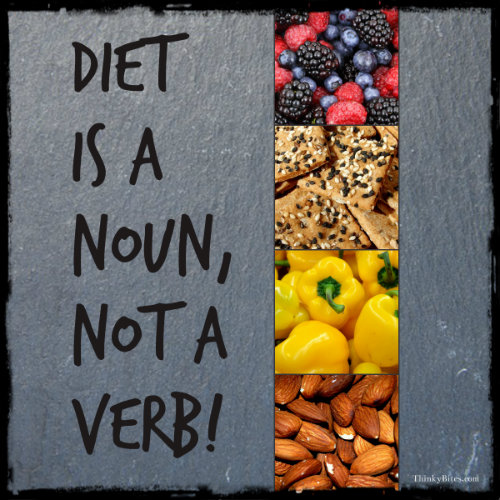
Diet is a Noun, Not a Verb
Like fitness, your diet is a lifestyle. It should be ongoing and permanent, not a temporary shift to achieve a quick result. Quick fixes always lead to short term results.
Think of your diet as a noun, not a verb. You have a diet; you don’t “go on” or “start” a diet.Every action has a reaction and anything you start you can also stop. You’re much less likely to suddenly end your lifestyle, but you can always abruptly end a diet and undo any of the good that has been achieved.Instead of dieting to lose weight, choose lower-calorie, nutrient-dense foods that will both nourish and fuel your body. Extreme calorie restriction can ultimately lower your metabolism, as your body seeks to preserve stored calories. Deprivation can lead to frustration and bingeing.Ask yourself how the foods you’re putting into your body are serving you. Are they nourishing your body and improving your health? Are they doing your body good?All calories are not equal. Some foods are more nutritious than others. One-hundred calories of vegetables are not the same as 100 calories of chips or cookies.A healthy diet is the fuel for your exercise program. Exercise, in turn, will help you gain strength, build fitness and increase your metabolism.Improving your fitness and wellness should be the goal; weight loss may be a byproduct of that. Fitness first!Diet and exercise aren’t just about changing your body; they’re about changing your life!