Category: exercise
-

Good Habits Can Have a Domino Effect
We all have various reasons that we work out, assuming we do so at all. For some, it’s to relieve stress and anxiety. Some may feel a great sense of pride and accomplishment afterwards. For others, working out may be a vanity project that provides a sense of confidence and the ability to fit into tight jeans or proudly wear a tank top or a backless dress.Yet, health outcomes, not simply appearance, should be your main motivation. It’s well established that the health benefits of exercise go beyond the physical. Once you make exercise part of your routine, you may notice a host of psychological benefits, such as feeling more energized, less stressed, and sleeping better.As you begin to notice how much better exercise makes you feel, the more you’ll want to do it regularly. At that point, exercise becomes a habit. What’s most important is to perform the activities you really enjoy, which will help you adhere to your program.It’s said that old habits are hard to break and new habits are hard to form. This is especially true with exercise. If you’re not in the habit of exercising, remaining physically inactive is effortless. To create the habit of exercising, however, takes a lot of resolve, determination and effort.The more consistent an action is, the more likely it is to become a habit. This means that exercising every day is more likely to result in habit formation. One useful idea is to schedule your exercise for a given time each day, as you would with a personal trainer. Accountability is critical to maintaining your schedule and forming a habit.As Charles Duhigg, author of The Power of Habit notes, “When people start habitually exercising, even just once per week, they start changing other, unrelated patterns in their lives, often unknowingly. They often start eating better, becoming more productive, smoking less and feeling less stressed. It’s not completely clear why. But, for many people, exercise is a keystone habit that triggers widespread, positive change.”Researchers asked some study participants to write down what they ate once a week. This keystone habit, food journaling, created a structure that helped other habits to flourish. Six months into the study, these participants had lost twice as much weight as the other study participants.Unfortunately, 42 percent of Americans are obese, according to the CDC, and another 30 percent or so qualify as overweight. So, roughly three-quarters of our population has an unhealthy bodyweight. Because of this, many people view exercise solely as a means of weight loss. But there’s a whole lot more to it than that. The mental and emotional components of exercise cannot be emphasized enough.Exercise has been shown to increase grey matter in the brain, according to research published by the Mayo Clinic. Exercise also promotes brain plasticity by stimulating the growth of new connections between cells. Consequently, exercise improves cognitive ability and memory.Furthermore, exercise releases chemicals, such as endorphins and serotonin, that improve your mood. As noted, exercise not only enhances self-esteem, it also reduces anxiety and depressed mood.“There’s good epidemiological data to suggest that active people are less depressed than inactive people. And people who were active and stopped tend to be more depressed than those who maintain or initiate an exercise program,” says James Blumenthal, PhD, a clinical psychologist at Duke University.Yet, there’s no denying the impact that exercise can have on our physical health and our ability to function well, aka, perform our activities of daily living.Don’t wait until your doctor tells you to exercise! At that point, too much time will have been lost.More than 1-in-3 adults, about 92.1 million people, have at least one type of cardiovascular disease, which is preventable.In fact, many forms of chronic illness are preventable. According to the CDC, the health-risk behaviors we can change include: lack of exercise/physical activity, poor nutrition, tobacco use and excessive alcohol use. These four behaviors cause much of the illness, suffering and early death related to chronic diseases and conditions. In essence, they are bad habits that can be corrected.It’s important to remember that health is not just about food and exercise. Everyone would benefit from things such as meditation, learning a new skill, developing a new hobby, and/or growing your social network. Each of these things can make you a healthier person in measurable ways.If you’re new to exercise or haven’t done it in a long time, start slowly. Don’t take the attitude that you can get fit today or even this week. Allow your body time to adjust to the demands you’re placing on it. Your exercise routine should be progressive, growing in either intensity or duration as your fitness level gradually improves.The physical effects of exercise — such as weight loss, lower blood pressure or a lower resting heart rate — take time and patience; you may not see your numbers move for weeks to months.The mood boost from exercise, however, is often immediate, offering near-instant gratification. Alleviating mood disorders, such as anxiety or depression, may take longer, but the mental and emotional effects of exercise are often immediately tangible.The most important takeaway is that good habits can have a domino effect, with one healthy change leading to another and so on. After committing to a few healthy acts, we’re less likely to back-step and commit unhealthy acts. After all, no one wants to undermine their own progress.Start with the easiest change you can think of; pick the low hanging fruit first. Once you’ve created a healthy daily habit that lasts a couple of weeks, add another easy-to-achieve step. View these changes as rungs on a ladder; take them one step at a time. Be consistent and be progressive. But don’t take on too much, too soon.Small victories lead to a sense of pride, achievement and accomplishment. These are all empowering and rewarding feelings. Ultimately, one good change will lead to another. -

Exercise to Be Happier and More Fulfilled
There are many reasons that people exercise. In my view — and this is what I try to impart to my clients — it’s not about having the best butt or bigger biceps; it’s about being a happier, more fulfilled, more self-satisfied person.
I’ve been in the been in the business of health, wellness and fitness for over 20 years, and I have to admit that my definition of health and wellness has certainly broadened over the years. Once upon a time, if you asked me to define health, I would have listed these parameters: an absence of chronic disease (i.e. coronary artery disease; hypertension; metabolic syndrome; diabetes, etc.), a healthy resting heart rate, low triglycerides, and an absence of obesity.However, over the years, I’ve come to recognize that physical wellbeing is only part of the health equation. Mental and emotional wellbeing are vitally important, and our social wellbeing plays a significant role in both.First, let’s define these terms:Physical well-being relates to vigor and vitality, feeling very healthy and full of energy.Mental well-being includes being satisfied with one’s life; balancing positive and negative emotions; accepting one’s self; finding purpose and meaning in one’s life; seeking personal growth, autonomy and competence; believing one’s life and circumstances are under one’s control; and generally experiencing optimism.Social well-being involves providing and receiving quality support from family, friends and others.When assessing overall wellbeing, it’s important to assess: the quality of our relationships; our positive emotions and resilience; whether we’re realizing our potential; and our overall satisfaction with life.Though there are many factors that can contribute to our overall wellness, exercise is critical. There is abundant scientific research showing that exercise improves mood and makes participants happier.Exercise promotes chemicals in the brain that improve your mood and make you more relaxed. Specifically, the brain releases feel-good chemicals called endorphins throughout the body. Physical activity also reduces anxiety and depressed mood.Exercise provides numerous other psychological benefits, such as better sleep, reduced stress, improved self-esteem and greater confidence.There are so many behaviors that can lead us to feelings of guilt: eating too many sweets or too much junk food; overeating in general; drinking too much; smoking; drug use; sleeping too little; being sedentary; not exercising, etc. With any of the aforementioned, it’s easy to say afterward, “I shouldn’t have done that.” Regrets are not fun.But, other than the rare instance of injury, no one ever finishes a workout and says, “Man, I shouldn’t have done that.” Nobody feels guilty after a workout.There is an undeniable positive-emotion component to exercise. It makes us feel like we did something very worthwhile for ourselves, when so many of our other behaviors can make us feel unworthy.Many adults may feel that their lives are in service to others: their kids, their spouse, their aging parents, their boss, etc. When we exercise, we feel that we are in service to ourselves; it’s our time for ourselves.Regular exercise is a great confidence and morale booster. You don’t necessarily need to aim for a particular weight-loss goal. Just aim for just feeling better about yourself, physically and emotionally.Exercise even helps your brain grow new neurons. In this process, called neurogenesis, new neurons (brain cells) develop in the hippocampus, the brain region responsible for learning information, storing long-term memories, and regulating emotions.Exercise also promotes brain plasticity by stimulating growth of new connections between cells in many important cortical areas of the brain.Yes, exercise leads to a happier, healthier brain!A regular exercise program may also have a domino effect, leading you to other healthier habits, such as eating more whole foods. Those two behaviors, in tandem, will ultimately change your physique, but they will also make you feel better physically and mentally. Everyone would feel better if they knew they were taking positive steps in their lives and working on self-improvement.So, don’t set a specific weight-loss target or make sculpted arms or chiseled abs your goal. Simply set a goal to feel happier, more positive and better about yourself. Exercise can serve those agendas.What better goals could anyone have? After all, there’s so much more to exercise than just how you look. -

Here’s Why Rotational Exercises Are So Critical
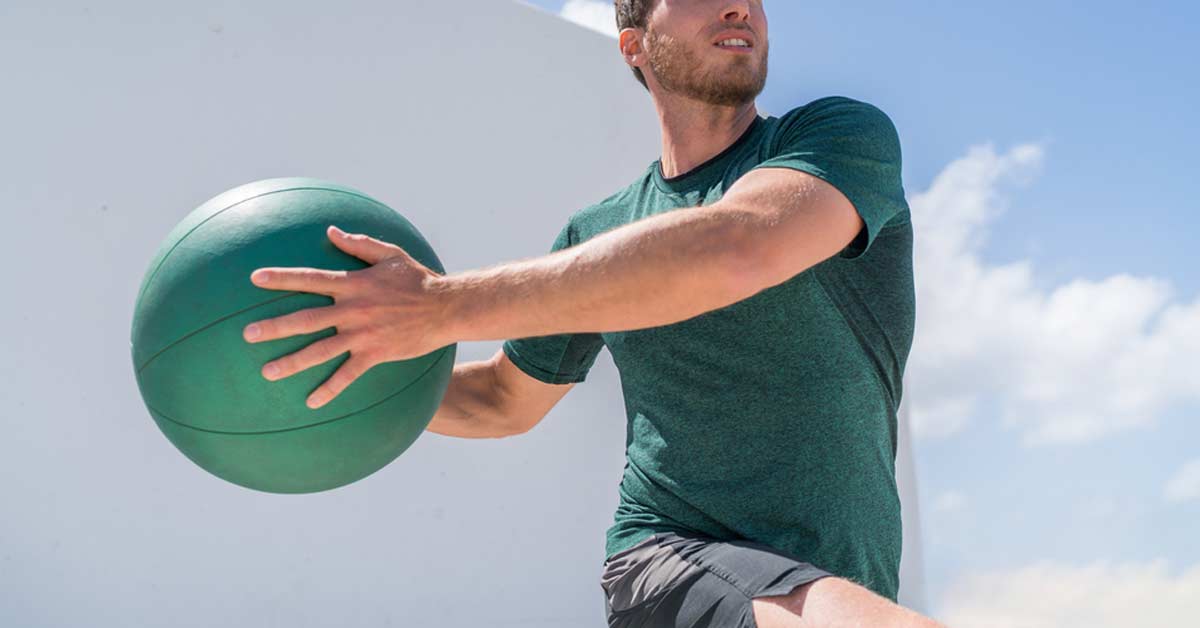
Look around any gym and you’ll see workout enthusiasts performing some very common exercises, such as the bench press, shoulder press, pull downs, rows, bicep curls, squats and lunges, for example. However, all of these exercises occur in just two planes of motion: sagittal (mostly) and frontal.Yet, human movement occurs in all three planes of motion: sagittal, frontal and transverse. Nevertheless, many people forget about or ignore the transverse plane, which is ill-advised. In fact, it is the most overlooked plane of motion.Let’s quickly examine the three planes of movement:The sagittal plane divides the body into left and right halves, using an imaginary line. Any forward or backward movement occurs in the sagittal plane.The frontal plane divides the body into front and back halves. Any lateral (side) movement occurs in the frontal plane.Last, but certainly not least, the transverse plane divides the body into superior (upper) and inferior (lower) halves. Rotational movements, such as spinal and limb rotation, occur in the transverse plane.Certain activities — such as swinging a golf club, a baseball bat or a tennis racket and throwing a punch, for example — generate spinal rotation in the transverse plane.Exercises that focus on rotation and anti-rotation are critical to good spinal health and stability. Anti-rotation exercises create stability through the core, without moving at the spine. In essence, these exercises create the necessary strength to prevent trunk rotation from occurring when it shouldn’t.One of the main functions of the core is to stabilize the spine and pelvis, which enhances power transfer and reduces shear loading on the spinal disks. Ultimately, a strong and functional core reduces injuries by stabilizing the spine.On the other hand, a weak core leads to general weakness. The point of having a strong core is not have “ripped abs.” The point is to have greater strength and stability when performing all functional, daily movements and exercises.For example, the limiting factor when performing a standing cable chest press is a lack of core strength and stability, not a lack of chest and shoulder strength.Human movement is a complex interplay of all three planes of motion, so rotational training shouldn’t be an afterthought.Exercises such as the side plank and bird dog are fundamental to any good workout program. There are even more advanced exercises that can be be added to your program over time.Your trainer or strength coach should be incorporating rotational training into your program. Regardless of your fitness level or goals, your trainer must understand the importance of transverse-plane movement to help you maximize your performance and to reduce the chance of injury during your day-to-day life.If you need assistance with this, I can help. The functional training programs I utilize place great emphasis on training in the transverse plane. This will help build your core strength, stabilize your spine and improve your ability to move well.Get in Motion. Stay in Motion. -

Your Mighty Mitochondria
The benefits of exercise are numerous and they extend all the way down to the cellular level.
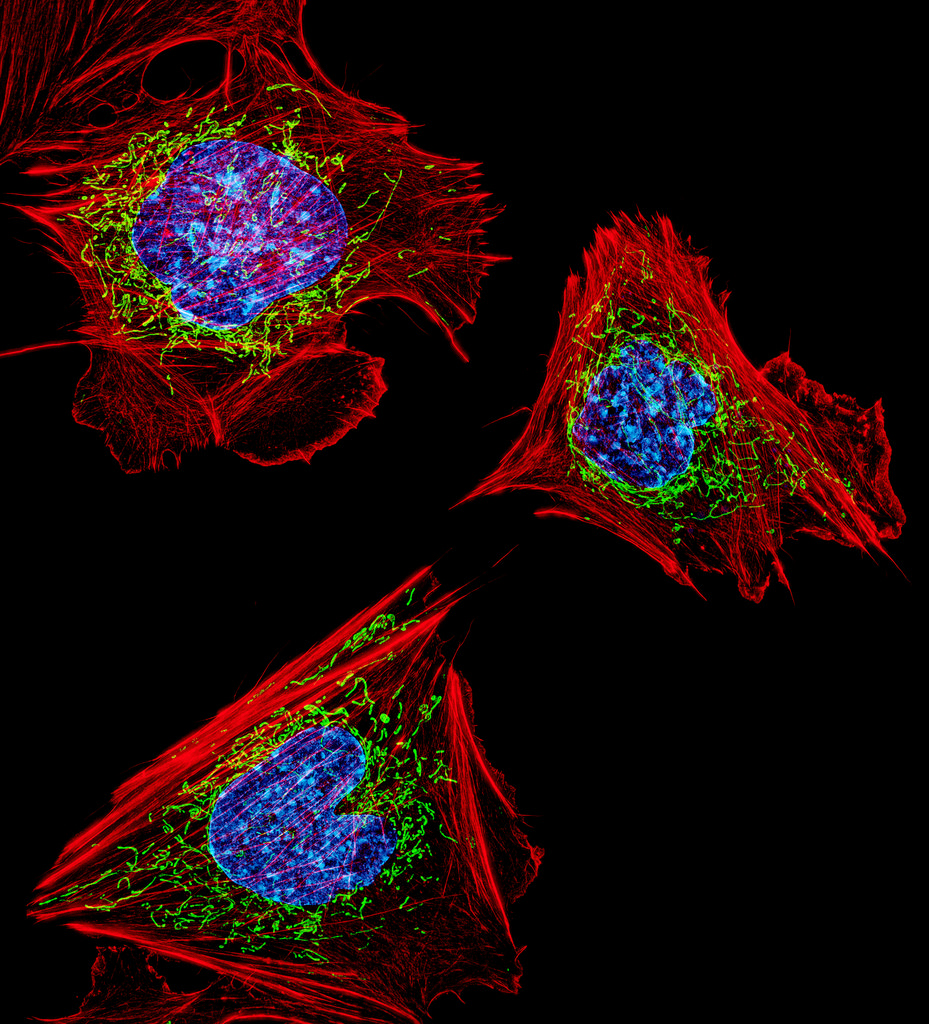
Mitochondria are often referred to as the powerhouses of the cell. They absorb nutrients, break them down and create energy-rich molecules for the cell, a process known as cellular respiration.
In essence, mitochondria convert chemical energy from the food we eat into an energy form that the cell can use. Mitochondria generate heat, a process known as thermogenesis, and they also store calcium, which is vital for a number of cellular processes, including proper muscle function.
Mitochondria float freely throughout the cell. Some cells have several thousand mitochondria, while others have none. Muscle cells, which need lots of energy, are loaded with mitochondria. For example, about 40 percent of the cytoplasm in heart muscle cells is made up of mitochondria.
It is well established that exercise increases the formation and function of skeletal-muscle mitochondria. Research indicates that exercise even increases brain mitochondria. The more you exercise, the more mitochondria you’ll make. Scientists say that improved mitochondrial function is a major factor in exercise-associated health benefits, including prevention of chronic diseases like cardiovascular disease and diabetes.
The ability of cells to create additional mitochondria to deliver extra energy is particularly important for working muscles. Mitochondria generate the majority of our adenosine triphosphate (ATP), the cellular fuel that powers all of our metabolic processes.
So, the more mitochondria you have, the more ATP your body produces, which creates a greater capacity for repeated muscular contractions, such as during exercise. Increased muscle mitochondria increase resistance to fatigue and improve endurance, allowing for better performance and longer bouts of exercise. It also allows for greater fat-burning capacity.
Yet, as we age, the capacity of mitochondria to generate energy slowly decreases. The good news is that physical activity manages to reduce aging on a cellular level.
Studies have shown that exercise increases mitochondrial capacity and muscle growth (hypertrophy). Current research indicates that high-load resistance exercise can stimulate the creation of muscle mitochondria and improve their function.
High-intensity interval training (HIIT) has proven to be particularly effective at increasing mitochondria in muscle cells. In the simplest sense, the harder you work out, the more mitochondria you create.
A recent study at the Mayo Clinic found that HITT causes cells to make more proteins for their mitochondria and their protein-building ribosomes, effectively stopping aging at the cellular level. This discovery is the closest science has ever come to discovering the “Fountain of Youth.”
As Sreekumaran Nair, senior author of the study, said, “These things we are seeing cannot be done by any medicine.”
“There are substantial basic science data to support the idea that exercise is critically important to prevent or delay aging,” said Nair. “There’s no substitute for that.”
However, you need to remain committed to your exercise program. Your mitochondrial levels will quickly decrease when you stop exercising. In fact, they return to normal levels within about a month.
Get in Motion. Stay in Motion.
-

The Bad and Good News About Fat Cells
The CDC reported in 2016 that obesity affected about 93.3 million US adults, or 40 percent of the adult population, and trend is worsening. The Harvard School of Public Health projects the obesity rate will rise to around 50 percent by 2030. In all, 72 precent (yes, nearly three-quarters) of the adult population is either overweight or obese. This has made weight loss a very big business.
The number of active dieters in the US is estimated at 97 million, and the total US weight loss industry hit a new peak of $72 billion in 2018, according to MarketResearch.com. Clearly, the desire for weight loss is widespread.
But those aren’t the only expenses. The CDC estimated the cost of obesity at $147 billion In 2008. A decade later, it’s surely higher.
With obesity reaching epidemic proportions, many have surely wondered if the problem is hereditary. Could obesity be passed down from parent to child? The CDC has answered that question: “Genetic changes in human populations occur too slowly to be responsible for the obesity epidemic.”
However, overweight and obese parents may pass on to their children the habits of physical inactivity and the tendency to eat high-calorie, processed foods. Conversely, active, healthy eaters may also pass on these same positive tendencies to their children.
Scientists are still learning about fat and not all of it is bad. At its core, body fat (aka, adipose tissue), is comprised of cells, just like everything else in your body.
It was once believed that adults could not create new fat cells. However, researchers have shown that adults constantly produce new fat cells, regardless of their body-weight status, sex or age.
Though the number of fat cells in a person’s body increases through childhood and adolescence, it remains fairly constant throughout your adult life, regardless of whether or not you diet or are thin or fat, say researchers at the Karolinska Institute, Sweden.
However, the scientists found that we continually create new fat cells (aka, adipocytes) to replace those that break down and die. Yes, when fat cells die, as all cells do, the body simply creates new ones in its effort to keep the number constant. About 10 percent of adipocytes die each year and they are replaced at the same rate.
The scientists at the Karolinska Institute found that obese people produce approximately twice as many new fat cells annually as lean people. They also found that fat cell death in obese people happens at twice the rate as lean people.
Other studies have shown that obese and overweight individuals have a greater number of fat cells than “naturally thin” people. When we slim down, fat cells shrink in size, but the total number of fat cells does not decrease. So, an obese person who loses weight will still have more fat cells than the person who never gained weight. The greater number of fat cells in formerly obese people may be a factor in their tendency to regain the weight they lost.
When we gain weight, we store the extra lipids we don’t use in our fat cells, which makes them grow in size. As we lose weight, these cells shrink, but they never disappear. Weight loss is attributed to fat cells shrinking, not losing them entirely.
Though excess body fat increases the risk of developing heart disease, type 2 diabetes, hypertension, stroke, osteoarthritis and certain cancers, not all body fat is the same.
Brown fat helps to maintain your body temperature and is activated when you get cold. While white fat stores calories, brown fat contains many more mitochondria (cellular engines), which burn calories to produce heat. In fact, brown fat even burns calories from white fat. The mitochondria in brown fat provide its color. Though brown and white fat cells are often mixed in together in fat tissue, white fat is much more prevalent.
Researchers have found that people with lower body mass indexes (BMIs) tend to have more brown fat. There is also evidence that brown fat activity declines with age, which may cause people to gain weight as they grow older, aside from the natural decline in muscle mass that lowers metabolic rate.
Additionally, researchers believe that exercise may stimulate hormones that activate brown fat, and that spending time in the cold may also cause the growth of new brown-fat cells.
It is believed that brown fat is activated and proliferates in response to overfeeding (aka, consuming too many calories). Since it takes energy to digest food, calorie burning usually increases at mealtimes. However, studies in humans have shown dramatic differences between individuals in the energy cost of overfeeding. These studies have shown that individuals with similar dietary intake and exercise patterns exhibit dramatic differences in their tendency to gain weight.
Researchers are looking into whether increasing the amount of brown fat could be a safe and effective therapy to limit obesity.
Though body fat is often viewed as our enemy, it has many useful purposes, such as: storing energy, storing fat-soluble vitamins (A, E, D and K), keeping us warm (fat is an insulator), and providing padding around our organs that protects us from physical trauma.
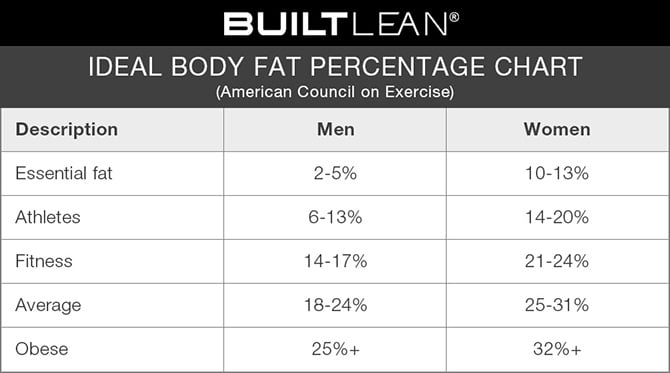
Clearly, some body-fat is necessary, even vital. The problem is that too many Americans have too much of it — sometimes far too much — to be healthy.
To determine healthy body-fat percentage ranges, based on your fitness level, follow these guidelines:

Eat well. Get in Motion. Stay in Motion.
-

Are You Meeting Exercise Guidelines?
Most Americans Are Not Meeting Exercise Guidelines
The American College of Sports Medicine, considered a top fitness authority, recommends that adults accumulate at least 150 minutes of moderate physical activity per week (i.e., 5 days for 30 minutes a session) for basic fitness. The Surgeon General, the Centers for Disease Control (CDC), the American Heart Association and the American Diabetes Association all agree.
If you up the ante to vigorous exercise intensity, 30 minutes, three days per week will get the job done.
Your heart rate offers an objective view of your exercise intensity. In general, the higher your heart rate during physical activity, the higher the exercise intensity.
The American Heart Association and the CDC offer the following definitions:
• Moderate exercise intensity: 50 to about 70% of your maximum heart rate
• Vigorous exercise intensity: 70 to about 85% of your maximum heart rate
If you have goals beyond just achieving basic fitness, such as weight loss or sports enhancement, you’ll need to put in more exercise time. Additionally, people should round out a basic fitness routine with resistance training.
The CDC and Surgeon General note that, “Adults should also do muscle-strengthening activities of moderate or greater intensity and that involve all major muscle groups on 2 or more days a week, as these activities provide additional health benefits.”
However, most Americans are not meeting these recommendations.
In a 2017 survey, more than three-quarters of U.S. adults said being in shape and looking good are “very important” to them, yet less than a third (31%) exercise regularly and nearly half (45%) admitted they are not active at all.
According to the CDC’s 2016 National Health Interview Survey, only 51.7% of adults aged 18 and over met the Physical Activity Guidelines for aerobic physical activity, and just 21.7% met the Physical Activity Guidelines for both aerobic and muscle-strengthening activity.
It’s long been established that most American adults fall short of physical activity recommendations. Again, only about a fifth of Americans meet exercise guidelines, according to the CDC.
Health outcomes, not simply appearance, should be your main motivation. The health benefits of exercise go beyond the physical. Once you make exercise part of your routine, you may notice a host of psychological benefits, such as feeling more energized, less stressed and sleeping better.
As exercise becomes a habit and you notice how good you feel, the more you’ll want to do it. What’s most important is to perform the activities you really enjoy. That helps with adherence to your program.
Get in Motion and stay in Motion.
-

How Many Calories Do You Need? How Many Do You Consume?
The total number of calories a person needs each day depends on a number of factors, including the person’s age, sex, height, weight and level of physical activity.
The number of calories you habitually consume each day determines whether you lose, maintain or gain weight.
How many calories a day should you consume?
The 2015 Dietary Guidelines for Americans estimates the number of calories needed to maintain caloric balance according to sex, age group and three different levels of physical activity: sedentary, moderately active and active.
Estimates range from 1,600-2,400 calories per day for adult women and 2,000-3,000 calories per day for adult men. Within each sex and age category, the low end of the range is for sedentary individuals; the high end of the range is for active individuals. Due to the reductions in basal metabolic rate that occur with aging, caloric needs generally decrease for adults as they age.
The physical activity categories are: sedentary, moderately active, active
Males
• Estimated calorie needs for males in their 20s: 2,400; 2,800; 3,000
• Estimated calorie needs for males in their 30s: 2,400; 2,600; 2,800/3,000
• Estimated calorie needs for males in their 40s: 2,200/2,400; 2,400/2,600; 2,800
• Estimated calorie needs for males in their 50s: 2,200; 2,400; 2,600/2,800
• Estimated calorie needs for males in their 60s: 2,000; 2,200/2,400; 2,600
• Estimated calorie needs for males in their 70s and above: 2,000; 2,200; 2,400/2,600
Females
• Estimated calorie needs for females in their 20s: 1,800/2,000; 2,000/2,200; 2,400
• Estimated calorie needs for females in their 30s: 1,800; 2,000; 2,200
• Estimated calorie needs for females in their 40s: 1,800; 2,000; 2,200
• Estimated calorie needs for females in their 50s: 1,600; 1,800; 2,200
• Estimated calorie needs for females in their 60s: 1,600; 1,800; 2,000
• Estimated calorie needs for females in their 70s and above: 1,600; 1,800; 2,000
For adults, the reference man is 5 feet 10 inches tall and weighs 154 pounds. The reference woman is 5 feet 4 inches tall and weighs 126 pounds. If those seem like low weights, that’s because by today’s standards they are.
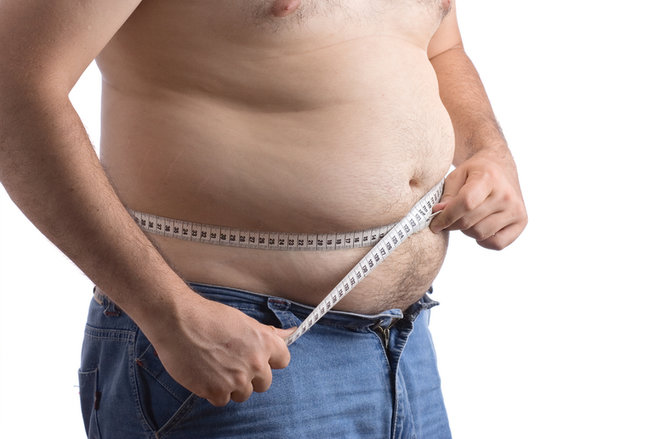
The average American man is just over 5 feet 9 inches tall and weighs 195.7 pounds, according to the CDC. The average male’s waist circumference is 40 inches.
By comparison, the average American woman is just under 5 feet 4 inches tall weighs 168.5 pounds. Her average waist circumference is 38.1 inches.
Americans have gotten a lot bigger in recent decades. In 1960, the average man weighed 166.3 pounds; the average woman weighed 140 pounds. The growth in waist size is particularly troubling.
Waist size is a good measure for the risk for certain diseases, including stroke, heart disease and type 2 diabetes. Studies have found that overweight people with large waists — more than 35 inches for women and more than 40 inches for men — are at greater risk of risk of developing type 2 diabetes and are more likely to have a heart attack.
We can change these lifestyle diseases by changing our lifestyle. One of the best changes would be limiting our excess calorie consumption.
The average American consumes more than 3,600 calories daily, according to The Food and Agriculture Organization of the United Nations, which is a 24% increase from 1961, when the average was just 2,880 calories. For some healthy adults, who want to maintain their weight, that’s nearly double the daily recommended requirement.
The problem is that, on average, people underestimate their caloric consumption by about 500 calories. So, if you think you’re eating 2,000 calories per day, you may be getting about 2,500. That adds up to plenty of unwanted weight gain by the end of the year.
If you want to maintain your weight, you need to eat according to your true physical activity level. If you want to lose weight, you’ll need to eat even less, and you’ll also need to perform weight training.
But that’s another story for another day. Feel free to ask me about it.
-

Six Reasons Why Water is So Critical to Your Health
Water is the single most critical nutrient to your body. Therefore, drinking sufficient water is essential to your health and, because it is excreted by the body in various ways all day long, it’s important to replace it throughout the day. When your water intake does not equal your output, you become dehydrated.
Fluid losses occur continuously — from skin evaporation, breathing, urine and stool — and these losses must be replaced daily to maintain good health. Even mild dehydration can cause daytime fatigue.
I’ve long been a proponent of drinking a tall glass of water upon waking each morning, before breakfast or even coffee. Caffeine is a diuretic, meaning it increases your urine output. For roughly every 100 milligrams of caffeine you consume – the approximate amount in one cup of coffee or two cups of black tea – you should drink an additional cup of water to compensate for the drug’s diuretic effect (yes, caffeine is a drug).
Your body also excretes water while you sleep, through perspiration and breathing. So even if you’re not a coffee drinker, this lost water should be replaced immediately each morning.
Fluid losses are heightened during strenuous exercise, in warmer climates, at high altitudes and in older adults, whose sense of thirst may not be as discerning.
Here are six prime reasons to make sure you’re drinking enough water every day:
1. Drinking Water Helps Maintain Every System in Your Body
Your body is composed of about 60% water. The lungs are about 83% water; the muscles and kidneys are 79% water; the brain and heart are composed of 73% water; and even the bones are 31% water.
Your body fluids are critical to digestion, absorption, circulation, transportation of nutrients, creation of saliva and maintenance of body temperature.
Body fluids transport waste products in and out of cells. The main toxin in the body is blood-urea nitrogen, a water-soluble waste that is able to pass through the kidneys to be excreted in the urine.
When you’re getting enough fluids, urine flows freely, is light in color and free of odor. When your body is not getting enough fluids, urine concentration, color and odor increase because the kidneys trap extra fluid for bodily functions.
2. Water Can Aid Weight Loss
Water is a great appetite suppressant because it makes you feel fuller. Drinking a glass of water before meals can curb your appetite, helping you eat less without feeling hungry. Since water is 100% calorie-free, substituting it for higher-calorie beverages can help with weight loss.
Water also helps you burn more calories. The amount of calories burned by the body at rest is known as resting energy expenditure. In adults, resting energy expenditure has been shown to increase by 24–30% within 10 minutes of drinking water. This lasts at least 60 minutes. The effects are heightened by cold water. When you drink cold water, your body uses extra calories to warm up the water to body temperature.
Two separate studies showed that increasing water intake to over 1 liter (34 oz) per day resulted in an extra 4.4 pounds of weight loss over a 12-month period. That’s roughly 17,000 additional calories burned annually.
Water also increases the body’s ability to metabolize stored fat. Inadequate water intake can cause fat deposits to increase, while sufficient water intake can actually reduce fat deposits.
3. Water Helps Build Muscles
Muscle cells need to maintain a balance of fluids and electrolytes to avoid fatigue, weakness and shrinking. In short, inadequate fluid intake can cause performance to suffer. Again, your muscles are 79% water.
Research has shown that when cells lose water, protein production can slow down and protein breakdown can speed up. This could hamper post-exercise muscle protein synthesis. Greater muscle breakdown results in less new-muscle growth.
Aerobic performance, such as running or cycling, can decrease when body weight drops just 2-3% as a result of dehydration. Power generation can also become compromised with the loss of just 3% in body weight.
Researchers determined that when test subjects were dehydrated by 3%, total repetitions performed were significantly lower. The subjects also perceived the exercises as more difficult and they needed longer for their heart rates to recover.
4. Water is Critical to a Healthy Digestive Process
Adequate water helps to maintain a normal digestive tract. It helps to properly metabolize food and transport nutrients.
Water also helps to maintain normal bowel function; adequate hydration can prevent constipation.
5. Water is Vital to Healthy, Good-Looking Skin
Your skin contains 64% water. Dehydration makes your skin look dry and wrinkled. Proper hydration may help prevent wrinkles and may even decrease some. Being well hydrated can also help rid the skin and body of toxins.
Healthy, well-hydrated skin also easily absorbs water from moisturizers and creams, increasing the benefit of skincare products.
6. Sufficient Water Intake is Important for Your Heart
Your heart pumps about 2,000 gallons of blood a day and it is able to pump blood more easily when well-hydrated, allowing it to work more easily and efficiently. Water also helps maintain blood pressure. Dehydration can cause blood to become thicker, increasing blood pressure.
Dehydration causes strain on your heart because your blood volume decreases when you are dehydrated. This results in your heart beating faster and working harder. Water delivers oxygen throughout the body. Blood, which is more than 90 percent water, carries oxygen to all parts of the body.
How Much Water Should You Drink?
The National Academy of Medicine (NAM) recommends a total daily water intake of 3.7 liters (15 cups) for the average adult male and 2.7 liters (11 cups) for the average adult female.
Water needs vary tremendously, according to the individual, and are dependent on factors such as temperature, altitude and activity level. If you’re exercising, you need more water than when you’re sedentary. People who exercise regularly may need more daily water intake than those who are not very active.
The American College of Sports Medicine’s guidelines recommend that people drink about 17 ounces of fluid roughly two hours before exercise. During exercise, they recommend that people start drinking fluids early, and drink them at regular intervals to replace fluids lost by sweating.
Eating more fruits and vegetables can aid hydration due to their high water content. About 20% of our fluid intake comes from foods. Having a beverage with every snack and meal will increase hydration.
Drink plenty of water. Eat healthy. Sleep plentifully. Stay healthy.
-

Don’t Be Fooled by Calorie Counters
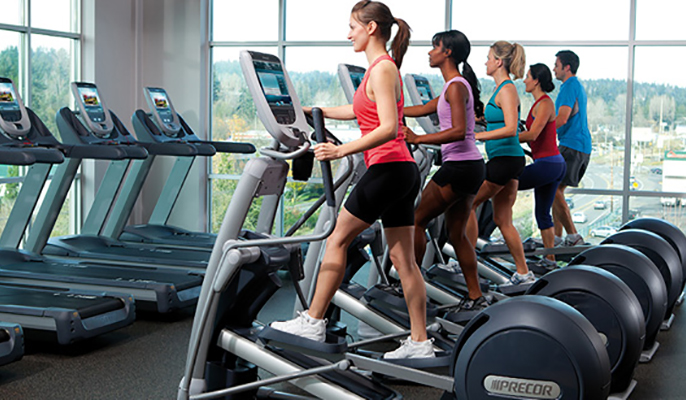
How accurate are the calorie counters on the cardio machines (treadmills, ellipticals, bikes, rowers, etc.) that you use at the gym and at home?
Not very, it turns out. Numerous studies have shown that calorie counters on cardio machines are overstated.
For example, one University of California, San Francisco experiment conducted for Good Morning America, found that elliptical machines were the most optimistic, overestimating one exerciser’s calorie expenditures by 42 percent. Meanwhile, treadmills overestimated by 13 percent, stair climbers by 12 percent, and stationary bikes by seven percent.
Another issue to consider is the age of the equipment. Newer machines tend to be more accurate; older machines, less so.
Caloric expenditure varies based on gender, age, weight and fitness level — which includes aerobic capacity, metabolism and ratio of muscle to fat (more muscular bodies burn more fat).
Most cardio machines allow you to enter the first three variables — your gender, age and weight — so make sure to do it. That will give you a much more accurate portrayal of calories burned. We burn fewer calories as we age, and men generally burn more calories than women.
Many treadmills use a reference weight of about 155 pounds. If you don’t weigh 155 pounds, the reading at the end of your workout is not accurate. Enter your true weight. Heavier bodies burn more calories in any given workout.
Additionally, relying on the handrails—especially during higher inclines or while running at high speeds—can throw off your reading by as much as 40 percent. Avoid the handrails. When you walk outside, there aren’t any.
Your heart rate will also determine how many calories you burn, so make sure the machine can synch to your heart monitor, assuming you have one.
When it comes to burning calories, the greater your exertion, the greater the rate at which calories are burned. Working out at 60% to 75% of your maximum heart rate burns fewer calories than working out at 75% to 85% of your maximum heart rate.
As always, get in Motion; stay in Motion.