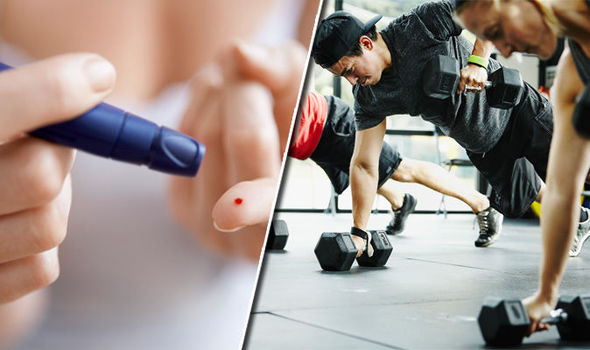
According to the American Diabetes Association (ADA), diabetes is a growing epidemic. The prevalence of diagnosed diabetes in the U.S. increased by 382% from 1988 to 2014.
Category: exercise
-

Exercise Can Help Prevent and Treat High Blood Pressure
Hypertension (aka, high blood pressure) is an epidemic in the United States, with nearly half of us affected by it.
For decades, high blood pressure has been determined by a top reading of at least 140 and/or a bottom one of 90.However, a dozen medical groups have now dropped the threshold to 120 over 80. Under these new guidelines, 46 percent of American adults have high blood pressure, according to the American Heart Association (AHA).The change has tripled the number of men under 45 and doubled the number of women under 45 with the diagnosis.Hypertension quietly damages blood vessels and leads to serious health problems. Left untreated, hypertension increases the risk of heart disease and stroke, which are the No. 1 and No. 5 causes of death in the US.Aside from heart attack/failure and stroke, high blood pressure can also lead to vision loss, kidney disease or failure, peripheral artery disease and sexual dysfunction.Symptoms of high blood pressure include dizziness, blurred/double vision, headache and neck pain. Some people also experience drowsiness and difficulty breathing. These problems often arise when the blood pressure is too high.However, since high blood pressure is a largely symptomless disease, millions of people are unaware that they have the condition. This is why hypertension is referred to as the “silent killer.” Many people with high blood pressure don’t even know they have it, according to the AHA.The only way to know if you have high blood pressure is to have your blood pressure tested. Though you can test your blood pressure at home with a store-bought arm cuff/monitor, a diagnosis of high blood pressure must be confirmed by a medical professional.Your blood pressure is recorded as two numbers. Systolic blood pressure (the upper number) indicates how much pressure your blood is exerting against your artery walls when your heart beats. Diastolic blood pressure (the lower number) indicates how much pressure your blood is exerting against your artery walls while your heart is resting between beats. These numbers measure millimeters of mercury, shown as mm Hg.Health professionals generally pay more attention to systolic blood pressure (the top number) as a major risk factor for cardiovascular disease for people over 50. In most people, systolic blood pressure rises steadily with age due to the increasing stiffness of large arteries, the long-term build-up of plaque and an increased incidence of cardiac and vascular disease.However, according to the AHA, elevated systolic or diastolic blood pressure alone may be used to make a diagnosis of high blood pressure. And, according to recent studies, the risk of death from ischemic heart disease and stroke doubles with every 20 mm Hg increase in systolic pressure or 10 mm Hg increase in diastolic pressure among people from age 40 to 89.The guidelines set new categories and get rid of “prehypertension”:• Normal: Under 120 / 80• Elevated: Top number 120-129 and bottom less than 80• Hypertension Stage 1: Top of 130-139 or bottom of 80-89• Hypertension Stage 2: Top at least 140 or bottom at least 90These new guidelines mean that 46 percent of U.S. adults have high pressure (stages 1 or 2).High blood pressure interacts with other major risk factors, such as diabetes and high levels of cholesterol, to amplify the risk of heart attack and stroke. Treatment for hypertension must begin early to prevent organ damage.High blood pressure develops slowly over time and can progressively worsen with age. Roughly half the people with untreated hypertension die of heart disease related to poor blood flow (ischemic heart disease) and another third die of stroke, according to the Mayo Clinic.While there is no cure for hypertension, changes in lifestyle can help you lower your blood pressure and keep it down.Remember that drinking more than moderate amounts of alcohol can raise blood pressure by several points, while also reducing the effectiveness of blood pressure medications.Using tobacco can also cause your blood pressure to increase and can contribute to damaged arteries. Too much stress may also contribute to increased blood pressure.Carrying too much weight puts an extra strain on your heart and circulatory system, which can cause serious health problems. Excess weight also increases your risk of cardiovascular disease, diabetes and high blood pressure. Losing just 10 pounds can help reduce your blood pressure.Maintain a healthy weight by eating a nutritious diet, rich in whole grains, fruits, vegetables and low-fat dairy products, but low in salt, saturated fat and cholesterol.Consistent exercise is also vital to lowering blood pressure and maintaining good health. Physical activity not only helps control high blood pressure and manage your weight, it also helps you strengthen your heart and lower your stress level. A healthy weight, a strong heart and general emotional health are all good for your blood pressure.Regular physical activity makes your heart stronger. If your heart works less to pump blood, the force on your arteries decreases, lowering your blood pressure. Exercise also lowers blood pressure by alleviating blood vessel stiffness so that blood flows more freely. Regular exercise can lower your systolic blood pressure by an average of 4 to 9 millimeters of mercury (mm Hg).On the other hand, inadequate physical activity increases your risk of developing high blood pressure. It can’t be overstated that physical activity is great for your heart and circulatory system, including blood pressure. It’s important to be consistent because if you stop exercising, your blood pressure can rise again.If you have slightly high blood pressure (prehypertension), exercise can help you avoid developing full-blown hypertension. If you already have hypertension, regular physical activity can bring your blood pressure down to safer levels.To improve overall cardiovascular health, the American Heart Association, the Surgeon General and the CDC all suggest at least 150 minutes per week of moderate-intensity exercise, or 75 minutes a week of vigorous-intensity exercise, or an equivalent combination of both. The easiest way to think of it is 30 minutes per day, at least five days per week.The best types of exercise for lowering blood pressure include walking, jogging, cycling, swimming or even dancing. Strength training can also help reduce blood pressure.The important thing is to find activities that you enjoy. Then get in motion and stay in motion. -
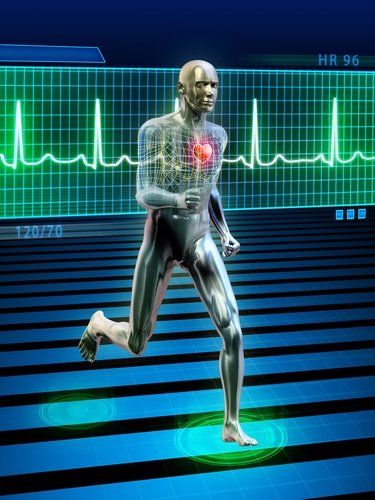
What are Your Resting, Maximum and Target Exercise Heart Rates?
People often ask me what a normal heart rate is. In adults, resting heart rate ranges from 60 to 100 beats per minute (BPM). Heart rate varies with age, the amount of physical activity a person engages (fitness level) and/or the presence of heart disease.Generally, a lower heart rate at rest implies more efficient heart function and better cardiovascular fitness. For example, a well-trained athlete might have a resting heart rate closer to 40 BPM.Regular exercise improves the heart’s ability to pump the same amount of blood with less effort, which naturally decreases the resting heart rate.A sedentary adult may have a resting heart rate of 70 to 80 BPM, while an adult who performs regular physical activity might have a resting heart rate of 50 to 60 BPM.The following table shows the normal resting heart rate for men:between 18 and 25 years between 26 and 35 years between 36 and 45 years Excellent 49-55 bpm 49-54 bpm 54-59 bpm Good 57-61 bpm 57-61 bpm 60 to 62 bpm Below average 71 to 73 bpm 72 to 74 bpm 73-76 bpm The following table shows the normal resting heart rate for women:
between 18 and 25 years between 26 and 35 years between 36 and 45 years Excellent 54 to 60 bpm 54-59 bpm 54-59 bpm Good 61 to 56 bpm 60 to 64 bpm 62 to 64 bpm Below average 74 to 78 bpm 75 to 76 bpm 74 to 78 bpm Your maximum heart rate (MHR) is genetically fixed and declines over time, as you age. It does not change as you become more or less fit.Maximum heart rate does not determine your fitness level; being able to sustain your MHR for longer and longer periods does.Only a highly motivated and very fit individual is able to reach their maximum heart rate while exercising, and even they can only do it for for a couple of minutes at a time — tops. These individuals have the ability to tolerate great discomfort and even pain.An untrained, unfit individual may find that basic tasks, such as walking, are highly taxing. These people are unfamiliar with the notion of exercising at, or near, maximum heart rate. As a result, they may find that exercising at even 75 percent of maximum is very strenuous and might confuse that with their maximum.A fit person is able to tolerate longer periods of exercise at their maximum heart rate than an unfit person, and he/she also requires a higher intensity of exercise to achieve their MHR than an unfit person.So, how do you calculate your maximum heart rate? The equation that has long been used is 220 – age = maximum heart rate (MHR). However, that formula has long been known to be inaccurate since it was derived from young athletes, who do not represent the general population. A revised formula for MHR is 208 – 0.7 (age).For example:- The MHR a 30-year-old is 208 – 0.7 x 30 = 187 beats per minute.
- The MHR for a 40-year-old is 208 – 0.7 x 40 = 180 beats per minute.
- The MHR for a 50-year-old is 208 – 0.7 x 50 = 173 beats per minute.
Determining your target training heart rate also varies according to age and fitness level. Most people will exercise at a target heart rate that ranges from 50 percent to 85 percent of their maximum heart rate.For example, if you want to exercise at 80 percent of your maximum heart rate, multiply your maximum by .80. For a 40-year-old, the target heart rate would be 180 x .80, or 144 beats per minute.The American Heart Association and the Centers for Disease Control and Prevention recommend the following target heart rate guidelines:- Moderate exercise intensity: 50 to 70 percent of your maximum heart rate
- Vigorous exercise intensity: 70 to 85 percent of your maximum heart rate
The American College of Sports Medicine provides its own guidelines:
- Beginners — 50 to 65 percent of maximum heart rate
- Intermediate level exercisers — 60 to 75 percent of maximum heart rate
- Established aerobic exercisers — 70 to 85 percent of maximum heart rate
It should be noted that maximum heart rate is a predicted number and many people (more than 40 percent of patients, according to one cardiologist, who spoke to the NY Times) can get their heart rates to more than 100 percent of their predicted maximum. Some people’s maximum heart rate can be as much as 15 to 20 beats per minute higher than the predicted maximum.Using a heart rate monitor (which has become quite prevalent) is a great way to gauge your heart rate while exercising.If you don’t have a heart monitor, you can simply use Rated Perceived Exertion. The RPE scale, which ranges from 0 – 10, is used to measure the intensity of your exercise.For example, 0 equates to no exertion at all, or how you feel when sitting in a chair; 10 is very, very intense, or how you feel at the end of an exercise stress test or after a very strenuous activity.The Cleveland Clinic offers this explanation:2 – Light3 – Moderate4 – Somewhat heavy5 – Heavy6 – Heavy7 – Very heavyIn most cases, you should exercise at a level perceived as 3 (moderate) to 4 (somewhat heavy). If you’re doing interval training, an RPE of at least 7 would be appropriate.No matter what you do or how you measure it…. Get in Motion. Stay in Motion. -

Proper Hydration Vital to Good Health and Exercise
Water is your body’s principal chemical component and constitutes about 60 percent of your body weight. Every system in your body depends on water. Lack of water can lead to dehydration, which prevents your body from carrying out normal functions. Even mild dehydration can drain your energy, create fatigue and even cause headaches and nausea.
Your ability to perform exercise can decline with a very small amount of dehydration. Losing just 2% of your body weight in fluid can decrease performance by up to 25%.Adults produce an average of about 1 – 2 liters of urine per day, depending on their state of hydration, activity level, environmental factors, weight and the individual’s health. But we lose water in more ways than one.In addition to urine, we are constantly losing water through sweat and even breathing. Since the body excretes water to maintain body temperature, we lose even more when we exercise.Sweating is a primary means of thermoregulation, since the evaporation of sweat from the skin has a cooling effect. Hence, in hot weather, or when your muscles heat up due to exertion/exercise, more sweat is produced. All of that water must be replaced.The volume of water lost in sweat daily is highly variable, ranging from 100 milliliters to 8 liters per day. Maximum sweat rates of an adult can be up to 2-4 liters per hour or 10-14 liters per day. However, during average intensity exercise, sweat loss can average up to 2 liters of water per hour.So how much water do you need to consume to offset these losses?The Institute of Medicine says adult men actually need about 13 cups (3 liters) of fluid per day, while adult women need about 9 cups (2.2 liters) of fluid (you get about an additional 2 1/2 cups of fluid from foods). The bigger you are, the more water you need. And if you exercise, you need even more water.In the summertime, or if you live in a warm climate, you’ll also need to drink more water than the recommended amount. That’s because heat can make you sweat more and lose fluids faster.Monitor your urine color will tell you how hydrated you are. Lighter urine color means you’re generally well-hydrated. If it’s darker, you are most likely dehydrated.Older adults are more likely to become dehydrated because their sense of thirst declines. Pregnant women and nursing mothers need slightly more water. Additionally, some medications, such as antihistamines and certain antidepressants, increase your fluid needs too.Alcohol, particularly at high doses, can cause you to excrete more than you consume. One drink, especially of beer, won’t do much (it’s about 92 percent water), but wine and hard liquor have more of a dehydrating effect because of their higher alcohol content.It’s not only important to drink water during your workout, but also before your workout. You must pre-hydrate to prepare for exercise. The reality is that it’s important to drink water before, during and after your workout. If you start out dehydrated, you won’t have a good workout. You’ll feel lethargic and perhaps even dizzy. Your body simply won’t function well.If you are well hydrated, you’ll feel stronger and will be able to work out longer and more effectively. That’s because the heart doesn’t have to work as hard to pump blood through the body.So, how much water do you need before and during exercise? Follow this formula:• One to two hours before your workout, drink 16 to 20 ounces of water• 15 minutes before you begin, drink between 8 and 10 ounces of water• During your workout, drink another 8 ounces every 15 minutes.If you hydrate accordingly, you’ll get so much more from your exercise, and you’ll be safer too.