Tag: diet

  • Here’s Why You Should Supplement Your Diet With Psyllium

    Here’s Why You Should Supplement Your Diet With Psyllium

    The most recent edition of the Dietary Guidelines for Americans recommends that adults consume 1.5-2.0 cups of fruit per day and 2-3 cups of vegetables per day.
     
    However, about 90 percent of Americans don’t eat enough fruits and vegetables, according to a 2017 CDC report. Specifically, just 12.2 percent of American adults are meeting the recommendation for fruit and only 9.3 percent are meeting the recommendation for vegetables.
     
    Aside from being packed with valuable nutrients and phytochemicals (helpful chemical compounds produced by plants), fruits and veggies are also packed with fiber, which aids digestion and can help treat digestive problems. Fiber also helps prevent constipation and can reduce cholesterol levels. Adequate fiber intake may even help protect against heart disease, type 2 diabetes and some forms of cancer.
     
    The national fiber recommendations are 30 to 38 grams a day for men between 18 and 50 years old, and 25 grams a day for women of the same age range. However, most of us are falling far short. The average American consumes a mere 14 grams, meaning many of us eat even less than that.
     
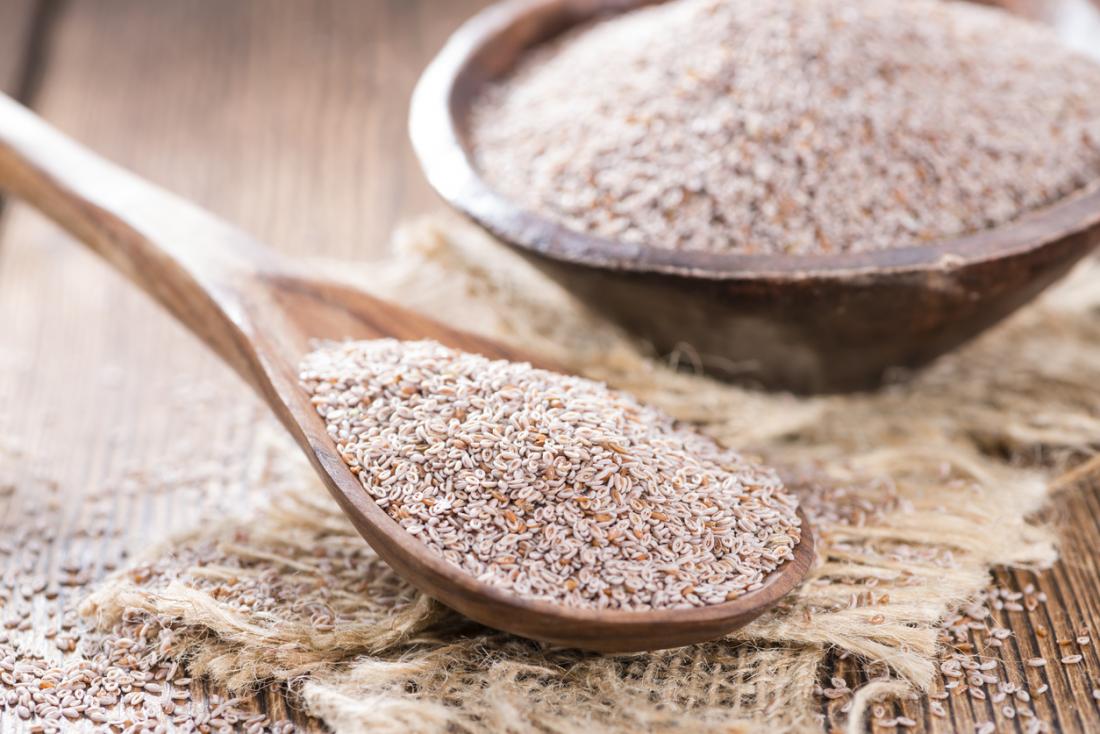
    A great way to increase your daily fiber intake is by supplementing your diet with psyllium, a natural, water-soluble fiber made from the husks of the Plantago ovata plant. Psyllium can aid our health in each of the following ways:
     
    • Lowering cholesterol
    • Improving digestion
    • Eliminating toxins and heavy metals (psyllium acts like a sponge, soaking them off the walls of the intestine)
    • Slowing the production of blood glucose during digestion
    • Encouraging the growth of healthy intestinal bacteria
     
    For all these reasons, psyllium is a highly valuable dietary supplement. Here’s more detail on each of the above:
     
    Being a soluble fiber, psyllium is able to pass through your digestive system without being completely broken down or absorbed. Instead, it absorbs water and becomes a gel-like substance that slows down the rate at which the stomach empties. As a result, psyllium tends to slow the movement of food through the digestive tract. Since fiber-rich foods take longer to digest, they result in an increased feeling of fullness and satiety. Consequently, psyllium can aid weight loss by reducing the amount of food consumed during meals.
     
    In addition, a more gradual absorption slows the entrance of glucose into the blood stream, thereby preventing large blood glucose and insulin spikes. For this reason, psyllium helps control blood sugar levels, which is particularly helpful to diabetics. It’s recommended that you take psyllium with food, rather than on its own, so it has a greater effect on your blood sugar levels.
     
    Psyllium has also been shown to help lower blood cholesterol. Soluble fiber binds to bile salts in the gastrointestinal (GI) tract, causing them to be excreted as part of our fecal matter, rather than being re-absorbed by the colon, as they usually are. Since blood cholesterol is needed to make bile, the body must pull more cholesterol out of our blood to make more bile and replace what was lost. This ultimately lowers the amount of cholesterol in our bloodstream.
     
    Additionally, psyllium also helps with constipation and diarrhea, and perhaps even benefits blood pressure, according to research.
     
    Psyllium is a bulk-forming laxative that also softens stools, which means it makes bowel movements much easier. Quite simply, psyllium promotes regularity and overall digestive health, which matters to millions of people.
     
    A total of 60 to 70 million Americans are affected by digestive diseases, according to the National Institute of Health. This means one in five Americans suffers some type of digestive illness. That’s because the modern American diet is so unhealthy. For example, the top sources of calories in the US are grain-based desserts, including cakes, cookies, donuts, pies, crisps, cobblers and granola bars. Americans also consume copious amounts of sodas, candy, potato chips and pizza.
     
    Having a healthy gut is vital to our overall health. Psyllium encourages the growth of healthful, “friendly” intestinal bacteria, such as Lactobacillus acidophilous and bifidobacteria.
     
    These are among the healthy or “good” bacteria in your GI tract that keep your entire digestive system at its peak, while boosting the health of your immune system. In fact, 80% of your immune system lives within your digestive tract and, obviously, a healthy immune system is vital to your overall well-being.
     
    It is crucial for us to maintain a healthy ratio of “good” to “other” bacteria in our GI tract for optimal health. A healthy and balanced digestive system even helps you better regulate your weight.
     
    The good bacteria in your GI tract need good nutrition to flourish. Dietary fiber can make a huge difference by feeding these good bacteria, allowing them to grow and proliferate. While the less-than-desirable bacteria like to eat refined sugars and fats, beneficial bacteria love to feed on fiber, such as psyllium.
     
    The average recommended dosage for psyllium is about one or two tablespoons with meals, once or twice daily. However, I suggest starting with a lower dose and gradually working up to this level. A tall glass of water should be taken with each dose.
     
    The most common brand of psyllium is Metamucil, which has added sugar and ascorbic acid. There are also 100% pure psyllium versions available, without added sugar, which you can find at any health food store. You may find that finely ground, powdered psyllium, which can be mixed with either water or juice, is easiest to drink.
     
    It should be noted that Metamucil is different from Citrucel, which is made from man-made cellulose fiber. Citrucel is merely a fiber laxative and does not offer the same health benefits of psyllium.
     
    So, there are many good reasons to add psyllium to your diet regimen: it’s all natural, inexpensive, easy to take and has a multitude of health benefits. Ultimately, psyllium is one of the very best supplements to include in your daily diet.
  • Some Simple Diet Recommendations

    Some Simple Diet Recommendations

    In America today, people are more likely to be overnourished than undernourished.

    In 2017, the Centers for Disease Control and Prevention found that almost 40 percent of American adults and nearly 20 percent of adolescents are obese — the highest rates ever recorded for the U.S. 

    In total, more than 70 percent of Americans are now either overweight or obese, meaning that an unhealthy weight has become the norm, with healthy-weight Americans — who have a BMI of less than 25 — now in the minority.

    Yet, while we are a nation of overnourished individuals, many Americans are still malnourished. Despite the overabundance of calories (Americans eat an average of over 3,600 calories a day, according to a report by The Food and Agriculture Organization), many Americans don’t get enough healthy calories.
     
    The most recent edition of the Dietary Guidelines for Americans recommends that adults consume 1.5-2 cups of fruit per day and 2-3 cups of vegetables per day. 
     
    However, about 90 percent of Americans dont eat enough fruits and vegetables, according to a 2017 CDC report. Specifically, just 12.2 percent of American adults are meeting the standard for fruit and 9.3 percent are meeting the standard for vegetables.  
     
    Fruits and veggies are nutrient-dense, meaning they are full of beneficial nutrients and minerals, while containing no added sugars or sodium. Every calorie they contain is very beneficial to the human body. 
     
    These healthy, natural foods are also packed with fiber, which aids digestion and can help treat digestive problems, while preventing constipation and potentially reducing cholesterol levels. Adequate fiber intake may also help protect against heart disease, type 2 diabetes and some forms of cancer.
     
    Since the vast majority of Americans are coming up short with their fruit and vegetable intake, many are also missing some key nutrients in their diets.
     
    According to the most recent U.S. Dietary Guidelines, there are seven important nutrients in foods that most Americans aren’t getting in sufficient amounts:
     
    • Fiber
    • Calcium
    • Potassium
    • Magnesium
    • Vitamin A
    • Vitamin C
    • Vitamin E
     
    Though each of the above can be found in the form of nutritional supplements, it’s always best to get all of our nutritional needs met through a well-rounded diet, anchored by fruits, vegetables, whole grains and lean proteins. As the name suggests, supplements are supposed to supplement a healthy diet. Studies have found that they don’t offer as many health benefits as the nutrients naturally found in food. That said, most nutritionists agree that a multivitamin is an inexpensive insurance policy.
     
    One macronutrient that most Americans eat in abundance is protein. Proteins are vital components of the human body, critical to the repair of tissue and the building of bones, muscles, cartilage, skin and blood. Proteins also help to regulate hormone production and make us feel full. 
     
    The U.S. Dietary Guidelines state that adults should take in a minimum of 10 percent of their daily calories from protein. Most Americans take in about 15 percent of their calories from protein. The healthy range for protein extends up to 35 percent of daily calories, according to the guidelines. The current 15 percent protein intake of the average American, combined with regular exercise, is sufficient to maintain muscle, according to Harvard Medical School.
     
    Most of us get a significant portion of our protein in the form of animal proteins. However, we’d all be well-served to eat plant proteins more often. Good sources include beans (kidney, pinto, black or white beans), peas (split peas, chickpeas, hummus), soy beans (edamame) or soy products (tofu, tempeh, veggie burgers), as well as nuts and seeds. These are all naturally low in saturated fat and high in fiber.
     
    The point is to get our proteins from a wide variety of sources and to make sure we’re getting what are known as “complete proteins.”
     
    There are 20 different amino acids that can form a protein, nine of which the body can’t produce on its own. These are called essential amino acids—we need to eat them since we can’t make them ourselves. In order to be considered complete, a protein must contain all nine of these essential amino acids in roughly equal amounts.
     
    Examples of complete proteins include meat, poultry, fish, eggs, milk, cheese, yogurt and soybeans. 
     
    Though most plant proteins are considered to be incomplete, combining them can create complete proteins. We don’t need to ingest every essential amino acid in every meal; we only need a sufficient amount of each amino acid every day.
     
    Here are some examples of complete proteins that are also meatless: quinoa, buckwheat, lentils and rice & beans.
     
    Vegans and vegetarians may have to work a little harder to consume complete proteins, but the following may be helpful: Every time legumes (such as beans, lentils and peanuts) are combined with grains like wheat, rice and corn, a complete protein is created. Peanut butter on whole wheat is perfect example. This snack provides all the essential amino acids, as well as some healthy fat.
     
    That leads us to another vital macronutrient: fats, most especially healthy fats. These include: avocados/avocado oil, nuts (walnuts, pecans, pistachios, cashews and almonds), seeds (flax, sunflower, chia), nut butters, olives/extra virgin olive oil, coconut/coconut oil, and fatty fish (salmon, mackerel, herring, sardines, albacore tuna).

    Here are some simple recommendations:

    Eat a salad every day and have vegetables with every meal. Snack on fruits. Eat more plant-based proteins and make sure to combine them so that they create complete proteins. Limit saturated fats and focus instead on healthier monounsaturated fats (olives, avocados, nuts, seeds) and healthy oils (olive-mono, avocado-mono, flaxseed-poly and grapeseed-poly) and polyunsaturated fats, the latter of which contain the omega-3 fatty acids found in fatty fish, flaxseed and walnuts, for example. 

    As Hippocrates famously said, “Let food be thy medicine and medicine be thy food.”

  • Beware the Liquid Calories

    Beware the Liquid Calories

    Whether you are trying to lose weight or just maintain it, it’s a good idea to limit your intake of liquid calories. Most Americans only count the calories they get from solid foods, and many are unaware of how liquid calories are sneaking into their diet and affecting their body weight.
     
    A study commissioned by the Milk Processor Education Program found that liquids make up 22 percent of calories in the average American’s diet.
     
    As of 2016, the average American drank about 39 gallons of soda a year—or about eight 12-ounce cans a week—according to the Beverage Marketing Corp.
     
    Yet, soda isn’t the only culprit. Though soda sales have fallen, Americans are still getting lots of unnecessary calories from fruit juice, fruit drinks, sports drinks, energy drinks, sweetened teas and sweetened coffee beverages. In fact, sugar drinks are the single-largest source of calories from added sugar in the American diet.
     
    A typical 12-ounce can of regular cola contains nearly 9 teaspoons of added sugars; a 20-ounce bottle contains 15.5 teaspoons of sugars. Yet, the American Heart Association recommends a maximum daily intake of 6 teaspoons of added sugars for women and 9 teaspoons for men.
     
    Sodas are the perfect example of empty calories. There is virtually no nutrition or useful quality in soda, which is full of unhealthy additives and preservatives, such as artificial colors, phosphoric acid and bicarbonate. This is why cutting back on liquid calories may be more valuable than cutting back on calories from solid food.
     
    Generally speaking, calories from fluids are not satiating and don’t suppress hunger, which means you can consume a lot of liquid calories without ever feeling full. That can lead to overconsumption and weight gain.
     
    After you ingest sugar, glucose enters your bloodstream and your pancreas immediately begins making insulin to balance the rush of sugar. Most sweetened drinks contain both glucose and fructose. Glucose is quickly turned into energy, while fructose, which is sweeter, is more likely to turn into fat.
     
    Fructose is sent to the liver, where it is converted to be burned as fuel. The excess stored away as fat. There is research on sugar intake suggesting that this fat ends up as belly fat.
     
    If you’re trying to lose weight or just trying to maintain it, your best beverage choice is water, which is calorie free. Water helps cleanse your body of unhealthy and unneeded waste, and helps your body function properly. Most of your body — as much as 65 percent — is composed of water.
     
    If you get hungry between meals, drink a glass of water and snack on fresh fruits and vegetables. Whole fruits and vegetables contain fiber and are therefore much more filling than juice. Critically, fruits and veggies are nutrient dense, while being low in calories.
     
    Although energy drinks are touted as healthy, some can have as much added sugar as sodas. Energy is just another word for calories. In fact, in England, calories are referred to as energy. If you’re not exercising for 45 or more minutes, why would you need an energy drink? If they were called “calorie drinks,” people would be a lot more cautious about consuming them.
     
    Other than water, remember that serving sizes matter. Beverage cans and bottles of 6 or 7 ounces were once commonplace. These days, it’s tough to find retail beverages offered in anything less than 12, 16 or even 20 ounce containers. All of those additional ounces represent additional calories.
     
    Lastly, if you think you’re doing yourself a favor by drinking artificially sweetened beverages, you’re not. Studies show that artificial sweeteners alter your metabolism and increase your sweet tooth. Artificial sweeteners are synthetic and intensely sweet, much more than regular sugar itself. They make you want more sugar, which means consuming more calories in the long run.
     
    Research on these sugar substitutes connects diet soda consumption to metabolic syndrome, Type 2 Diabetes and chronic kidney disease. A nine-year study, which followed older adults who drank diet soda daily, showed a 48 percent higher risk of stroke, heart attack and even death. Steer clear.
     
    Remember that liquid calories in just about any form — alcohol, juice or soda — are stealth calories. They are often imperceptible, but they can have an enormous impact on your weight status, as well as your overall health.
  • Diet is a Noun, Not a Verb

    Diet is a Noun, Not a Verb

    Like fitness, your diet is a lifestyle. It should be ongoing and permanent, not a temporary shift to achieve a quick result. Quick fixes always lead to short term results.

    Think of your diet as a noun, not a verb. You have a diet; you don’t “go on” or “start” a diet.
     
    Every action has a reaction and anything you start you can also stop. You’re much less likely to suddenly end your lifestyle, but you can always abruptly end a diet and undo any of the good that has been achieved.
     
    Instead of dieting to lose weight, choose lower-calorie, nutrient-dense foods that will both nourish and fuel your body. Extreme calorie restriction can ultimately lower your metabolism, as your body seeks to preserve stored calories. Deprivation can lead to frustration and bingeing.
     
    Ask yourself how the foods you’re putting into your body are serving you. Are they nourishing your body and improving your health? Are they doing your body good?
     
    All calories are not equal. Some foods are more nutritious than others. One-hundred calories of vegetables are not the same as 100 calories of chips or cookies.
     
    A healthy diet is the fuel for your exercise program. Exercise, in turn, will help you gain strength, build fitness and increase your metabolism.
     
    Improving your fitness and wellness should be the goal; weight loss may be a byproduct of that. Fitness first!
     
    Diet and exercise aren’t just about changing your body; they’re about changing your life!
  • Get Fit in the Gym; Lose Weight in the Kitchen

    Get Fit in the Gym; Lose Weight in the Kitchen

    Exercise has numerous benefits, the least of which is weight loss. Focus on the many health benefits of exercise, not just your weight. 

    Whether it’s a New Year’s resolution, a birthday, or the recommendation of a doctor, most Americans will determine to lose weight at some point during the year. It’s little surprise.
     
    In 2017, the Centers for Disease Control and Prevention found that almost 40 percent of American adults and nearly 20 percent of adolescents are obese — the highest rates ever recorded for the U.S.
     
    In all, more than 70 percent of Americans are now either overweight or obese, meaning that an unhealthy weight has become the norm, with healthy-weight Americans — who have a BMI of less than 25 — now in the minority.
     
    However, while exercise is great for overall health in a multitude of ways, it isn’t the most effective means of weight loss.
     
    A lot of personal trainers may not want their clients to know this, but I think it’s important to set the record straight and to set a framework for reasonable expectations.
     
    The number of calories you burn when exercising account for a rather small portion of your total, daily energy expenditure.
     
    There are three main components to energy expenditure: 1.) basal metabolic rate, or the energy used for basic functioning when the body is at rest; 2.) the energy used to break down food; and 3.) the energy used in physical activity.
     
    Your basal metabolic rate (BMR) is the single biggest source of energy expenditure, responsible for about 70 percent of the calories burned each day. Digesting your food accounts for roughly another 10 percent. The remaining 20 percent, or so, can be burned through exercise.
     
    However, if you’ve ever walked on a treadmill, for example, you may be disappointed by just how few calories you burn.
     
    Your weight and the distance you walk are the biggest factors in how many calories you burn while walking. A rule of thumb is that about 100 calories per mile are burned for an 180-pound person and 65 calories per mile are burned for a 120-pound person.
     
    In other words, if a 180-pound person walks two miles, they would burn just 200 calories. If that person walks at a fairly brisk 4-miles-per-hour, it would take them 30 minutes to burn those 200 calories. That’s a pretty small payoff for that amount of time.
     
    In short, there’s a huge discrepancy between the number of calories you intake and the number of calories you expend while exercising.
     
    The average American consumes more than 3,600 calories daily – a 24% increase from 1961, when the average was just 2,880 calories, according to The Food and Agriculture Organization of the United Nations.
     
    To make matters worse, various studies have shown that people generally overestimate how much energy they burn while exercising and that they eat more when they work out.
     
    In a nutshell, if you’re trying to burn off all those excess calories at the gym, you’re going to be greatly disappointed.
     
    By far, the most critical factor for weight loss is limiting caloric consumption. It’s as plain as that.
     
    People who decide to reward themselves with food because they exercise — whether it’s larger portions, seconds, dessert, etc. — are setting themselves up for failure. They’re just taking one step forward and then two steps back. All the hard work done at the gym on any given day can be erased with just one excessive meal.
     
    Exercise has numerous benefits, aside from calorie burning: strengthening the heart (your most important muscle) and the arteries; lowering blood pressure; lowering resting heart rate; strengthening muscles, bones, tendons and ligaments; lowering resting blood sugar levels and sensitivity; lowering bad cholesterol, while raising good cholesterol; preventing many cancers; better sleep; improved mood and mental state; stress management and on and on.
     
    Weight training, in particular, is the closest thing to the fountain of youth that humanity has yet discovered. Yes, numerous studies have shown that strength training can actually reverse the aging process!
     
    None of this is to say that exercise, particularly strength training, cannot positively affect weight loss; it just shouldn’t be the primary focus.
     
    Resistance training may significantly increase resting metabolic rate (RMR) by increasing muscle mass. That’s because muscle mass alone contributes about 22 percent to RMR. An increase in RMR will result in more calories burned throughout the day, even when you’re not working out.
     
    RMR is generally depressed during caloric restriction, such as when individuals are dieting. This makes strength training especially important since it can elevate RMR, even when dieting. The problem for dieters who don’t strength train is that they not only lose body fat, they also lose muscle mass. That’s ultimately counterproductive to their long-term goal of maintianing weight loss.
     
    The important thing to remember is that exercise has many, many benefits, but weight loss is not the primary one. Reducing calories is central to weight loss.
     
    The focus of exercise should be the plethora of health benefits, both mental and physical, that can be achieved through a regular, committed workout program.
  • Don’t Obsess on Weight Loss; Consider all the Benefits of Exercise

    Don’t Obsess on Weight Loss; Consider all the Benefits of Exercise


    Exercise and diet are critical to good health, not just weight loss.

    When I entered the fitness profession many years ago, my aim was to work with people on developing and improving their fitness levels. What I didn’t anticipate was that people would seek out my expertise to help them lose weight.
     
    After all, there are 168 hours in a week and a personal trainer might see his/her clients for all of 1-3 hours per week. There’s a whole lot of time when our clients are not accountable to us.
     
    We typically aren’t with our clients for grocery shopping, meal preparation, portion control, or to encourage them to skip the seconds, the snacks, the beer, the wine and the dessert.
     
    In retrospect, it’s not that surprising that so many people consult a personal trainer to achieve weight loss.
     
    In October, the Centers for Disease Control and Prevention reported that almost 40 percent of American adults and nearly 20 percent of adolescents are obese — the highest rates ever recorded for the US.
     
    In all, more than 70 percent of Americans are either overweight or obese, meaning that an unhealthy weight has become the norm, with healthy-weight Americans — who have a BMI of less than 25 — now in the minority.
     
    Many people who are overweight have been so for many years — most of their lives, perhaps.
     
    Obesity often runs in families, and not just for genetic reasons. Families often share the same eating and exercise patterns. Kids don’t do grocery shopping; they eat whatever mom/dad buys and prepares. Consequently, poor eating habits are often inherited. And if parents are sedentary and dislike exercise, there’s a good chance that their kids will follow this same pattern or lifestyle.
     
    The opposite is also true. Parents who are healthy weight often buy healthy foods and prepare healthy meals for their families. For these people, vegetables aren’t an oddity or an occasional, small side dish and French fries aren’t the only vegetable in their diets. Additionally, parents who exercise regularly will typically encourage and promote exercise to their children.
     
    There can be no overstating the emotional component in being overweight or obese. Food is often used as a reward, a soothing comfort, an antidote to boredom or in an act of self-loathing or self-sabotage. Food is even used to stuff down or coverup feelings that one would rather not confront. In short, people with weight issues may eat for reasons other than just hunger.
     
    For some individuals, there may genetic, metabolic or other health-related factors involved in weight gain. But for most people, it’s just a matter of too many calories being consumed and too few being burned.
     
    Most Americans simply eat too much relative to their activity level. Most people also lead sedentary lifestyles, sitting all day at work and all night at home.
     
    Weight loss can only be achieved by modifying energy intake, energy expenditure or both. To lose weight, you must create a negative energy balance. Since working out is all about energy expenditure, this is the part which you’ll directly work with your personal trainer.
     
    Additionally, portion sizes are enormous compared to what was considered normal a half-century ago, or at any time other time in history. Consequently, plates are much bigger now too. Restaurant plates now look like serving platters. But even the plates we use at home are much bigger than those of our grandparents. I look at my grandmother’s china and laugh — everything looks so small compared to our modern dish ware.
     
    In short, portions matter — a lot. Try cutting them in half. Additionally, using a smaller plate will make it look full, while holding less volume.
     
    Another thing that causes people to overeat is watching television at meal times. This causes them to become distracted and to lose sight of how much they’re consuming. Turn off the TV and eat at the kitchen table or in the dining room. Enjoy some conversation and slow down the process of eating.
     
    Sleep problems, such as sleep apnea or insomnia, can also lead to weight gain, or present a greater challenge to weight loss. Even if you don’t have a medical problem that is affecting your sleep, make sure you give yourself 7-9 hours per night, as recommended by the National Sleep Foundation. Proper rest can make a difference in maintaining a healthy weight.
     
    Exercise is vital to good health and it’s important to remember that weight loss isn’t the only goal. Those of us with an ideal body weight still need to consistently exercise our cardiovascular systems to keep them strong and healthy.
     
    Consider all of the benefits of exercise, aside from weight loss:
     
    – lower blood pressure
    – increased level of good cholesterol (HDL)
    – leaner, stronger muscles
    – stronger bones
    – more energy
    – improved mood
    – better sleep
    – stress management
     
    Maintaining good health should be the primary reason you eat well and exercise often.
     
    About half of all American adults—117 million individuals—have one or more preventable chronic diseases, many of which are related to poor quality eating patterns and physical inactivity. These diseases include cardiovascular disease, high blood pressure, Type-2 diabetes, some cancers and poor bone health.
     
    Being physically active can help prevent heart disease and stroke, the nation’s No. 1 and No. 5 killers.
     
    To improve overall cardiovascular health, the American Heart Association (AHA) suggests at least 150 minutes per week of moderate exercise or 75 minutes per week of vigorous exercise (or a combination of moderate and vigorous activity).
     
    Thirty minutes a day, five times a week is an easy goal to remember. You will also experience benefits even if you divide your time into two or three segments of 10 to 15 minutes per day.
     
    For people who need to lower their blood pressure or cholesterol, the AHA recommends 40 minutes of aerobic exercise of moderate to vigorous intensity, three to four times a week, to lower the risk for heart attack and stroke.
     
    Ultimately, your workout program can be the best healthcare plan you ever have. Think of it as your health insurance plan — one that will inexpensively ensure your health and wellness.
     
    Regular exercise results in health and wellness. Fitness equals good health. In other words, fitness is health care. On the other hand, going to the doctor is sick care. Investing in your health is the best investment you’ll ever make. The old saying is true: an ounce of prevention is worth a pound of cure.
     
    A healthy diet and consistent exercise go hand in hand. They are two sides of the same coin.
     
    Healthy eating means maximizing the nutrients you put into your body. It will strengthen your immune system, thereby helping to prevent disease, not to mention manage weight. Lastly, healthy eating will also help you perform better. What you put in is what you’ll get out. Your body is a high-performance machine, so treat it like one.
     
    If good overall health is not enough motivation and you are still preoccupied with weight loss, here’s how strength/resistance training will help:
     
    Resting metabolic rate (RMR) is the amount of energy expended by the body at rest and accounts for about 70% of daily energy expenditure. Resistance training may significantly increase RMR by increasing muscle mass. That’s because muscle mass alone contributes about 22% to RMR.
     
    An increase in RMR can have a significant impact on total energy expenditure and the creation of a negative energy balance. This increase in RMR is especially important when you consider that RMR is generally depressed during caloric restriction, such as when individuals are dieting.
     
    In effect, strength training results in a trade off — fat mass for muscle mass.
     
    Resistance exercise can help maintain muscle mass and RMR during diet-induced weight loss. Without resistance exercise, body fat is lost, but muscle mass is also significantly wasted. That is counter-productive since it ultimately results in a reduction in RMR.
     
    Weight loss will eventually come in time, as long as you are eating healthily and exercising regularly. But remember, weight loss is just one of the many benefits you will derive from living this healthy lifestyle.
  • For Exercisers, Prepare & Repair

    For Exercisers, Prepare & Repair

    Diet and nutrition are the critical counterpoints to a regular exercise program. Both proteins and carbohydrates are essential for preparing for your workouts, as well as for recovering from them.
     
    To feed the rigorous demands of working out, you need to prepare your body for exercise and then repair it from the associated stresses. Proteins and carbs provide both the fuel that drives you during your workouts, as well as the building blocks that help you recover.
     
    If you don’t eat before exercise, you won’t have adequate fuel to get you through an intense workout. Instead, you’ll feel tired and weak and have limited endurance. That’s because complex carbs provide the energy that fuels muscle contractions.
     
    Carbohydrates are broken down by the body into glucose, which is used as energy. Any glucose not immediately used is stored in the muscles and the liver, in the form of glycogen.
     
    Glycogen is the source of energy most often used for exercise. Because it is immediately accessible, glycogen is used for any short, intense bouts of exercise, from sprinting to weight lifting. Glycogen also supplies energy during the first few minutes of any sport. Though fat helps to fuel activity during long, slow-duration exercise, glycogen is still needed to help break down the fat into something the muscles can use.
     
    Adequate carbohydrate intake also helps prevent protein from being used as energy. If the body doesn’t have enough carbohydrate, protein is broken down to make glucose for energy. That’s undesirable because proteins are the building blocks for muscles, bones and other vital tissues.
     
    Though carbohydrates are the human body’s key source of energy, not all carbs are created equally. Simple carbohydrates, or sugars, can cause a spike in blood sugar, thereby stimulating excess insulin production, which causes a fast drop in blood sugar. This creates a vicious cycle of hunger and eating, followed by more hunger and more eating. Stick with complex carbohydrates of the fibrous variety, such as legumes, brown rice, whole oats, and vegetables. These are digested slowly and do not cause a spike in blood sugar (glucose).
     
    Depending on your ability to break down food, you need at least an hour, perhaps 90 minutes, to properly digest before commencing exercise. You only need a small amount of food (about 200 calories), primarily consisting of carbohydrates. Small portions of food are easily broken down and digested, providing more immediate energy.
     
    However, carbohydrates are also vital in the post-workout period. Eating carbs in your post-training meal will kick-start the muscle-building process. If you lack carbohydrates, you’ll fail to support the growth process. That’s because muscle glycogen not only provides fuel for hard training, but it also supports recovery.
     
    Carbohydrates directly support muscle-building by fueling muscles and helping them to remain anabolic. Energy-starved muscles quickly fall out of an anabolic state and fail to grow. Carbs also create a special hormonal environment that plays a critical role in growth — they initiate the release of insulin, which increases protein uptake by muscles. Insulin also helps muscles take in testosterone, the body’s chief muscle-building hormone.
     
    Carbohydrates aren’t just the most important nutrient for exercising muscles; they are essential for brain and CNS function.
     
    Consume at least 50 grams of carbohydrates (in addition to protein) in the meal following your workout to kick-start the rebuilding process. If you don’t gain body fat from eating that much, boost it to 70-80 grams.
     
    Also, be sure to eat an adequate portion of protein in your post-training meal; anywhere from 70-100 grams should be sufficient for muscle repair.and growth.
     
    Protein ingestion also helps athletes recover from exercise. After all, proteins are the building blocks of muscle tissue. They aid in the repair of exercise-induced damage to muscle fibers. Unless a protein-containing meal is consumed during the recovery period, muscle breakdown will exceed muscle synthesis, resulting in the loss of muscle mass.
     
    Some proteins digest faster than others. Whey protein, egg whites and some fish rapidly reach the bloodstream, while casein protein, red meat, poultry and whole eggs are slower. Faster-digesting proteins are best in the morning to reverse the overnight fast when the body sometimes falls out of a growth state. They’re also best before and after training, when the body needs immediate sources of protein to help prevent muscle breakdown. At other times of day, slower-digesting proteins do just fine.
     
    Proteins and carbohydrates are best eaten together because they work synergistically, upgrading the ability to drive amino acids into muscles and resulting in growth.
     
    Adults should get 45 percent to 65 percent of their calories from carbohydrates, 20 percent to 35 percent from fat, and 10 to 35 percent from protein, according to the National Academy of Science.
     
    A triathlete, marathoner of other endurance athlete might get 60 percent of their daily calories from carbohydrates and 20 percent each from fats and proteins. But a dedicated weight trainer or body builder may lower the percentage of carbs and increase the percentage of protein, finding a balance more along the lines of 50 percent carbohydrates, 20 percent fat and 30 protein.
     
    Some people might have a hard time breaking their daily macronutrient intake into percentages. For these people, keeping track of their total protein ingestion might be easier.
     
    The Recommended Daily Allowance (RDA) for protein for persons over 18 years of age, irrespective of physical activity status, is 0.8 gram per kilogram of body weight per day (1 kilogram equals 2.2 pounds).
     
    However, many sports nutrition experts (American College of Sports Medicine, American Dietetic Association) have concluded that protein requirements are higher for athletes.
     
    The protein recommendations for endurance athletes are 1.2 to 1.4 grams per kilogram of body weight per day, whereas those for resistance and strength-trained athletes may be as high as 1.6 to 1.7 grams per kilogram of body weight per day.
     
    Remember, you’ll get the most out of your training if you prepare for and repair from your workouts. Pushing your body hard to improve health and fitness requires you to nourish it. By giving your body everything it needs, you’ll get the most out of it.
  • How to Get the Abs You Desire

    How to Get the Abs You Desire

    Abs — everybody wants them. The truth is, everybody’s got them. Yes, underneath the varying amount of belly fat that most of us possess, lies a shapely wall of muscle. 

    The rectus abdominis are two parallel muscles running vertically on each side of the anterior wall of the abdomen. In the abdomens of people with low body fat, these muscles can be easily seen and they are commonly referred to as “six packs.” However, some people have “four packs,” “eight packs” or even “ten packs” that are plainly visible. Simply being thin is usually enough for the ab muscles to be prominent, even without conducting ab exercises.
     
    While many people desire the classic six-pack look purely for aesthetic reasons, the rectus abdominis is an important postural muscle. Strong abdominals can help to reduce lower back pain, improve balance and stability, and also prevent injuries. So, ab exercises are critical for all of those reasons, but not for trimming fat, which they won’t. Don’t fall for the myth that doing abdominal exercises will cut the belly fat hiding your abs and give you a ripped stomach.
     
    The rectus abdominis also assists with breathing and plays an important role in respiration when forcefully exhaling, such as during exercise. It also helps to keep the internal organs intact and in creating intra-abdominal pressure, such as when exercising or lifting heavy weights. Yes, your abs are important for more than just outward appearance.
     
    The abdominal muscles are present in everyone. There is little need for most people to perform ab exercises, such as crunches, to make them “pop.” The reason why most people’s abs aren’t visible has nothing to do with a lack of ab exercises; it’s because they have too much abdominal fat covering the underlying muscles for them to be seen.
     
    Once you strip away the fat, the ab muscles are clearly visible. If men drop their body fat percentage into the range of 10-12 percent and women to 15-17 percent (sorry ladies, but you typically hold more belly fat and have a higher body fat percentage than men), your abs will become noticeable. Then you can really begin focusing on ab exercises, such as planks, hanging leg raises, ab wheel roll outs and jackknives on a stability ball.
     
    In the meantime, your focus should be reducing the amount of visceral and subcutaneous fat in your stomach, which is hiding your abs right now.
     
    What is visceral fat and subcutaneous fat?
     
    Visceral fat surrounds your internal organs. It takes more effort to lose and it is dangerous. Excess visceral fat interferes with liver function and metabolic function. This leads to high blood pressure, cardiovascular disease, stroke, diabetes and even some cancers. Research has shown that the size of your belly is a relatively reliable indicator of the health risks linked to visceral fat.
     
    Subcutaneous fat is stored just underneath the skin. It is the type of fat that you can easily pinch or grab hold of, and it is apparent on the stomachs of most people. However, subcutaneous fat is not necessarily unhealthy. It may not look good to you, but it is not nearly as hazardous to your health as is visceral fat.
     
    Obviously, lifestyle choices affect the amount of body fat you carry. Being too sedentary, not exercising enough and eating an unhealthy, high-calorie diet will cause you to store more, and burn less, fat.
     
    Another culprit is a lack of sleep. While the specific amount of sleep that’s best varies by individual, the National Sleep Foundation recommends seven to nine hours a night for most adults. Researchers have found that the number of hours you sleep affects your metabolism. When you’re sleep-deprived, it’s harder to manage blood sugar levels and you may be hungrier for high-carb foods.
     
    Other factors include stress, which causes your body to release certain hormones (such as cortisol, norepinephrine and epinephrine) that cause fat accumulation on the abdomen and make you resistant to weight loss.
     
    Lastly, diet is primary component in fat gain or loss — and it’s fat that’s hiding your “undercover” abs. There’s an old saying: Abs are made in the kitchen, not in the gym. Start by reducing your intake of sugars, bad fats and processed foods.
     
    Good fats include avocados, olives, olive oil, oily fish (such as salmon, mackerel, trout, herring and sardines) nuts (walnuts, pecans, almonds, cashews and pistachios) and flax seed/meal, which are full of omega-3 fatty acids.
     
    Processed foods, which are abundant in the modern American diet, include processed meats (deli and lunch meats, salami, hot dogs and sausages) white rice, white and/or refined bread, chips, sodas, sugary cereals and store-bought cookies, crackers, muffins and cakes.
     
    Adults should get 45 percent to 65 percent of their calories from carbohydrates, 20 percent to 35 percent from fat, and 10 to 35 percent from protein, according to the National Academy of Medicine.
     
    Based on this, I recommend aiming for the lower percentage of fats, 20 percent, and the higher percentage of proteins, 35 percent, leaving the remaining 45 percent to carbohydrates.
     
    Clearly, exercise is important if you want to have a flat stomach, much less ripped abs.
     
    Activities such as running, cycling or jumping rope are all excellent calorie burners and are great for the heart, your most important muscle. Minute per minute, cardio burns more calories than weight training, so it is very effective at reducing fat mass and body mass. However, those last two words — body mass — are critical.
     
    Doing lots of cardiovascular exercise will not only cause you to burn fat; it will also cause you to burn vital muscle mass. Yes, weight loss due to cardiovascular exercise can be the result of muscle loss, as well as fat loss. Yet, muscle is vital to your metabolic rate and calorie/fat burning.
     
    Compound, or multi-joint, weight lifting exercises (such as squats, deadlifts, lunges, pull ups and bench presses) are all great fat burners. What’s more, by building additional muscle you will increase your metabolic rate, allowing you to burn more calories even when you aren’t exercising.
     
    Both weight training and cardiovascular training have numerous health benefits, and both will help you trim fat and reveal that six pack hiding underneath your belly fat.
     
    Just remember that how much you eat will have a far greater impact on your weight status than exercise will. That’s because it’s far easier to take in less energy (calories) than it is to burn significant amounts of energy through exercise.
     
    That said, only weight training will give you a truly sculpted body and the shape that so many of us desire.