Tag: GetInMotion

  • Big-Boned, Big Myth

    Big-Boned, Big Myth


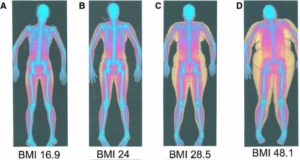
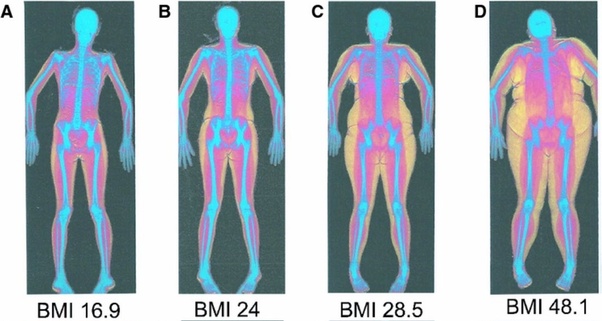
    You may have heard the term “big-boned” used to describe some overweight or obese people. Sometimes it’s a self-description. How much do our bones really contribute to our weight?
     
    The average human skeleton will account for around 12%-15% of total body weight. So, a 200-pound man would have a skeletal weight of 24-30 pounds. A 150-pound woman has a skeletal weight of 18-22.5 pounds. Bone density refers to the concentration of minerals in your bones, yet dense bones may add only a few pounds to your frame. As an adult continually gains weight throughout life, it’s not because their bones become continually bigger and heavier.
     
    An adult’s skeleton weighs more than a child’s. And a 7-foot person’s skeleton weighs more than a 6-foot person’s, who’s skeleton weighs more than a 5-foot person’s skeleton. Beyond this, people are not “big-boned.” The bones in people of the same height are relatively the same weight. Most people who weigh too much for their height typically do so because of excess body fat, though a more-muscular body does indeed weigh more than a less-muscular body.
     
    Seventy-five percent of Americans are now either overweight or obese. Yet, most people aren’t body builders. Our national weight problem is a fat problem, unrelated to too much muscle or too much bone.
     
    The term “big-boned” is not a medical term. One orthopedic surgeon would tell her patients, “I have seen your bones, and they’re not big.” Being “big-boned” or “small-boned” doesn’t justify a 30-35 pounds differential from a normal-weight person of your height. If you are truly convinced that you are just big-boned and not overweight, buy a body-fat scale to measure your fat percentage. Excess weight is either the result of excess fat or excess muscle, not excess bone or big bones.
     
    So, the notion of being big-boned is a big myth… unless you’re Shaquille O’Neal, who is 7-feet, 2-inches tall.
     
    By the way, in 1992, at the start of O’Neal’s rookie season, he was listed at 325 pounds. According to Shaq, he weighed 395 pounds by 2002. But it wasn’t because his bones got bigger or heavier though.
  • Diet vs Nutrition

    Diet vs Nutrition

    While many people continually “go on a diet” (and then another and another), everyone has a diet. I’ve never gone on a diet, but I’ve always had a diet. As I always say, diet should be viewed as a noun, not a verb. It’s a thing you have, not an action you take. Every action has a reaction (intended or otherwise), so any diet plan you initiate can quickly be halted in favor of something else.
     
    If you instead think of your diet as part of your lifestyle, you’re much more likely to stick to it. 
     
    Everyone has a diet, but not everyone gets good nutrition. In the minds of many people, low-calorie means healthy. Yet, this isn’t necessarily true.
     
    For example, a rice cake has just 35 calories. Yet, it is almost entirely devoid of fiber and protein. Though a rice cake has very few calories, it also has very little nutrition, not to mention that it’s entirely processed.
     
    On the other hand, an avocado, which grows on a tree, is both calorically and nutritionally dense. An avocado can weigh anywhere from 8 ounces to 3 pounds (48 ounces). So, serving size matters.
     
    One cup (8oz) of sliced avocado has 234 calories and 21 grams of fat, most of which is monounsaturated. It is packed with fiber (10g) and potassium (more than a banana), and is also a great source of vitamin-C, folate and B-6. Additionally, it has virtually no sugar (despite being a fruit) and very few carbs (for those who care about such things).
     
    In short, an avocado is loaded with healthy fats, fiber and various important nutrients.
     
    Yet, some people would choose a nutritionally lacking rice cake over an avocado simply because it is lower in calories. Bad move. Caloric content and nutritional content are not necessarily related. 
     
    No one thinks of a Big Mac as health food. Yet, you could eat three Big Macs a day and still lose weight. Don’t believe me? Well, a Big Mac has just 550 calories. Eat three a day and you’d ingest just 1,650 calories. Since the average American now eats a whopping 3,660 calories per day, eating one Big Mac for breakfast, lunch and dinner would cut that average intake by more than half. Do that, and watch the pounds melt away!
     
    However, you’d be missing lots of important nutrition on the Big Mac Diet. McDonald’s signature sandwich has minimal calcium, potassium and fiber, and zero vitamin D. However, it is loaded with sodium (44% of the daily value) and has 11 grams of saturated fat (53% of the daily value). Eat three a day and you’d be ingesting an enormous amount of salt and unhealthy fat.
     
    Oh, and one Big Mac also has nine grams of sugar. Eat three of them and you’d intake 27 grams of sugar, which is above the 24-gram daily limit recommended for women by the American Heart Association.
     
    Yet, on this Big Mac Diet you’d lose weight, and that would ultimately have a positive effect on your health. Scientific evidence shows that losing just 10 pounds can decrease hypertension, improve good cholesterol (HDL), lower triglycerides, decrease insulin resistance, reduce inflammation in blood vessels, improve or reverse sleep apnea, and increase energy and vitality.
     
    That said, there are better, healthier ways to lose weight than the Big Mac Diet. 
     
    The point is that calories and nutrition are not synonymous. You can eat a low-calorie diet that is not healthy. More to the point, you can eat a low-calorie diet and not necessarily be healthy.
     
    On the other hand, you can eat a very healthy diet featuring high-calorie foods that are packed with nutrition (i.e., avocados, nuts, nut-butters, salmon, whole-fat yogurt, etc.). Additionally, high-calorie foods are more filling than most low-calorie foods (like rice cakes), meaning you might ultimately eat less.
     
    Low calorie foods are not necessarily nutritious, beneficial or preferable. And high-calorie foods are not necessarily unhealthy or to be avoided. The goal should be to maximize nutrition at each and every meal, even if you also seek to limit calories.
     
    If you need to lose weight to be more healthy, you can do this by eating healthy, whole foods, such as fruits, vegetables, a wide variety of animal- and/or plant-based proteins, plus whole grains (There’s more than just wheat, people! Try spelt, millet, amaranth, quinoa, black or red rice, whole oats, etc.).
     
    And, yes, you can indeed lose weight by including healthy, high-calorie foods in your diet. You just need to limit your total caloric intake. To do that, you need to track your daily caloric input. And you should also know how many calories you need each day.
     
    As the Twinkie Diet proved, you can eat an unhealthy diet and still lose weight. The Big Mac Diet would be no different.
     
    By the same token, you can have a healthy diet and still gain weight, if your caloric intake is higher than your needs.
     
    To lose weight, it comes down to quality and quantity. You should aim for higher quality foods, and a lower quantity of them, each day.
  • What Is Your Heart Rate Monitor Really Telling You?

    What Is Your Heart Rate Monitor Really Telling You?

    Wrist-based heart-rate monitors are all the rage the days; many of my clients wear them to the gym each day. Yet, aside from the fact that these wrist-based heart-rate monitors are less accurate than the chest-strap versions, especially as you work harder (some models can be off by several beats per minute according to new research), they don’t offer users any perspective.
     
    What does it truly mean if your heart rate is 135, 145 or 155 beats per minute? Unless you know your maximum heart rate (MHR) and what percentage of it you’re working at, that info is useless.
     
    The well-known calculation of 220 minus your age to calculate MHR has long been known to be quite inaccurate. Yet, unfortunately, it remains a common standard for maximum heart rate calculations. For example, a 40-year-old person would subtract 40 from 220, indicating a maximum heart rate of 180 beats per minute.
     
    Known as the Fox formula, this classic maximum heart rate calculation was developed for untrained healthy adult males, though it was also considered valid for untrained healthy adult females and children.
     
    The Fox formula originated in the late 1960s, when William Haskell, an exercise physiologist who is now at Stanford University, and Sam Fox, a cardiologist, came up with a formula to determine the maximum heart rates of people who were having treadmill stress tests for heart disease.
     
    However, it was not really a scientific effort. Rather, it was a suggestion, based on a decidedly non-random and small sample of people. When Haskell and Fox proposed the formula, they never intended to give an absolute number for athletes or people who are used to exercising vigorously.
     
    Yet, it’s now recognized that that an individual’s maximum heart rate can vary widely from what that formula predicts — by as many as 30 beats per minute higher or lower.
     
    In essence, the Fox formula is as likely to be wrong as it is to be right. In fact, this formula’s reliability is 0.51. In other words, it’s reliable about half the time.
     
    The Tanaka formula for maximum heart rate is more accurate. It was developed based on studies of thousands of test subjects, can be used for all age and gender groups, and is considered to be more reliable than the Fox formula.
     
    • Fox: Maximum Heart Rate (beats/minute) = 220 minus Age
    • Tanaka: Maximum Heart Rate (beats/minute) = 208 minus (0.7 x Age)
     
    Using the Tanaka formula, a 40-year-old person would multiply 40 by 0.7, which equals 28. Then they would subtract 28 from 208, indicting a maximum heart rate of 180 beats per minute. You may remember that this is the same figure determined by the Fox formula. However, this is a coincidence, not the norm.
     
    For example:
     
    50-year-old
     
    • Fox formula: maximum heart rate = 170 (220 minus 50)
    • Tanaka formula: maximum heart rate = 173 (208 minus 35)
     
    30-year-old
     
    • Fox formula: maximum heart rate = 190 (220 minus 30)
    • Tanaka formula: maximum heart rate = 187 (208 minus 21)
     
    Ok, so now you can calculate your maximum heart rate. What does that mean? How does that help you?
     
    Reaching your MHR doesn’t mean your heart will explode! And it doesn’t guarantee a heart attack either. People train at this level for brief periods during their workouts every day, and they do it again and again and again.
     
    Most well-trained, fit people can maintain their maximum heart rate for just 1-2 minutes. Yet, world-class athletes may sustain their MHR for 3-4 minutes. On the other hand, a person who is quite out of shape may only be able to sustain their maximum heart rate for about 10 seconds or so.
     
    Yet, the ability to sustain MHR is just one measure of your fitness. How quickly your heart is able to recover from high-intensity exercise, during periods of lower heart-rate work or rest, matters a lot. The ability to recover (lower) your heart rate quickly is also an important measure of fitness.
     
    Familiarity and experience with exercise matters. Someone who works out regularly may be very accustomed to briefly pushing their heart rate to 85, 90 or even 100 percent. Yet, someone who is sedentary may find that pushing their heart rate to 70 percent is excruciating and scary. It’s all about perspective.
     
    It’s important to recognize that you can’t improve or increase your maximum heart rate with exercise. MHR is determined by genetics and age; as we get older, our MHR declines. Furthermore, not every 30-year-old will have the exact same maximum heart rate, nor will all 40-year-olds or 50-year-olds, etc. The calculation is an approximation, not a scientific assurance.
     
    What’s important is not what your maximum heart rate is, but what heart rate you can sustain for an extended period. Someone with a MHR of 190 isn’t necessarily more fit than someone with a MHR of 180. Person A, with the 190 MHR, may only be able to sustain 70 percent of that. Meanwhile, Person B, with the 180 MHR, may be able to sustain 85 percent of that. Person B is more fit, which is what matters — not an age-determined MHR.
     
    It’s important to remember that your heart rate has variability when you’re exerting yourself, such as when you’re working out. Most exercisers can’t simply pin their heart rate at 70, 80 or 90 percent of MHR. That’s because heart rate fluctuates throughout exercise. Your heart rate may rise quickly at the onset of a workout, then level out at a lower number. As you continue to workout, it may, over time, begin to climb again. And the harder you work, the more your heart rate may continue to rise throughout the workout.
     
    This is why you should pick a target heart-rate zone for your workouts, so that it doesn’t go to low or too high.
     
    The target heart rate during moderate intensity activities is about 50-70% of maximum heart rate, while during vigorous physical activity it’s about 70-85% of maximum, according to the American Heart Association.
     
    Of course, you can push your heart rate higher for brief periods and then allow it to recover. This is the essence of high-intensity interval training (HIIT), which is used not only by athletes but also by older folks and those with chronic conditions, such as diabetes or heart disease.
     
    Lastly, another important determinant of fitness is resting heart rate. The average resting heart rate is usually between 60 and 80 beats per minute, though it can even be as high as 100 bpm. Yet, some athletes have resting heart rates as low as 30 to 40 bpm. So, exercise can indeed lower resting heart rate, and this is important because every heart has a pre-determined number of beats from birth. The slower we get there, the better!
     
    In 2013, a team of Danish researchers published16 years of work on just under 5,200 men in the journal BMJ Heart. The researchers determined that higher resting heart rates correlated with a greater chance of dying.
     
    Those participants who ranged between 71 to 80 beats per minute had a 51 percent greater chance of dying prematurely than those with a resting rate of under 50 beats. At 81 to 90 beats per minute, that risk was double. And over 90, it tripled.
     
    So, there’s a lot more to the heart-rate story than just the number flashing on your watch.
     
    In conclusion, if you’re using a heart rate monitor while working out, it’s important to calculate your maximum heart rate, and to know your target heart-rate zone, as well as your resting heart rate. Once you know all of these things, then you’ll have some context for that heart rate number popping up on your watch.
  • Good Habits Can Have a Domino Effect

    Good Habits Can Have a Domino Effect

    We all have various reasons that we work out, assuming we do so at all. For some, it’s to relieve stress and anxiety. Some may feel a great sense of pride and accomplishment afterwards. For others, working out may be a vanity project that provides a sense of confidence and the ability to fit into tight jeans or proudly wear a tank top or a backless dress.
     
    Yet, health outcomes, not simply appearance, should be your main motivation. It’s well established that the health benefits of exercise go beyond the physical. Once you make exercise part of your routine, you may notice a host of psychological benefits, such as feeling more energized, less stressed, and sleeping better.
     
    As you begin to notice how much better exercise makes you feel, the more you’ll want to do it regularly. At that point, exercise becomes a habit. What’s most important is to perform the activities you really enjoy, which will help you adhere to your program.
     
    It’s said that old habits are hard to break and new habits are hard to form. This is especially true with exercise. If you’re not in the habit of exercising, remaining physically inactive is effortless. To create the habit of exercising, however, takes a lot of resolve, determination and effort.
     
    The more consistent an action is, the more likely it is to become a habit. This means that exercising every day is more likely to result in habit formation. One useful idea is to schedule your exercise for a given time each day, as you would with a personal trainer. Accountability is critical to maintaining your schedule and forming a habit.
     
    As Charles Duhigg, author of The Power of Habit notes, “When people start habitually exercising, even just once per week, they start changing other, unrelated patterns in their lives, often unknowingly. They often start eating better, becoming more productive, smoking less and feeling less stressed. It’s not completely clear why. But, for many people, exercise is a keystone habit that triggers widespread, positive change.”
     
    Researchers asked some study participants to write down what they ate once a week. This keystone habit, food journaling, created a structure that helped other habits to flourish. Six months into the study, these participants had lost twice as much weight as the other study participants.
     
    Unfortunately, 42 percent of Americans are obese, according to the CDC, and another 30 percent or so qualify as overweight. So, roughly three-quarters of our population has an unhealthy bodyweight. Because of this, many people view exercise solely as a means of weight loss. But there’s a whole lot more to it than that. The mental and emotional components of exercise cannot be emphasized enough.
     
    Exercise has been shown to increase grey matter in the brain, according to research published by the Mayo Clinic. Exercise also promotes brain plasticity by stimulating the growth of new connections between cells. Consequently, exercise improves cognitive ability and memory. 
     
    Furthermore, exercise releases chemicals, such as endorphins and serotonin, that improve your mood. As noted, exercise not only enhances self-esteem, it also reduces anxiety and depressed mood.
     
    “There’s good epidemiological data to suggest that active people are less depressed than inactive people. And people who were active and stopped tend to be more depressed than those who maintain or initiate an exercise program,” says James Blumenthal, PhD, a clinical psychologist at Duke University.
     
    Yet, there’s no denying the impact that exercise can have on our physical health and our ability to function well, aka, perform our activities of daily living.
     
    Don’t wait until your doctor tells you to exercise! At that point, too much time will have been lost.
     
    More than 1-in-3 adults, about 92.1 million people, have at least one type of cardiovascular disease, which is preventable.
     
    In fact, many forms of chronic illness are preventable. According to the CDC, the health-risk behaviors we can change include: lack of exercise/physical activity, poor nutrition, tobacco use and excessive alcohol use. These four behaviors cause much of the illness, suffering and early death related to chronic diseases and conditions. In essence, they are bad habits that can be corrected.
     
    It’s important to remember that health is not just about food and exercise. Everyone would benefit from things such as meditation, learning a new skill, developing a new hobby, and/or growing your social network. Each of these things can make you a healthier person in measurable ways. 
     
    If you’re new to exercise or haven’t done it in a long time, start slowly. Don’t take the attitude that you can get fit today or even this week. Allow your body time to adjust to the demands you’re placing on it. Your exercise routine should be progressive, growing in either intensity or duration as your fitness level gradually improves.
     
    The physical effects of exercise — such as weight loss, lower blood pressure or a lower resting heart rate — take time and patience; you may not see your numbers move for weeks to months.
     
    The mood boost from exercise, however, is often immediate, offering near-instant gratification. Alleviating mood disorders, such as anxiety or depression, may take longer, but the mental and emotional effects of exercise are often immediately tangible.
     
    The most important takeaway is that good habits can have a domino effect, with one healthy change leading to another and so on. After committing to a few healthy acts, we’re less likely to back-step and commit unhealthy acts. After all, no one wants to undermine their own progress.
     
    Start with the easiest change you can think of; pick the low hanging fruit first. Once you’ve created a healthy daily habit that lasts a couple of weeks, add another easy-to-achieve step. View these changes as rungs on a ladder; take them one step at a time. Be consistent and be progressive. But don’t take on too much, too soon. 
     
    Small victories lead to a sense of pride, achievement and accomplishment. These are all empowering and rewarding feelings. Ultimately, one good change will lead to another.
  • How Your BMR and RMR Contribute to Your Weight Status

    How Your BMR and RMR Contribute to Your Weight Status

    If you’ve ever weighed yourself before bed at night and again in the morning, you may have been surprised that you lost anywhere from 1-3 pounds. This is fairly normal. We all lose weight at night while sleeping.
     
    How much we lose overnight depends on whether we get enough sleep, how much water we excrete, and our basal metabolic rate (BMR), which is largely determined by the amount of muscle we have (muscle is quite metabolically active).
     
    The body is in an entirely aerobic state while we’re sleeping, since it uses only fat to operate in such a low-energy state (carbohydrates are used only for higher energy demands). Our heart, brain and other organs all need energy to maintain basic functions while we’re sleeping.
     
    In one hour of sleep, most people burn 0.4 to 0.5 calorie for every pound of body weight. For example, a 150-pound person would multiply 150 by 0.4 or 0.5 to get 60 to 75 calories used in one hour of sleep. After eight hours of sleep, that person has burned 480 to 500 calories.
     
    A 200-pound person would burn 80-100 calories per hour, or 640-800 calories during eight hours of sleep.
     
    This may seem unbelievable, but it’s true. You’re burning calories all day long — even while sleeping — just to stay alive; that’s your BMR. Additionally, energy is also expended by digesting your food and from non-exercise daily movements, such as brushing your teeth, getting dressed and pouring your morning coffee. This additional expenditure is known as your resting metabolic rate (RMR).
     
    For American women, the average BMR is 1,493 calories. For American men, the average BMR is 1,662 calories.
     
    Your BMR accounts for about 70 percent of the calories you burn every day (in general, men have a higher BMR than women). This is critically important since there is no way we can exercise away all the calories we consume each day.
     
    Muscle is the single most important predictor of how well you metabolize your food, burn calories, and burn body fat. However, beginning in our late 20s, we start losing muscle, which means our metabolism also starts declining. A consistent weight training program can stop this decline and even reverse it.
     
    There are approximately 3,500 calories in a pound of stored body fat. If you subtract 3,500 calories each week through diet, exercise or a combination of both, you will lose one pound of body weight.
     
    On average, 75 percent of this is fat and 25 percent is lean tissue, which is why it’s so important to strength train while attempting to lose weight; you don’t want to lose your precious muscle along with that unwanted fat. Muscles at rest burn three times more calories than fat, so maintaining or increasing muscle mass influences BMR.
     
    In simple terms, if you’re seeking to lose weight, aim for a 500-calorie deficit each day of the week (7 x 500 = 3,500).
     
    As a guide, the American College of Sports Medicine (ACSM) recommends that women never drop their calorie-intake level below 1,200 per day and men should not go below 1,800 calories per day.
     
    So, back to where we started: it’s possible for a 150-pound person to lose about 1 pound each week simply by sleeping eight hours every night. Remember, a person of this weight burns roughly 500 calories while sleeping each night. Sleep is very valuable!  In fact, sleep deprivation has been linked to an increase in weight.
     
    Clearly, much of this 1-pound of weight loss is water, not just fat (we lose water gradually each night through respiration and perspiration), but burning 500 calories overnight while sleeping is no small matter.
     
    The average person eliminates about 1.2 liters of water in urine each day, and also eliminates about 1 liter a day through perspiration and respiration. That’s 2.2 kilograms (almost 5 pounds) of weight fluctuation happening throughout the day.
     
    So, don’t get caught up in the daily fluctuations of your body weight. You can gain up to 5 pounds during the day just from your food and beverage intake — but it’s not all fat!
     
    Your BMR, non-exercise daily movements, and your daily exercise routine should allow you to at least maintain your present weight. To lose weight, however, you’ll have to reduce your daily caloric intake.
     
    You weigh less in the morning than during the rest of the day because you don’t (normally, at least) eat and drink during the night. Remember that two cups of water (16 ounces or one pint) weighs one pound, so drinking a tall glass of water will temporarily be reflected in your weight.
     
    The most accurate time to weigh yourself is first thing in the morning, when you have an empty stomach. Weighing yourself while naked will also give you a more accurate reflection of your weight. 
     
    Lastly, always weigh yourself on the same scale. Even if it’s off by a pound or so, it will be relative to itself and still reveal any upward or downward movements. Different scales may give you different results, which can be misleading or even maddening.
  • Walking Has Many Benefits, Even for Runners

    Walking Has Many Benefits, Even for Runners


    While running is more physically demanding than walking, the latter is still a good form of exercise and a great recovery tool for runners. Running the same speed and distance each day can lead to plateauing. Walking, which is lower impact, can allow your body to recover and enable better results over the long term.
     
    Running will lead to greater cardiorespiratory fitness than walking, as well as more calories burned in an equal period of time. However, walking is a better alternative for people with ankle, knee or back injuries (including recent surgeries), as well as for people who are obese. Walking puts less stress on joints and can reduce the pains associated with running.
     
    Like running, walking can improve heart health, improve circulation and improve posture. Walking can also help reduce the risk for high blood pressure, high cholesterol, diabetes, heart disease and even cancer.
     
    The key is to walk with a sense of purpose by engaging in at least moderate-intensity walking. Walking can even be a form of interval training. By repeatedly raising and lowering your speed and (if you are on a treadmill) the incline, you can also raise and lower your heart rate intermittently, which is a great calorie burner. You can even intersperse short runs, of say a block or two or a minute or two, into your walks. 
     
    Walking uphill or on an incline places more demand on the body, particularly the leg muscles. You’ll notice it in your heart rate, as well. The higher you set the incline on the treadmill, the more you activate your glutes, quadriceps and calves, and the more energy you use. That means more calories burned.
     
    One common mistake that people make when using a treadmill is holding onto the handrails. This takes away from muscle engagement and the energy required to walk or run at the level you set. Remember, there are no handrails when you walk outside and you manage that quite well!
     
    Like running, walking can clear your mind, improve mood,nd alleviate anxiety and depression.
     
    So, put on some comfy athletic shoes, get hydrated and get in motion.
  • Strength Training Can Prevent Falls

    Strength Training Can Prevent Falls

    According to a new report from the CDC, 1 in 4 Americans age 65 and older report falling each year, which accounts for the largest percentage of unintentional deaths.
     
    There were 18,000 fall-related deaths in 2007 and that rose to 30,000 in 2016. Over that span, the rate of deaths increased by an average of 3 percent annually. Moreover, there are 3 million fall-related emergency room visits annually. This is a worsening problem that needs to be addressed. 
     
    Being on multiple medicines, including blood thinners, can contribute to falling. However, reduced physical activity, plus age-related changes in gait and balance, also contribute to this problem.
     
    Balance and strengthening exercises can help prevent falls. Exercise makes your muscles stronger and more flexible, and it can also improve your balance.
     
    A comprehensive 2016 analysis by the British Journal of Sports Medicine found that exercise alone reduces the risk of falls in older adults by an average of 21 percent. What’s more, working out for more than three hours per week was linked to a 39 percent reduction in falls.
     
    As we age, our muscle mass declines. The way to thwart this is by performing resistance exercises. According to one Age and Ageing review, 1 in 3 adults age 60 and older suffer from severe muscle loss, called sarcopenia.
     
    The strength of the legs, hips and core are all critical to mobility. The loss of muscle mass and strength in the arms and upper body can also make it difficult to catch yourself if you trip and begin to fall.
     
    Focus on your body’s largest, most powerful muscle groups, such as your glutes, quads and hamstrings, while also performing single-leg and balancing exercises.
     
    A qualified personal trainer can help you perform the necessary exercises to strengthen your legs, hips, core, low back and upper body, as well as improve your coordination and mobility.
     
    Don’t wait until you (or your parents) begin falling to act. Be proactive and preventative.
     
    Get in Motion. Stay in Motion.
  • Is Your Weight Training Intensity Adequate?

    Is Your Weight Training Intensity Adequate?

    Through many years at the gym, I’ve often seen women using the same 5-pound dumbbells for a variety of exercises: chess presses, shoulder presses, rows, bicep curls, lateral raises, front raises and more. Since weights should be thought of as tools, this is tantamount to using a screwdriver for every task, when sometimes you need a hammer or a wrench.
     
    For example, the weight you use for a chest press should be heavier than the weight you use for a shoulder press, which should he heavier than the weight you use for a lateral raise.
     
    As you work out consistently, you should grow stronger over time, necessitating the use of heavier weights for each exercise. This is especially true in the early stages of a workout program, when strength gains are most pronounced.
     
    It’s not just women either. I’ve often seen men using the same 25-pound dumbbells for an exercise that they’ve been performing for years. They make no progress because their program is not built on progression.
     
    Your body is a demand-based system. That is, the more you demand of it, the more it will produce. If you don’t steadily, but incrementally, increase the demand, your workouts and your results will stagnate.
     
    Aside from the fact that you shouldn’t be lifting the same exact weight for a variety of exercises, you shouldn’t be lifting the same exact weight for the same exercise, week after week, month after month.
     
    In short, weight training is meant to be progressive. You shouldn’t be lifting the same amount of weight today that you did one year ago. You should have gotten stronger; you should have progressed.
     
    However, sometimes your body needs a break from heavy lifting. Take it easy once a week and work on muscular endurance instead of just strength. Give your muscles a break, while still remaining active in the gym.
     
    How do you know if you are (or are not) using a high enough weight, aka, working out at the proper intensity?
     
    First, let’s define intensity, which is based on the maximum number of repetitions that can be performed with a given weight. The one-repetition maximum (1RM) is an ideal baseline:
     
    • High Intensity = 80–100% of your 1-rep max (1RM); typically 1-5 reps
    • Medium Intensity = 60–80% of your 1-rep max (1RM); 6-12 reps
    • Low Intensity = 10–40% of your 1-rep max (1RM); 15 or more reps
     
    The National Strength and Conditioning Association (NSCA) provides the following guidelines:
     
    • Hypertrophy (muscle growth) = 6-12 RM
    • Strength = 6, or fewer, RM
    • Power = 1-2 RM
     
    In order for your muscles to undergo an adaptation from training (i.e., to grow stronger or bigger), they must be stressed by working against a weight/load/stimulus that is greater than what they are accustomed.
     
    Don’t stop an exercise simply because you have reached 10 or 12 reps. Perform each exercise to the point of momentary muscular failure, whether that’s 12, 10, eight or six reps.
     
    Increasing weight means a reduction of reps. If, for example, you can chest press 40-pound dumbbells 10 times to failure, that means you shouldn’t be able to press 50-pound dumbbells 10 times (if you can, you should be working out with the 50s, not the 40s). It’s likely that you can only press the 50s six times or eight times, or whatever it might be.
     
    If the current weight you are lifting isn’t challenging, you need to increase that weight. Strength training is meant to be challenging, because the whole point is to “overload” your muscles so they become stronger.
     
    Simply put, if you can do more than 12 repetitions, you should increase the weight. Everyone could stand to be stronger. 
     
    If you determine that it’s time to increase your resistance for a particular exercise, do this by adding no more than 10 percent at a time. For example, if you’re currently lifting 50 pounds, you’d increase that by five pounds to 55 pounds. This incremental increase should keep you safe and prevent injury. It’s important to maintain good form with a new, higher weight.
     
    Remember, if you don’t make your muscles work harder than they’re accustomed, they won’t get stronger (which is the whole point). If you train progressively, your muscles will grow stronger in order to meet the increasing demands you are placing on them.
     
    Lastly, recognize that some days you will feel like the Incredible Hulk, while on other days you will feel like a mere mortal. It’s okay; it’s all part of the process. Don’t beat yourself up over a bad training day. We all have them from time to time. 
  • Diet is a Noun, Not a Verb

    Diet is a Noun, Not a Verb

    Like fitness, your diet is a lifestyle. It should be ongoing and permanent, not a temporary shift to achieve a quick result. Quick fixes always lead to short term results.

    Think of your diet as a noun, not a verb. You have a diet; you don’t “go on” or “start” a diet.
     
    Every action has a reaction and anything you start you can also stop. You’re much less likely to suddenly end your lifestyle, but you can always abruptly end a diet and undo any of the good that has been achieved.
     
    Instead of dieting to lose weight, choose lower-calorie, nutrient-dense foods that will both nourish and fuel your body. Extreme calorie restriction can ultimately lower your metabolism, as your body seeks to preserve stored calories. Deprivation can lead to frustration and bingeing.
     
    Ask yourself how the foods you’re putting into your body are serving you. Are they nourishing your body and improving your health? Are they doing your body good?
     
    All calories are not equal. Some foods are more nutritious than others. One-hundred calories of vegetables are not the same as 100 calories of chips or cookies.
     
    A healthy diet is the fuel for your exercise program. Exercise, in turn, will help you gain strength, build fitness and increase your metabolism.
     
    Improving your fitness and wellness should be the goal; weight loss may be a byproduct of that. Fitness first!
     
    Diet and exercise aren’t just about changing your body; they’re about changing your life!
  • Get Fit in the Gym; Lose Weight in the Kitchen

    Get Fit in the Gym; Lose Weight in the Kitchen

    Exercise has numerous benefits, the least of which is weight loss. Focus on the many health benefits of exercise, not just your weight. 

    Whether it’s a New Year’s resolution, a birthday, or the recommendation of a doctor, most Americans will determine to lose weight at some point during the year. It’s little surprise.
     
    In 2017, the Centers for Disease Control and Prevention found that almost 40 percent of American adults and nearly 20 percent of adolescents are obese — the highest rates ever recorded for the U.S.
     
    In all, more than 70 percent of Americans are now either overweight or obese, meaning that an unhealthy weight has become the norm, with healthy-weight Americans — who have a BMI of less than 25 — now in the minority.
     
    However, while exercise is great for overall health in a multitude of ways, it isn’t the most effective means of weight loss.
     
    A lot of personal trainers may not want their clients to know this, but I think it’s important to set the record straight and to set a framework for reasonable expectations.
     
    The number of calories you burn when exercising account for a rather small portion of your total, daily energy expenditure.
     
    There are three main components to energy expenditure: 1.) basal metabolic rate, or the energy used for basic functioning when the body is at rest; 2.) the energy used to break down food; and 3.) the energy used in physical activity.
     
    Your basal metabolic rate (BMR) is the single biggest source of energy expenditure, responsible for about 70 percent of the calories burned each day. Digesting your food accounts for roughly another 10 percent. The remaining 20 percent, or so, can be burned through exercise.
     
    However, if you’ve ever walked on a treadmill, for example, you may be disappointed by just how few calories you burn.
     
    Your weight and the distance you walk are the biggest factors in how many calories you burn while walking. A rule of thumb is that about 100 calories per mile are burned for an 180-pound person and 65 calories per mile are burned for a 120-pound person.
     
    In other words, if a 180-pound person walks two miles, they would burn just 200 calories. If that person walks at a fairly brisk 4-miles-per-hour, it would take them 30 minutes to burn those 200 calories. That’s a pretty small payoff for that amount of time.
     
    In short, there’s a huge discrepancy between the number of calories you intake and the number of calories you expend while exercising.
     
    The average American consumes more than 3,600 calories daily – a 24% increase from 1961, when the average was just 2,880 calories, according to The Food and Agriculture Organization of the United Nations.
     
    To make matters worse, various studies have shown that people generally overestimate how much energy they burn while exercising and that they eat more when they work out.
     
    In a nutshell, if you’re trying to burn off all those excess calories at the gym, you’re going to be greatly disappointed.
     
    By far, the most critical factor for weight loss is limiting caloric consumption. It’s as plain as that.
     
    People who decide to reward themselves with food because they exercise — whether it’s larger portions, seconds, dessert, etc. — are setting themselves up for failure. They’re just taking one step forward and then two steps back. All the hard work done at the gym on any given day can be erased with just one excessive meal.
     
    Exercise has numerous benefits, aside from calorie burning: strengthening the heart (your most important muscle) and the arteries; lowering blood pressure; lowering resting heart rate; strengthening muscles, bones, tendons and ligaments; lowering resting blood sugar levels and sensitivity; lowering bad cholesterol, while raising good cholesterol; preventing many cancers; better sleep; improved mood and mental state; stress management and on and on.
     
    Weight training, in particular, is the closest thing to the fountain of youth that humanity has yet discovered. Yes, numerous studies have shown that strength training can actually reverse the aging process!
     
    None of this is to say that exercise, particularly strength training, cannot positively affect weight loss; it just shouldn’t be the primary focus.
     
    Resistance training may significantly increase resting metabolic rate (RMR) by increasing muscle mass. That’s because muscle mass alone contributes about 22 percent to RMR. An increase in RMR will result in more calories burned throughout the day, even when you’re not working out.
     
    RMR is generally depressed during caloric restriction, such as when individuals are dieting. This makes strength training especially important since it can elevate RMR, even when dieting. The problem for dieters who don’t strength train is that they not only lose body fat, they also lose muscle mass. That’s ultimately counterproductive to their long-term goal of maintianing weight loss.
     
    The important thing to remember is that exercise has many, many benefits, but weight loss is not the primary one. Reducing calories is central to weight loss.
     
    The focus of exercise should be the plethora of health benefits, both mental and physical, that can be achieved through a regular, committed workout program.