Category: high blood pressure

  • Know Your Health; Know Your Biomarkers

    Know Your Health; Know Your Biomarkers

    America is not a healthy nation. The US spends more on health care than any other high-income country but still has the lowest life expectancy at birth and the highest rate of people with multiple chronic diseases, according to a 2023 report from The Commonwealth Fund, an independent research group. In fact, America is ranked No. 35 out of 169 countries in terms of overall citizen health, according to the Bloomberg Healthiest Country Index. This means that 34 countries are ahead of us.

    It’s easy to see why. Nearly 60% adults in the United States have at least one chronic disease, with the most common being heart disease, cancer, diabetes, arthritis, and obesity, according to the CDC. Consequently, biomarkers — objective measures of normal or abnormal processes or conditions or diseases —really matter. These might include blood pressure, resting heart rate, blood sugar levels, cholesterol levels, and body fat percentage, for example.

    Essentially half (47%) of American adults have high blood pressure (hypertension), according to the American Heart Association. That amounts to a whopping 122.4 million people. A normal blood pressure is less than 120/80 mmHg. A blood pressure of 140/90 mmHg or more is too high. People with levels from 120/80 mmHg to 139/89 mmHg have a condition called pre-hypertension, which means they are at high risk for high blood pressure.

    Having high blood pressure puts you at risk for heart disease and stroke, which are leading causes of death in the United States. However, most people who have hypertension do not experience any symptoms. People usually discover that they have hypertension following a routine blood pressure check.

    Another all-too-common disease in the US is diabetes, which is diagnosed when a person’s A1C levels are 6.5% or higher.

    According to the CDC, 11.3% of the US population has diabetes, and 23% of adults are undiagnosed. This means that more 34% of the adult population likely has diabetes. Yet, about 90-95% of people with diabetes have type-2, which is preventable. Additionally, about 98 million American adults (more than 1 in 3) have pre-diabetes. If you get the sense that diabetes is a crisis in the US, you’re right. Having diabetes also raises the risks for other chronic conditions.

    For example, if you have diabetes, you are twice as likely to have high blood pressure. Chronic diseases are often linked.
    Diabetes is the top cause of kidney failure, causing nearly half (47%) of new cases. About 1 in 3 adults with diabetes may have kidney disease. High blood pressure is the second most common cause of kidney failure, causing 27% of new cases. In fact, 1 in 5 adults with high blood pressure may have kidney disease. Are you getting the sense that many of the most common chronic diseases are linked?

    Quite astonishingly, as many as 37 million Americans have kidney disease, meaning it affects 14% of American adults. In fact, kidney disease is the fastest-growing noncommunicable disease in the US, and it’s one of the top 10 causes of death.

    The kicker is that all of the above are preventable; it’s within our hands to heal or prevent them. But there’s more.

    High LDL (bad) cholesterol levels in the bloodstream may increase the risk of heart disease and cardiovascular events like stroke. Normal cholesterol in adults is less than 200 mg/dL; borderline high is 200 to 239 mg/dL. Yet, about 86 million US adults age 20 or older have total cholesterol levels above 200 mg/dL, according to the CDC. And nearly 25 million adults in the US have total cholesterol levels above 240 mg/dL.

    The latest data indicate that 39.6% of US adults are obese, and another 31.6% are overweight. Taken together, 71.2%, or nearly three-quarters, of American adults are either overweight or obese. This comes at a tremendous cost to our national wellbeing. Overweight and obesity may increase your risk for developing health problems, such as diabetes, heart disease, stroke, and certain cancers, according to the National Institutes of Health.

    Excess body fat is associated with high levels of LDL (bad) cholesterol and triglycerides, as well as low levels of HDL (good) cholesterol. It also impairs the body’s responsiveness to insulin, raising blood sugar and insulin levels. Excess body fat contributes to major causes of death and disability, including heart attacks, strokes, high blood pressure, cancer, diabetes, osteoarthritis, fatty liver, and depression. Yet, when it comes to health, the issue is not how much you weigh but how much abdominal fat you have. Research shows that abdominal fat is the worst of the worst because it is a major contributor to cardiovascular disease.

    Waist circumference is an indicator of the health risks associated with excess fat around the waist. A waist circumference of 40 inches or more in men, or 35 inches or more in women, is associated with health problems such as type 2 diabetes, heart disease, and high blood pressure. Ideally, everyone should aim to keep their waist measurement less than half that of their height, according to scientists. That means a 6ft (72 inch) tall man should aim to keep his waist less than 36 inches, while a 5ft 4in (64 inch) woman should keep hers under 32 inches.

    Metabolic syndrome is a cluster of conditions that increases the risk of heart disease, stroke and diabetes. Metabolic syndrome includes obesity, high blood pressure, high blood sugar, high triglycerides, and irregular cholesterol levels. The risk of metabolic syndrome increases with age, and about 1 in 3 adults have metabolic syndrome.

    Heart disease remains the leading cause of death in the US, as it has been for the past 100 years. Stroke is the fifth leading cause of death. Together, they claimed more lives in 2021 in the U.S. than all forms of cancer and chronic lower respiratory disease combined. High blood pressure, high blood cholesterol, and smoking are key risk factors for heart disease. Yet, diabetes, overweight and obesity can also put people at a higher risk for heart disease.

    The links between all of these chronic diseases is striking. Having high blood pressure puts you at risk for heart disease and stroke. If you have diabetes, you are twice as likely to have high blood pressure. Yet, people with high blood pressure usually have insulin resistance and have an increased risk of developing diabetes compared to those with normal blood pressure. So the relationship between diabetes and high blood pressure is a two-way street. Diabetes is the top cause of kidney failure. High blood pressure is the second most common cause of kidney failure. High LDL (bad) cholesterol levels in the bloodstream may increase the risk of heart disease and stroke. Overweight and obesity may increase your risk for developing a wide array health problems, such as diabetes, heart disease, stroke, and certain cancers.

    Link after link after link. The connection between chronic conditions is stark.

    Yet, being thin doesn’t necessarily mean that you’re healthy. Thin people might still have cancer, diabetes or heart disease, for example.

    Health is comprehensive and encompasses a number of factors including nutrition, exercise, sleep, stress levels, lifestyle choices, and more. Weight is just one small piece of the puzzle and should never be used as the sole indicator of overall health.

    Wellness requires us to think holistically and address all indicators of health. Obsessing and stressing over one factor, such as weight status, can stunt progress and lead to decreased mental wellbeing.

    It’s important to recognize that medical interventions contribute less than 10% to overall health. Meanwhile, nutritional status accounts for a remarkable 80%. Nutrition addresses the root causes of diseases, whereas drugs often only alleviate symptoms. What we eat really matters… a lot.

    We know that exercise certainly improves health and wellness. Yet, a staggering 80% of US adults and adolescents are insufficiently active, according to the Journal of the American Medical Association. What’s more, those leading sedentary lifestyles face a 20-30% higher risk of mortality compared to those who participate in at least 30 minutes of moderate exercise most days of the week, according to the World Health Organization.

    Numerous studies show that consistent exercise decreases the risk of cardiovascular disease, type 2 diabetes, many cancers, cognitive decline and mental illness. Meanwhile, a sedentary life is associated with an increase in cardiometabolic disease and shortened lifespans.

    While there are many reasons that people exercise, in my view it shouldn’t be about having the best butt or bigger biceps; it’s about being a happier, more fulfilled, more self-satisfied person. Everyone recognizes that exercise can change your body, but it can also change your mood, your attitude, and even your mind.

    Wellbeing is not just the absence of disease or illness. It’s a complex combination of a person’s physical, mental, emotional, and social health factors. Wellbeing is strongly linked to happiness and life satisfaction. In short, wellbeing could be described as how you feel about yourself and your life.

    Researchers agree that health-related quality of life is multi-dimensional and includes domains that are related to physical, mental, emotional and social functioning, and the social context in which people live. That said, loneliness and social disconnectedness are two of the greatest challenges of the modern era. Social isolation and loneliness are now considered demonstrated risk factors for depression and cancer. Our social connections, or lack thereof, really affect our health.

    Loneliness takes a toll on our health. It can lead to high blood pressure, and an increased risk of cardiovascular disease and stroke. Loneliness has been linked to the progression of Alzheimer’s, raising the likelihood of dementia by 40%. And it can also double the risk of Type-2 diabetes. One study found that loneliness can be as much of a long-term risk factor as smoking. As a consequence, chronically lonely people tend to have an 83% higher mortality risk than those who feel less isolated.

    Brigham Young University researchers have revealed that loneliness is deadlier than obesity and should now be considered a major public health hazard. They discovered that lonely people had a 50% increased risk of early death, compared to those with good social connections. In contrast, obesity raises the chance of dying before the age of 70 by around 30%. Humans are social animals. We need community, we need friends. While solitude may be nice sometimes, loneliness isn’t.

    Research also shows that mindset really matters when it comes to health, and it can even extend your life. A classic study found that people who were optimistic about aging lived seven and a half years longer than those who had negative perceptions of it.

    The takeaway is that our health is mostly in our own hands. We can be proactive and we can largely control our own destiny. We are not fated to ill health, even if our parents or grandparents had specific diseases. Most of the diseases that modern Americans suffer from are lifestyle disease, meaning they’re the result of the way we live and the choices we make.

    We can make better choices to improve our health, the quality of our life, and even our life expectancy. We also need to remember that stress reduction and social connection play a big role in our wellbeing. We can do better, and we must do better. Our very lives depend on it.

    It’s preferable that your doctor tells you that you look better on the inside than on the outside. Your biomarkers really matter, and you should know them.


  • Honor Your Body Clock, Create Circadian Alignment

    Honor Your Body Clock, Create Circadian Alignment

    Scientists have isolated the body-clock genes that control 24-hour light-dark circadian rhythm, and it’s now known that every cell in the body has a synchronized clock. 
     
    The 2017 Nobel Prize in Physiology and Medicine was awarded to three scientists who discovered the body clock gene and its critical role in metabolic function. In a world of 24/7 non-stop chaotic eating, relentless stress, continuous screen-gazing, sedentary lifestyle and sleep deprivation, time has become irrelevant. These constant 21st century disruptions of the powerful cellular body clock cycles (aka, circadian rhythm) are wreaking life-threatening havoc on mental and physical health, resulting in obesity, metabolic syndrome, cancer and diabetes.
     
    “We didn’t realize at the time that this clock would be represented all over the body in many different tissues and control so many different biological processes that we go through every day,” says Michael Young MD, 2017 Nobel Laureate in Medicine and Physiology. “It left us with the understanding that our whole bodies are rhythmically active.”  
     
    Circadian Alignment is when the central and peripheral clocks are aligned: bright light during daytime, sleep at night, and food intake during daytime. Circadian Misalignment is when the central and peripheral clocks are misaligned: light at night, sleep during daytime, and food intake at night.
     
    This misalignment has become normalized. According to a recent study of the eating habits of more than 34,000 U.S. adults, nearly 60 percent said it was normal for them to eat after 9 p.m. 
     
    Yet, time-restricted eating (12-16 hours of non-eating) has proven to be the best match to our circadian clocks. This means we need to eliminate nocturnal eating. We should stop eating by 6-7pm and not eat again for at least 12 hours (14 hours is the sweet spot).
     
    Our bodies have evolved to process nutrients during the day, and to conserve energy at night. The body uses energy to repair all of its systems at night, while we sleep. Disrupting that natural rhythm can cause problems.
     
    Several studies have found, for instance, that eating dinner within three hours of bedtime may worsen heartburn or acid reflux symptoms. And limited research has suggested that eating one to three hours before bedtime is associated with more disrupted sleep.
     
    The most intriguing research on late-night eating, however, has focused on its relationship with body weight and metabolic health.
     
    In one 2019 study of nearly 900 middle-aged and older U.S. adults, researchers at Brigham and Women’s Hospital in Boston found that those who consumed roughly 100 calories or more within two hours of bedtime were about 80 percent more likely to be overweight or to have obesity than those who did not eat during that window. Researchers have found similar results in adults in Sweden and Japan.
     
    And in a 2023 study of more than 850 adults in Britain, those who regularly snacked after 9 p.m. had higher levels of HbA1c, a marker for diabetes risk, and greater spikes in blood sugars and fats after daytime meals than those who did not typically consume late-night snacks.
     
    Research has also found that carbohydrates consumed in the evening result in greater blood sugar spikes than those consumed earlier in the day. That is in part because melatonin, a sleep-promoting hormone that increases in the evening, dampens the secretion of insulin, which regulates blood sugar levels. Elevated blood sugars could eventually damage blood vessels and increase the risk of developing high blood pressure and Type 2 diabetes.
     
    Research suggests that it’s best to avoid eating for three to four hours before your usual bedtime. We should be eating during an 8-12 hour window, allowing 12-16 hours for regeneration. We should also be sleeping for 7-8 hours each night. 
     
    A regular bed time is critical for your health and wellness, as is a regular waking time. Additionally, sleeping too long can affect your ability to fall asleep that night. After a good night’s sleep, most people need to be awake around 16 hours before they feel sleepy again.
     
    Going to sleep between 10:00 pm and 11:00 pm is associated with a lower risk of developing heart disease compared to earlier or later bedtimes, according to a recent study by the European Society of Cardiology. Early or late bedtimes may be more likely to disrupt the body’s circadian clock, with adverse consequences for cardiovascular health, according to the study’s authors.
     
    The incidence of cardiovascular disease was highest in those with sleep times at midnight or later (25% higher risk) and lowest in those with sleep onset from 10:00 to 10:59 pm. There was also a 24% higher risk for falling asleep before 10:00 pm. Yes, the body clock is that precise and sensitive. 
     
    Humans are not nocturnal animals; we are diurnal. We need to honor our innate body clock by eating and sleeping in a manner that naturally suits us and promotes health.
  • How to Slow Your Heart Rate and Promote Feelings of Calm

    How to Slow Your Heart Rate and Promote Feelings of Calm

    Our breath is the fundamental element of our life.
     
    Most people can comfortably hold their breath for 30 to 60 seconds. Some can safely hold it for as long 2 minutes. However, permanent brain damage usually begins after only 4 minutes without oxygen, and death can occur as soon as 4 to 6 minutes after that.
     
    Obviously, our breath is vital. Yet, we’re rarely conscious of it. Breathing is part of the autonomic nervous system, meaning that it is automatic and unconscious. The autonomic nervous system has two primary branches: The sympathetic nervous system and the parasympathetic nervous system.
     
    The sympathetic nervous system prepares the body for the “fight or flight” response during any potential danger. On the other hand, the parasympathetic nervous system inhibits the body from overworking and restores it to a calm and composed state. So, we can think of the sympathetic nervous system as the gas pedal and the parasympathetic nervous system as the brake pedal.
     
    The breath is really the quickest and most efficient way to affect and control the nervous system. By extending the exhalation longer than the inhalation, you generate parasympathetic activation and often a soothing, calming, steadying effect. This natural phenomenon is called respiratory sinus arrhythmia. As you exhale, the vagus nerve will slow down the heartbeat.
     
    So, consciously slowing your breath can ease the parasympathetic nervous system, which can slow your heart rate and promote feelings of calm.
     
    Studies have found that breathing practices can help reduce symptoms associated with anxiety, insomnia, post-traumatic stress disorder (PTSD), depression, and attention deficit disorder (ADD).
     
    Normal respiration rates for adults at rest range from 12 to 16 breaths per minute, according to Johns Hopkins. It should be noted that 12 breaths per minute amounts to one breath every 5 seconds. Exceeding 12 breaths per minute is a sign of quick and shallow breathing.
     
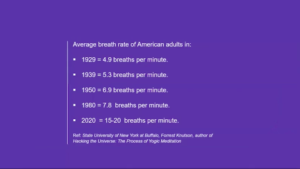
    Unfortunately, we breathe a lot faster than previous generations did, and it’s really not good for us. Most American adults now breathe at a rate of 15-20 per minute. Yet, any breath rate above 12 per minute activates the sympathetic nervous system (fight or flight). This means that most of us are in a constant state of fight or flight activation simply due to the way we breathe.
     
    Scientists are finding that breathing at the rate of about six exhalations per minute can be especially restorative, triggering a relaxation response in the brain and body. Some people can reduce their respiratory rate to this level using slow, mindful breathing techniques. 
     
    There is a direct relationship between respiration rate and heart rate. Exhalation – particularly when sustained longer than inhalation – slows your heart. Meanwhile, inhalation accelerates your heart. And the more your heart beats, the more respiration occurs. As the heart beats faster, it uses more energy and sends more oxygen to the body. For example, during exercise the respiratory rate will increase to about 40–60 breaths per minute.
     
    Breathing with your mouth, especially when you’re not exercising vigorously, is a sign of dysfunctional breathing.
     
    Nose breathing is more beneficial than mouth breathing, which is unnatural. Breathing through your nose can help filter out dust and allergens, boost your oxygen uptake, and humidify the air you inhale. Mouth breathing, on the other hand, can dry out your mouth, which may increase your risk of bad breath and gum inflammation.
     
    The nose produces nitric oxide, which improves your lungs’ ability to absorb oxygen. Nitric oxide also increases your ability to transport oxygen throughout your body, including inside your heart. It relaxes vascular smooth muscle and allows blood vessels to dilate.
     
    Nitric oxide is also antifungal, antiviral, antiparasitic, and antibacterial. Simply put, it helps the immune system fight infections.
     
    It is also believed that you absorb oxygen around 15 percent better when you exhale through your nose when compared to mouth breathing.
     
    So, breathing with your nose is preferable in many ways. Meanwhile, mouth breathing, as previously stated, is a sign of dysfunctional breathing.
     
    Inhaling with your chest is another common sign of dysfunctional breathing. If you notice that your chest is the first thing to move when you begin inhaling, it’s a sign that you’re engaging in shallow, upper chest breathing.
     
    A shallow or a quick breathing pattern is a sign that your diaphragmatic muscles may not be actively stabilizing your trunk, which can lead to poor posture and instability in your low back.
     
    Poor diaphragmatic control can cause the muscles in your chest and the front of your shoulders to become short and tight. If you find yourself slouching your head or shoulders forward, this can be a sign that you’re not activating your diaphragm when you breathe.
     
    You should be able to limit shoulder movement while breathing, keeping the shoulders from elevating. Elevating your shoulders when breathing causes upper chest breathing.
     
    Tight neck, chest, and shoulder muscles can cause shallow breathing. If you carry lots of tension in your shoulders and neck, this can be a sign that you engage in stressed and shallow breathing.
     
    Practice contracting your abdominal muscles as you breathe. Using your abdominals (part of your core) can help you breathe better. You should feel your abdominal muscles moving in and out as you breathe.
     
    A healthy breathing pattern allows your body to maintain a high metabolism and deliver oxygen to vital tissues. Shallow breathing increases both blood pressure and heart rate. In addition, if you breathe too fast or don’t inhale deeply enough, you can increase the pH of your blood, which can decrease the amount of blood getting to your brain and muscles, and result in less oxygen being released by the blood. This can make you feel tired and fatigued.
     
    So, though we typically take breathing for granted and pay little, if any, attention to it (unless we’re exercising), it really is a critical and fundamental element to good health and lower stress levels.
     
    The fact that slow, measured breathing can slow heart rate, promote feelings of calm, and help reduce symptoms associated with anxiety, insomnia, PTSD, depression, and ADD is all the reason we need to begin a regular, deliberate practice. Begin with the following:
     
    1. While standing or sitting, draw your elbows back slightly to allow your chest to expand.
     
    2. Take a deep inhalation through your nose for a count of four.
     
    3. Retain/hold your breath for a count of four.
     
    4. Using your belly muscles, exhale through your nose for a count of eight.
     
    5. Continue to breath like this for 2-5 minutes. See if you can eventually work your way up to 10 minutes.
     
    Utilizing this method should bring your breathing down to a rate of about six exhalations per minute, which scientists are finding to be especially restorative, triggering a relaxation response in the brain and body.
     
    Another useful technique is alternate nostril breathing, known as pranayama in India. This yogic technique also promotes relaxation and lowers heart rate.
     
    Alternate nostril breathing is best practiced on an empty stomach. Avoid the practice if you’re feeling sick or congested. Keep your breath smooth and even throughout the practice.
     
    1. Choose a comfortable seated position.
     
    2. After an exhale, use your right thumb to gently close your right nostril.
     
    3. Inhale through your left nostril and then close your left nostril with your middle or index finger.
     
    4. Release your thumb and exhale out through your right nostril.
     
    5. Inhale through your right nostril and then close this nostril.
     
    6. Release your finger to open your left nostril and exhale through this side.
     
    7. This is one cycle.
     
    8. Continue this breathing pattern for up to 5 minutes.
     
    9. Finish your session with an exhale on the left side.
     
    You can utilize these techniques any time you’re feeling stressed or anxious throughout the day. Try them both, or least one, every day. Naturally, you should discontinue these practices if you experience any feelings of discomfort or agitation.
  • The Benefits of Whey Protein, and Why You Should Supplement

    The Benefits of Whey Protein, and Why You Should Supplement

    According to the Institute of Medicine, we all should consume between 10% to 35% of our daily calories from protein. Athletes and those who engage in regular strength training should aim toward the higher end of that range.  
     

    Though proteins are best derived from whole foods, if your diet is solid and you’re simply trying to add a protein supplement between meals, protein powder can be a useful addition to your diet.

    Most people eat about 10% of their protein at breakfast, about 20% at lunch and about 70% at dinner. However, protein intake should be spread out more evenly to increase protein synthesis, and protein powder can help you achieve that goal. What type of protein powder, you ask?


    Whey is one of the richest sources of branched-chain amino acids (BCAAs), including leucine, isoleucine and valine. These three gems have been shown to be absolutely critical for muscle growth, and even energy during workouts.

    Whey protein also provides antioxidant benefits, boosts immune function, and enhances muscle recovery and growth.

     
    Whey is the liquid remaining after milk has been curdled and strained. The most common whey protein foods include dairy foods such as yogurt, cottage cheese and ricotta.
     

    When you were a kid and read about Little Miss Muffet “eating her curds and whey,” she was actually eating cottage cheese, a great source of whey protein.

    Yet, many athletes and exercisers ingest much of their whey in the form of protein powder. However, not all whey protein powders are created equally. Some are made from concentrates, which are high in lactose.

    If you are lactose intolerant or can’t digest lactose properly (i.e., you get stomach cramps, gas and diarrhea), but you want a high-quality protein powder with excellent bioavailability, you might try a 100% whey protein isolate powder.

    The amount of lactose in whey protein isolate is quite low. The processing of whey into 100% isolate removes the lactose, lessening your chance of feeling gassy and bloated.

    What separates whey protein from other forms of protein is its digestion rate; whey digests very rapidly. In fewer than 30 minutes it can fast-track a good portion of its amino acids to your muscles, and that rapid delivery of aminos to muscle cells has been shown to be important for enhancing muscle growth.

    To be considered a great, whey protein the product MUST list whey protein isolate or hydrolyzed whey protein isolate as the very first ingredient. That’s because whey protein isolates are the purest form of protein you can get, with some being more than 90% protein. And “hydrolyzed whey protein isolate” means that high-quality whey has been pre-digested into smaller protein fragments for even faster digestion than regular whey isolate.


    Whey protein concentrate, on the other hand, goes through less filtering, which means fewer of the natural carbohydrates found in milk are removed. The result is a whey product that is much lower in protein content. Although most whey protein concentrates are somewhere between 70-80% protein, some can be less than 35% protein. This is why isolates and hydrolysates generally cost more.

    In order to know if a whey protein powder is top notch, you’ll need to do some math. Take the grams of protein per serving listed on the supplement facts panel and divide it by the serving size (in grams). This will give you the percentage of protein in each serving. To be considered a great whey protein powder, the percent protein per serving (or scoop) should be 80% or greater.

     
    If you are vegan, you might choose a non-dairy protein powder, preferably the organic variety. Pea protein powder and soy protein isolate are good choices. However, it’s important to recognize that not all plant proteins contain each of the nine essential amino acids (EEAs).
     
    EEAs cannot be made by the body. As a result, they must come from food. Animal-based foods have all nine of the EAAs and they are also higher in bioavailability, which is their ability to be absorbed and used by the body. Plant-based foods have lower bioavailability. 
     
    Soy is the only complete plant protein. Soy foods are also rich in vitamins and minerals. 
     
    It’s worth noting that plant proteins generally have less leucine, which is an essential amino acid. Leucine can: increase muscle growth and lean body mass, help in healing skin and bonesincrease production of human growth hormone (HGH), and may help control blood sugar.
     
    However, the following protein powders are good plant-based sources of leucine:
     
    • Soy protein isolate
    • Pea protein powder
    • Peanut powder
     
    Nonetheless, because it contains all of the essential amino acids and is easily digested, whey protein (including whey protein powder) is considered the gold standard. Add in the facts that whey protein can aid wound healing, boost immune function, provide antioxidant benefits, moderate blood sugar, and might even lower blood pressure, and whey protein should be your go-to powder. 
     
    Yet, what likely matters most to athletes and weight trainers is that whey is a complete, high-quality protein that promotes muscle growth. To that end, some studies show that whey protein may be slightly better than other types of protein, such as casein or soy.
     
    When choosing a hydrolyzed whey protein isolate, make sure to select one with no additives, preservatives or artificial sweeteners. You might want a natural vanilla or chocolate flavor, for example, but you don’t need any of the other junk that may be added. If the only ingredient is whey protein isolate or hydrolyzed whey protein, you’re getting purity, without any other fillers or low-quality garbage. 
  • Stress Management Key to Life Management

    Stress Management Key to Life Management

    In 2018, Americans ranked among the most stressed people in the world, according to a Gallup Poll. Americans reported feeling stress, anger and worry at the highest levels in a decade, according to the survey.
     
    At the time, about 55 percent of adults said they had experienced stress during “a lot of the day” prior, compared with just 35 percent globally. About 45 percent of the Americans surveyed said they had felt “a lot” of worry the day before, compared with a global average of 39 percent.
     
    Mind you, this was pre-pandemic.
     
    Stress is problematic because it affects all of the body’s organ systems, including the brain and nervous system, the cardiovascular system, the musculoskeletal system, the immune system and the digestive system. Stress can even affect our perceptions, thoughts, beliefs and feelings.
     
    There is mounting evidence that chronic stimulation of the sympathetic nervous system can lead to long-term physiological dis-regulation, resulting in problems such as increased blood pressure, cardiac arrhythmias, digestive problems, chronic headaches, back aches and sleep disorders, as well as psychological disorders such as chronic anxiety, depression or both.
     
    While stress is often unhealthy, we often habitually and automatically react to it in ways that are also unhealthy.
     
    About 38 percent of adults in 2017 battled an illicit drug use disorder, according to the National Survey on Drug Use and Health, which is stunning.
     
    This included use of illegal drugs, prescription drugs, alcohol and tobacco, and the misuse of prescription drugs.
     
    Food is often used to cope with stress and emotional discomfort. Many people eat whenever they feel anxious or depressed. Food is often used as a means to fill an emptiness inside. Foods high in fat and sugar, the so-called comfort foods, are most commonly used to deliver stress relief.
     
    Yet, there are other unhealthy strategies that people utilize to cope with stress. One is to simply deny that there is any problem at all. Another is workaholism; if one feels stressed by family life, working provides an excuse to not be at home.
     
    These are all examples of maladaptive coping attempts; while they may give some relief in the short run, they can compound stress in the long run. They don’t ultimately make us healthier or happier. Your body can tell you some important things, if you’re willing to listen to it rather than tuning out.
     
    It is not the particular stressor itself but how you perceive it, then how you handle it, that will determine whether or not it will lead to stress. Your perception and how you handle the stressor makes all the difference in how much stress you will experience. If we can change the way we see, we can change the way we respond, thereby significantly lowering our stress, as well as its short- and long-term consequences for our health and wellbeing.
     
    In the end, we are well-advised to stop reacting to stress and to instead start responding to it. Responding to stress with greater mindfulness instead of reacting to it habitually and automatically can dramatically reduce the negative effects of stress.
     
    We can become more resistant to stress, more resilient, if we build up our resources and enhance our physical and psychological wellbeing via meditation, regular exercise, adequate sleep, and a sense of deep connectedness with others, to name four of the most important.
     
    This bears repeating. Healthy coping strategies include: meditating, exercising regularly, practicing yoga, praying, sharing your feelings with close friends, and having hobbies or interests that take your mind off your troubles. People who do these things tend to be stress hardy.
     
    Having a healthy strategy to manage pressure or stress can reduce our dependence on the common maladaptive coping strategies that we so often resort to, and get stuck in, when we feel tense.
     
    Greater resilience in the face of stressors and reduced stress reactivity are characteristic of people who practice meditation regularly. This has been demonstrated in a large number of studies.
     
    This is why I practice meditation daily, and why I teach it to others. If you’re interested in beginning a meditation practice, reach out and let me know. I have many years of experience and can help you get started.
  • Here’s Why You Should Supplement Your Diet With Psyllium

    Here’s Why You Should Supplement Your Diet With Psyllium

    The most recent edition of the Dietary Guidelines for Americans recommends that adults consume 1.5-2.0 cups of fruit per day and 2-3 cups of vegetables per day.
     
    However, about 90 percent of Americans don’t eat enough fruits and vegetables, according to a 2017 CDC report. Specifically, just 12.2 percent of American adults are meeting the recommendation for fruit and only 9.3 percent are meeting the recommendation for vegetables.
     
    Aside from being packed with valuable nutrients and phytochemicals (helpful chemical compounds produced by plants), fruits and veggies are also packed with fiber, which aids digestion and can help treat digestive problems. Fiber also helps prevent constipation and can reduce cholesterol levels. Adequate fiber intake may even help protect against heart disease, type 2 diabetes and some forms of cancer.
     
    The national fiber recommendations are 30 to 38 grams a day for men between 18 and 50 years old, and 25 grams a day for women of the same age range. However, most of us are falling far short. The average American consumes a mere 14 grams, meaning many of us eat even less than that.
     
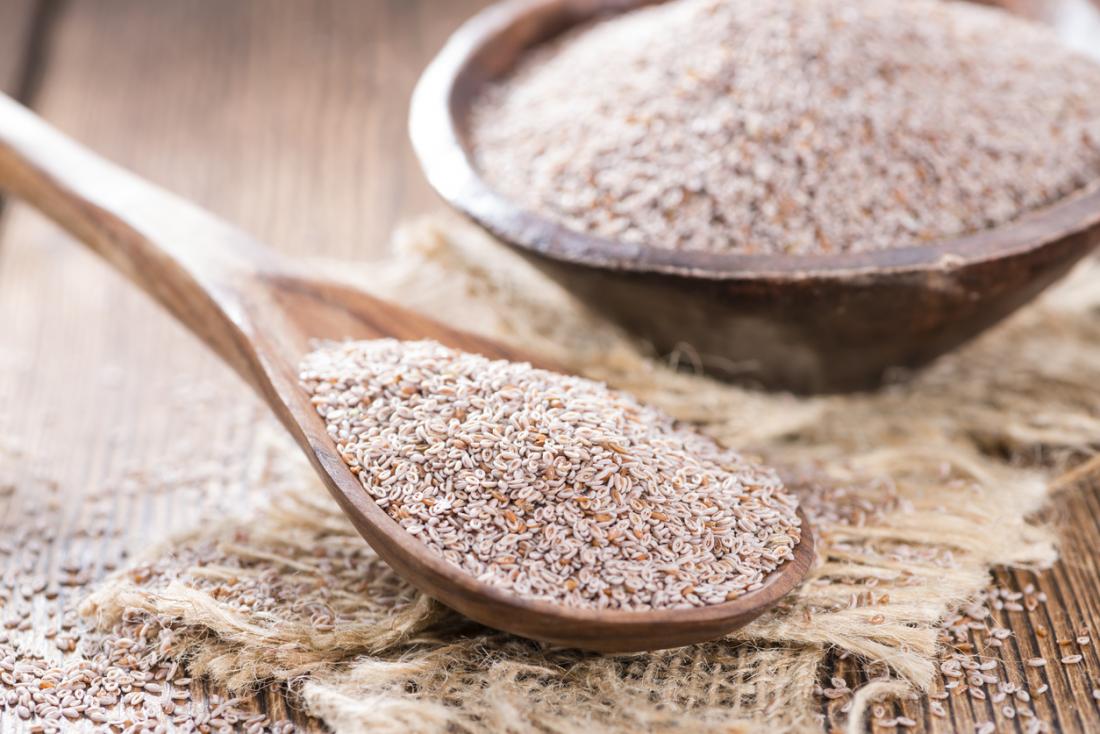
    A great way to increase your daily fiber intake is by supplementing your diet with psyllium, a natural, water-soluble fiber made from the husks of the Plantago ovata plant. Psyllium can aid our health in each of the following ways:
     
    • Lowering cholesterol
    • Improving digestion
    • Eliminating toxins and heavy metals (psyllium acts like a sponge, soaking them off the walls of the intestine)
    • Slowing the production of blood glucose during digestion
    • Encouraging the growth of healthy intestinal bacteria
     
    For all these reasons, psyllium is a highly valuable dietary supplement. Here’s more detail on each of the above:
     
    Being a soluble fiber, psyllium is able to pass through your digestive system without being completely broken down or absorbed. Instead, it absorbs water and becomes a gel-like substance that slows down the rate at which the stomach empties. As a result, psyllium tends to slow the movement of food through the digestive tract. Since fiber-rich foods take longer to digest, they result in an increased feeling of fullness and satiety. Consequently, psyllium can aid weight loss by reducing the amount of food consumed during meals.
     
    In addition, a more gradual absorption slows the entrance of glucose into the blood stream, thereby preventing large blood glucose and insulin spikes. For this reason, psyllium helps control blood sugar levels, which is particularly helpful to diabetics. It’s recommended that you take psyllium with food, rather than on its own, so it has a greater effect on your blood sugar levels.
     
    Psyllium has also been shown to help lower blood cholesterol. Soluble fiber binds to bile salts in the gastrointestinal (GI) tract, causing them to be excreted as part of our fecal matter, rather than being re-absorbed by the colon, as they usually are. Since blood cholesterol is needed to make bile, the body must pull more cholesterol out of our blood to make more bile and replace what was lost. This ultimately lowers the amount of cholesterol in our bloodstream.
     
    Additionally, psyllium also helps with constipation and diarrhea, and perhaps even benefits blood pressure, according to research.
     
    Psyllium is a bulk-forming laxative that also softens stools, which means it makes bowel movements much easier. Quite simply, psyllium promotes regularity and overall digestive health, which matters to millions of people.
     
    A total of 60 to 70 million Americans are affected by digestive diseases, according to the National Institute of Health. This means one in five Americans suffers some type of digestive illness. That’s because the modern American diet is so unhealthy. For example, the top sources of calories in the US are grain-based desserts, including cakes, cookies, donuts, pies, crisps, cobblers and granola bars. Americans also consume copious amounts of sodas, candy, potato chips and pizza.
     
    Having a healthy gut is vital to our overall health. Psyllium encourages the growth of healthful, “friendly” intestinal bacteria, such as Lactobacillus acidophilous and bifidobacteria.
     
    These are among the healthy or “good” bacteria in your GI tract that keep your entire digestive system at its peak, while boosting the health of your immune system. In fact, 80% of your immune system lives within your digestive tract and, obviously, a healthy immune system is vital to your overall well-being.
     
    It is crucial for us to maintain a healthy ratio of “good” to “other” bacteria in our GI tract for optimal health. A healthy and balanced digestive system even helps you better regulate your weight.
     
    The good bacteria in your GI tract need good nutrition to flourish. Dietary fiber can make a huge difference by feeding these good bacteria, allowing them to grow and proliferate. While the less-than-desirable bacteria like to eat refined sugars and fats, beneficial bacteria love to feed on fiber, such as psyllium.
     
    The average recommended dosage for psyllium is about one or two tablespoons with meals, once or twice daily. However, I suggest starting with a lower dose and gradually working up to this level. A tall glass of water should be taken with each dose.
     
    The most common brand of psyllium is Metamucil, which has added sugar and ascorbic acid. There are also 100% pure psyllium versions available, without added sugar, which you can find at any health food store. You may find that finely ground, powdered psyllium, which can be mixed with either water or juice, is easiest to drink.
     
    It should be noted that Metamucil is different from Citrucel, which is made from man-made cellulose fiber. Citrucel is merely a fiber laxative and does not offer the same health benefits of psyllium.
     
    So, there are many good reasons to add psyllium to your diet regimen: it’s all natural, inexpensive, easy to take and has a multitude of health benefits. Ultimately, psyllium is one of the very best supplements to include in your daily diet.
  • Exercise Can Help Prevent and Treat High Blood Pressure

    Exercise Can Help Prevent and Treat High Blood Pressure

    Hypertension (aka, high blood pressure) is an epidemic in the United States, with nearly half of us affected by it.

    For decades, high blood pressure has been determined by a top reading of at least 140 and/or a bottom one of 90.
     
    However, a dozen medical groups have now dropped the threshold to 120 over 80.  Under these new guidelines, 46 percent of American adults have high blood pressure, according to the American Heart Association (AHA).
     
    The change has tripled the number of men under 45 and doubled the number of women under 45 with the diagnosis.
     
    Hypertension quietly damages blood vessels and leads to serious health problems. Left untreated, hypertension increases the risk of heart disease and stroke, which are the No. 1 and No. 5 causes of death in the US.
     
    Aside from heart attack/failure and stroke, high blood pressure can also lead to vision loss, kidney disease or failure, peripheral artery disease and sexual dysfunction.
     
    Symptoms of high blood pressure include dizziness, blurred/double vision, headache and neck pain. Some people also experience drowsiness and difficulty breathing. These problems often arise when the blood pressure is too high.
     
    However, since high blood pressure is a largely symptomless disease, millions of people are unaware that they have the condition. This is why hypertension is referred to as the “silent killer.” Many people with high blood pressure don’t even know they have it, according to the AHA.
     
    The only way to know if you have high blood pressure is to have your blood pressure tested. Though you can test your blood pressure at home with a store-bought arm cuff/monitor, a diagnosis of high blood pressure must be confirmed by a medical professional.
     
    Your blood pressure is recorded as two numbers. Systolic blood pressure (the upper number) indicates how much pressure your blood is exerting against your artery walls when your heart beats. Diastolic blood pressure (the lower number) indicates how much pressure your blood is exerting against your artery walls while your heart is resting between beats. These numbers measure millimeters of mercury, shown as mm Hg.
     
    Health professionals generally pay more attention to systolic blood pressure (the top number) as a major risk factor for cardiovascular disease for people over 50. In most people, systolic blood pressure rises steadily with age due to the increasing stiffness of large arteries, the long-term build-up of plaque and an increased incidence of cardiac and vascular disease.
     
    However, according to the AHA, elevated systolic or diastolic blood pressure alone may be used to make a diagnosis of high blood pressure. And, according to recent studies, the risk of death from ischemic heart disease and stroke doubles with every 20 mm Hg increase in systolic pressure or 10 mm Hg increase in diastolic pressure among people from age 40 to 89.
     
    The guidelines set new categories and get rid of “prehypertension”:
     
    • Normal: Under 120 / 80
     
    • Elevated: Top number 120-129 and bottom less than 80
     
    • Hypertension Stage 1: Top of 130-139 or bottom of 80-89
     
    • Hypertension Stage 2: Top at least 140 or bottom at least 90
     
    These new guidelines mean that 46 percent of U.S. adults have high pressure (stages 1 or 2).
     
    High blood pressure interacts with other major risk factors, such as diabetes and high levels of cholesterol, to amplify the risk of heart attack and stroke. Treatment for hypertension must begin early to prevent organ damage.
     
    High blood pressure develops slowly over time and can progressively worsen with age. Roughly half the people with untreated hypertension die of heart disease related to poor blood flow (ischemic heart disease) and another third die of stroke, according to the Mayo Clinic.
     
    While there is no cure for hypertension, changes in lifestyle can help you lower your blood pressure and keep it down.
     
    Remember that drinking more than moderate amounts of alcohol can raise blood pressure by several points, while also reducing the effectiveness of blood pressure medications.
     
    Using tobacco can also cause your blood pressure to increase and can contribute to damaged arteries. Too much stress may also contribute to increased blood pressure.
     
    Carrying too much weight puts an extra strain on your heart and circulatory system, which can cause serious health problems. Excess weight also increases your risk of cardiovascular disease, diabetes and high blood pressure. Losing just 10 pounds can help reduce your blood pressure.
     
    Maintain a healthy weight by eating a nutritious diet, rich in whole grains, fruits, vegetables and low-fat dairy products, but low in salt, saturated fat and cholesterol.
     
    Consistent exercise is also vital to lowering blood pressure and maintaining good health. Physical activity not only helps control high blood pressure and manage your weight, it also helps you strengthen your heart and lower your stress level. A healthy weight, a strong heart and general emotional health are all good for your blood pressure.
     
    Regular physical activity makes your heart stronger. If your heart works less to pump blood, the force on your arteries decreases, lowering your blood pressure. Exercise also lowers blood pressure by alleviating blood vessel stiffness so that blood flows more freely. Regular exercise can lower your systolic blood pressure by an average of 4 to 9 millimeters of mercury (mm Hg).
     
    On the other hand, inadequate physical activity increases your risk of developing high blood pressure. It can’t be overstated that physical activity is great for your heart and circulatory system, including blood pressure. It’s important to be consistent because if you stop exercising, your blood pressure can rise again.
     
    If you have slightly high blood pressure (prehypertension), exercise can help you avoid developing full-blown hypertension. If you already have hypertension, regular physical activity can bring your blood pressure down to safer levels.
     
    To improve overall cardiovascular health, the American Heart Association, the Surgeon General and the CDC all suggest at least 150 minutes per week of moderate-intensity exercise, or 75 minutes a week of vigorous-intensity exercise, or an equivalent combination of both. The easiest way to think of it is 30 minutes per day, at least five days per week.
     
    The best types of exercise for lowering blood pressure include walking, jogging, cycling, swimming or even dancing. Strength training can also help reduce blood pressure.
     
    The important thing is to find activities that you enjoy. Then get in motion and stay in motion.
  • Why Cardiovascular / Aerobic Exercise Is So Vital to Everyone

    Why Cardiovascular / Aerobic Exercise Is So Vital to Everyone

    Cardiovascular endurance is considered one of the 5 parameters of fitness (the others being muscular strength, muscular endurance, flexibility and body composition).

    As you might imagine, this makes cardiovascular exercise — which most people simply call “cardio” — vital to everyone’s exercise program. 
     
    So, how much cardio do you need?
     
    According to the Physical Activity Guidelines, released by the U.S. Department of Health and Human Services, adults need at least 150 minutes of moderate-intensity, aerobic, physical activity each week; or 75 minutes a week of vigorous-intensity, aerobic, physical activity; or an equivalent combination of moderate- and vigorous-intensity aerobic activity. 
     
    The American College of Sports Medicine (ACSM) concurs. The ACSM recommends that adults accumulate at least 30 minutes of moderate physical activity at least five days per week for basic fitness. If you up the ante to vigorous exercise intensity, 30 minutes three days per week it will also get the job done. 
     
    While that’s enough to keep your heart healthy, it may not be enough to promote weight loss. The Institute of Medicine advises Americans to get an hour of physical activity a day to control their weight.    
     
    Due to the prevalence of obesity and overweight in the US — a whopping 70 percent of Americans are overweight or obese — many people think of cardiovascular exercise merely as a means to lose weight. However, even those with an ideal, healthy body weight need to regularly perform cardio to maintain good health and prevent disease.
     
    The cardiovascular system, in particular, needs to be exercised regularly to maintain optimum health. It’s about being healthy from the inside out, not just looking good on the outside. 
     
    Exercises, such as walking, running, cycling, swimming or some other form of aerobic exercise, will all stimulate the cardiovascular system, but intensity matters. Obviously, the heart isn’t strengthened as much, and doesn’t make as much adaptation, by walking at 3.5 mph as it does when running at 7 mph.
     
    Ultimately, there is a difference between being fit and being healthy. Being fit is a much stricter standard.
     
    Choose activities that you enjoy. The results will be essentially the same. Studies show that a 10-15 week program of cycling, swimming or running, done 5 days per week, 30 minutes per session, at 70% heart-rate reserve (HRR), will result in comparable improvements in cardiorespiratory fitness.
     
    Let’s look at the benefits of regular aerobic exercise:
     
    – Weight loss or maintenance (healthy body composition) 
     
    MEN:
    Healthy = 18-24% body fat 
    Fit = 14-17% body fat 
    Essential = 2-5% body fat
    WOMEN:
    Healthy = 25-31% body fat 
    Fit = 21-24% body fat 
    Essential = 10-13% body fat
     
    An exercise program conducted 3 times per week, burning 300-400 cals per session, could result in a 16-pound weight loss in one year.
     
    – Decreased appetite in some people
     
    – Reduces the risks of coronary artery disease
     
     A six-year study released in September, 2002 showed that for middle-aged or older women, walking, or an equal amount of more strenuous exercise, for 2 1/2 hours per week (5 days x 30 mins.) can cut heart disease and stroke risk by just over one third.
     
    – Increases levels of HDLs (healthy cholesterol) and decreases levels of LDLs (unhealthy cholesterol)
     
    – Decreases triglycerides (blood fats)
     
    – Lower resting heart rate:
    • Men average about 70 beats per minute
    • Women average about 75 beats per minute
      
    – Decreases blood pressure:  
    <120/80 = normal
    120-129/<80 = elevated
    130-139/80-89 = Stage 1 hypertension
    140 or above/90 or above = Stage 2 hypertension
     
    – Increases the sensitivity of cells to insulin and reduces blood glucose levels. This is a critical part of the treatment program for diabetics.
     
    – Weight bearing exercises (running, brisk walking) strengthen the skeletal system, reducing the chances of osteoporosis, which is characterized by reduced bone mass and increased susceptibility to fractures. This occurs more commonly in women over 45 and affects an estimated 15-20 million Americans.
     
    – Increases joint range of motion. Frequently part of the treatment for those with arthritis. Flexibility is developed primarily up to and between the ages of 7-12 and begins to decline after adolescence, accelerating after the age of 25 (unless otherwise maintained) 
     
    Why Aerobic Exercise Works
     
    Regular aerobic exercise can lead to increased cardiovascular endurance due to the following factors:
     
    – Increased lactate threshold (the time when your muscles start to burn and fatigue)
     
    – Increase of ATP (fuel) in mitochondria, the cell’s power plant or engine
     
    – Increase in the number and size of mitochondria
     
    In short, you can become a high-performance, human machine.
     
    Working out in the “fat-burning zone” is not the most efficient way to lose weight. As exercise intensity increases, the body burns less and less fat and more and more carbohydrates. That’s why some people say it’s best to work out at low to moderate intensities, in the so-called “fat-burning zone.” But when it comes to weight loss, what matters most is how many total calories you burn. High-intensity exercise burns the most calories.
     
    That said, even brisk walking is enough to keep your heart healthy. Exercise doesn’t have to be strenuous to be beneficial. Studies show that moderate physical activity – such as a half-hour of brisk walking or swimming – on most days of the week can help fight off heart disease and lower your risk of diabetes and some cancers, among other health benefits.
     
    However, while walking is good for your overall health, it may not burn enough calories to help you lose a substantial amount of weight. Nor will it get you a well-toned, sculpted body. 
     
    To get buff, you’ll need to add resistance training to your workout regimen. Yet, even with a good cardio and strength program, you may never look like a swimsuit model (good genes and airbrushing help in that regard), but you can slim down and firm up. 
     
    The most important thing is to improve your health, so that your doctor says you look as good from the inside as you do on the outside.